Ruïne
Framlingham Castle
ENG Engeland · 12e eeuw
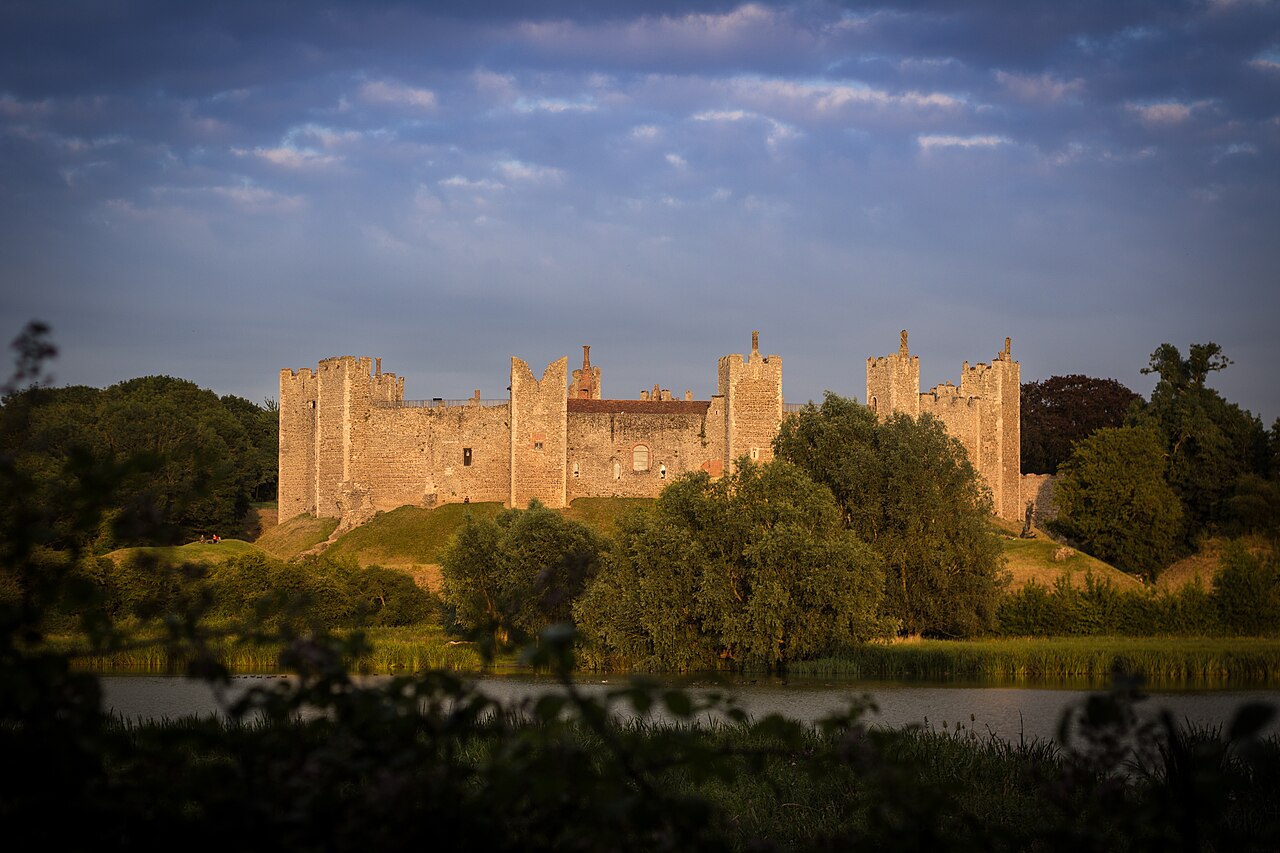
Framlingham Castle is een kasteel in het marktstadje Framlingham in Suffolk, Engeland. Op de locatie van Framlingham was omstreeks 1148 een vroeg Normandisch motte-en-baileykasteel of ringwalburcht gebouwd, maar dit werd verwoest (geslecht) door Hendrik II van Engeland in de nasleep van de Opstand van 1173-1174. De vervanger ervan, gebouwd door Roger Bigod, graaf van Norfolk, was voor die tijd ongebruikelijk doordat er geen centrale donjon was, maar in plaats daarvan een ringmuur met dertien muurtorens het centrum van het kasteel verdedigde. Desondanks werd het kasteel in 1216 na een kort beleg met succes ingenomen door koning Jan. Tegen het einde van de 13e eeuw was Framlingham een luxueus woonhuis geworden, omgeven door uitgestrekt parkland dat voor de jacht werd gebruikt.
In de 15e en 16e eeuw vormde Framlingham het hart van de landgoederen van de machtige families Mowbray en Howard. Rond het kasteel werden twee kunstmatige meren aangelegd, en het kasteel werd in modieuze baksteen uitgebreid. Met een grote, welvarende huishouding om te onderhouden kocht het kasteel voorraden uit heel Engeland en haalde het luxegoederen van internationale markten. Binnen het kasteel werden uitgestrekte siertuinen aangelegd en oudere delen werden herontworpen zodat bezoekers van de daaruit voortkomende uitzichten konden genieten. Tegen het einde van de 16e eeuw raakte het kasteel echter in verval en nadat de laatste Howard-eigenaar, Theophilus, in financiële moeilijkheden kwam, werden het kasteel en de omliggende landgoederen verkocht.
Machinaal vertaald uit “Framlingham Castle” op de Engelstalige Wikipedia, CC BY-SA 4.0.
Framlingham Castle staat op plaats 757 van 8.134 in de bekendheidsranglijst van deze atlas en op plaats 54 van de 333 die de atlas in Engeland in kaart brengt. Gebouwd in 1148, en daarmee ouder dan 84% van de gedateerde bouwwerken in de atlas — een van de 564 bouwwerken in de atlas die uit de 12e eeuw stammen. De Wikipedia-artikelen erover werden de afgelopen 60 dagen 7.456 keer geopend, meer dan 90% van de atlas. Binnen 25 km staan nog 3 andere bouwwerken uit de atlas. De dichtstbijzijnde dagtripgids is Colchester, 48 km verderop. Zie hoe dat zich verhoudt in de kastelenstatistiek.
Bekijk op de interactieve kastelenkaart →Veelgestelde vragen
Waar ligt Framlingham Castle?
Framlingham Castle ligt in Engeland, op 52.2246°, 1.34661°.
Wanneer werd Framlingham Castle gebouwd?
De atlas dateert de stichting op 1148. Er kunnen eerdere bouwwerken hebben gestaan; dit is het oudste gedocumenteerde bouwjaar.
Hoe bekend is Framlingham Castle?
In de bekendheidsranglijst van deze atlas: plaats 757 van 8.134 wereldwijd, plaats 54 in Engeland. Bekendheid combineert het aantal Wikipedia-taalversies met het aantal lezers.
Welk kasteel ligt het dichtst bij Framlingham Castle?
Wingfield Castle, ongeveer 15 km verderop.
Meer kastelen in Engeland
- Bolingbroke Castle Engeland · 13e eeuw
- Scarborough Castle Engeland · 12e eeuw
- Tattershall Castle Engeland · 13e eeuw
- Eltham Palace Engeland · 20e eeuw
Meer ruïnes
- Dinefwr Castle Wales
- Slot Monbijou Duitsland · 18e eeuw
- Palace of Nestor Griekenland · 13e eeuw v.Chr.
- Kasteel Rakvere Estland · 13e eeuw