Ruïne
Richmond Palace
ENG Engeland · 16e eeuw
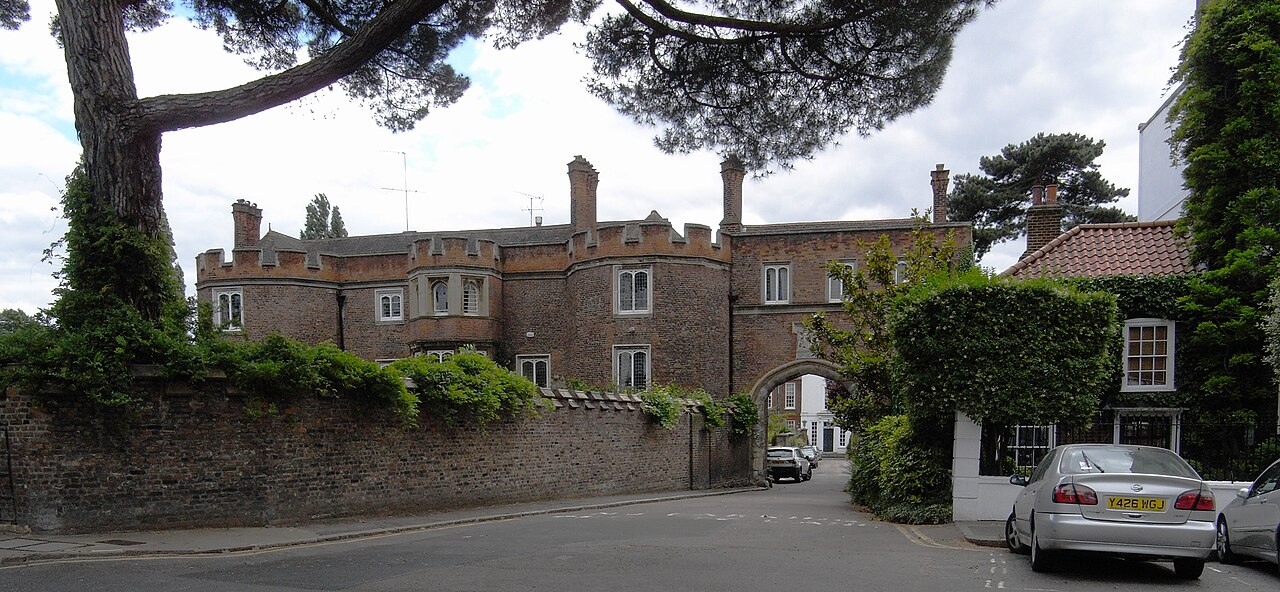
Richmond Palace was een koninklijke Tudorresidentie aan de Theems in Engeland die in de zestiende en zeventiende eeuw bestond. Gelegen in het toen landelijke Surrey, lag het stroomopwaarts en aan de overkant van het Palace of Westminster, dat negen mijl (14 km) naar het noordoosten lag. Het werd omstreeks 1501 opgericht door Hendrik VII van Engeland, voorheen bekend als de graaf van Richmond, ter ere waarvan het manor Sheen kort daarvoor was hernoemd tot "Richmond". Richmond Palace verving daarmee Sheen Palace, dat op zijn beurt was gebouwd op de plek van een eerder herenhuis dat in 1299 door Eduard I was toegeëigend en dat vervolgens door zijn volgende drie rechtstreekse afstammelingen werd gebruikt voordat het in verval raakte.
In 1500, een jaar voordat de bouw van het nieuwe Richmond Palace begon, werd de naam van het stadje Sheen, dat rond het koninklijke manor was ontstaan, op bevel van Hendrik VII veranderd in "Richmond". Beide namen, Sheen en Richmond, worden echter nog steeds gebruikt. De huidige wijken East Sheen en North Sheen, nu onder het bestuur van de London Borough of Richmond upon Thames, lagen in oude tijden nooit binnen het manor Sheen, maar werden in de 19e en 20e eeuw ontwikkeld in delen van het aangrenzende manor en de parochie Mortlake. Richmond bleef deel van het graafschap Surrey tot 1 april 1965, toen het door de uitbreiding van Groot-Londen als gevolg van de London Government Act 1963 werd opgenomen.
Richmond Palace was een geliefde woning van Elizabeth I, die er in 1603 stierf. Het bleef een residentie van de koningen en koninginnen van Engeland tot de dood van Karel I van Engeland in 1649. Binnen enkele maanden na zijn terechtstelling werd het paleis in opdracht van het Parlement van Engeland opgemeten en voor £13.000 verkocht.
Machinaal vertaald uit “Richmond Palace” op de Engelstalige Wikipedia, CC BY-SA 4.0.
Richmond Palace staat op plaats 445 van 8.134 in de bekendheidsranglijst van deze atlas en op plaats 36 van de 333 die de atlas in Engeland in kaart brengt. Gebouwd in ca. 1501, en daarmee ouder dan 45% van de gedateerde bouwwerken in de atlas — een van de 755 bouwwerken in de atlas die uit de 16e eeuw stammen. De Wikipedia-artikelen erover werden de afgelopen 60 dagen 20.680 keer geopend, meer dan 97% van de atlas. Binnen 25 km staan nog 26 andere bouwwerken uit de atlas. De dichtstbijzijnde dagtripgids is Londen, 14 km verderop. Zie hoe dat zich verhoudt in de kastelenstatistiek.
Bekijk op de interactieve kastelenkaart →Veelgestelde vragen
Waar ligt Richmond Palace?
Richmond Palace ligt in Engeland, op 51.46039°, -0.31022°.
Wanneer werd Richmond Palace gebouwd?
De atlas dateert de stichting op ca. 1501. Er kunnen eerdere bouwwerken hebben gestaan; dit is het oudste gedocumenteerde bouwjaar.
Hoe bekend is Richmond Palace?
In de bekendheidsranglijst van deze atlas: plaats 445 van 8.134 wereldwijd, plaats 36 in Engeland. Bekendheid combineert het aantal Wikipedia-taalversies met het aantal lezers.
Welk kasteel ligt het dichtst bij Richmond Palace?
Kew Palace, ongeveer 3 km verderop.
Meer kastelen in Engeland
- Camulodunum Engeland
- White Tower Engeland · 11e eeuw
- Colchester Castle Engeland · 11e eeuw
- Portchester Castle Engeland · 11e eeuw
Meer ruïnes
- Jiaohe Ruins China · 2e eeuw v.Chr.
- Tour du Temple Frankrijk · 13e eeuw
- Ostroh Castle Oekraïne · 13e eeuw
- Maglič Servië · 13e eeuw