Paleis
Sponza Palace
🇭🇷 Kroatië · 16e eeuw
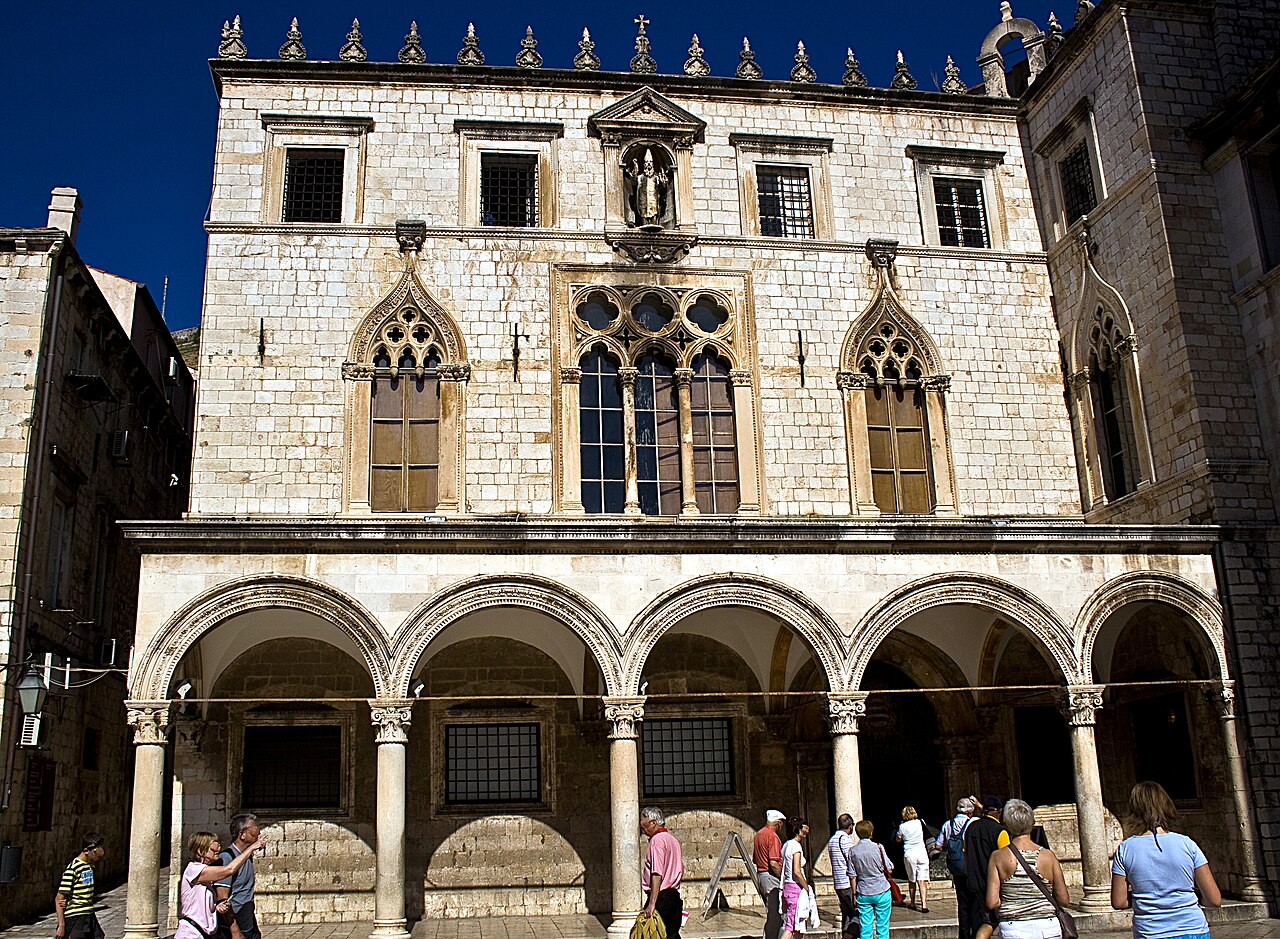
Het Sponzapaleis (Kroatisch: Palača Sponza; Italiaans: Palazzo Sponza), ook wel Divona genoemd (naar dogana, douane), is een 16e-eeuws paleis in Dubrovnik, Kroatië. De naam is afgeleid van het Latijnse woord "spongia", de plek waar regenwater werd opgevangen.
Het rechthoekige gebouw met binnenplaats werd tussen 1516 en 1522 gebouwd in een gemengde gotische en renaissancestijl door Paskoje Miličević Mihov. De loggia en de beeldhouwwerken werden vervaardigd door de gebroeders Andrijić en andere steenhouwers.
Het paleis heeft in de loop der tijd diverse openbare functies vervuld, waaronder die van douanekantoor en entrepot, muntgebouw, wapenkamer, schatkamer, bank en school. Het werd het culturele centrum van de Republiek Ragusa met de oprichting van de Academia dei Concordi, een literaire academie, in de 16e eeuw. Het overleefde de aardbeving van 1667 zonder schade. Het atrium van het paleis diende als handelscentrum en zakelijke ontmoetingsplaats. Een Latijnse inscriptie op een boog getuigt van deze openbare functie:
Fallere nostra vetant et falli pondera. Meque pondero cum merces ponderat ipse deus.
"Onze gewichten staan geen bedrog toe. Wanneer ik goederen weeg, weegt God met mij mee."
Het paleis herbergt nu het Staatsarchief van Dubrovnik, dat documenten bewaart die teruggaan tot de 12e eeuw, waarvan het oudste uit 1022 dateert. Deze stukken, waaronder meer dan 7000 delen handschriften en ongeveer 100.000 individuele manuscripten, werden voorheen bewaard in het Rectorspaleis.
Het Lužaplein voor het paleis wordt gebruikt voor de openingsceremonie van het Zomerfestival van Dubrovnik. Het Sponzapaleis zelf wordt ook gebruikt als voorstellingsruimte.
Het atrium van het paleis vormt de basis van het "Sponza Atrium"-3D-computergrafiekmodel, gemaakt voor een renderingwedstrijd en nu een veelgebruikt referentiemodel voor het renderen van globale belichting.
Machinaal vertaald uit “Sponza Palace” op de Engelstalige Wikipedia, CC BY-SA 4.0.
Sponza Palace staat op plaats 1.226 van 8.134 in de bekendheidsranglijst van deze atlas en op plaats 9 van de 61 die de atlas in Kroatië in kaart brengt. Gebouwd in 1516, en daarmee ouder dan 44% van de gedateerde bouwwerken in de atlas — een van de 755 bouwwerken in de atlas die uit de 16e eeuw stammen. De Wikipedia-artikelen erover werden de afgelopen 60 dagen 2.858 keer geopend, meer dan 74% van de atlas. Binnen 25 km staan nog 4 andere bouwwerken uit de atlas. De dichtstbijzijnde dagtripgids is Nikšić, 70 km verderop. Dit is een van de 23 bouwwerken op de regiokaart Dalmatië. Zie hoe dat zich verhoudt in de kastelenstatistiek.
Bekijk op de interactieve kastelenkaart →Veelgestelde vragen
Waar ligt Sponza Palace?
Sponza Palace ligt in Kroatië, op 42.64111°, 18.11056°.
Wanneer werd Sponza Palace gebouwd?
De atlas dateert de stichting op 1516. Er kunnen eerdere bouwwerken hebben gestaan; dit is het oudste gedocumenteerde bouwjaar.
Hoe bekend is Sponza Palace?
In de bekendheidsranglijst van deze atlas: plaats 1.226 van 8.134 wereldwijd, plaats 9 in Kroatië. Bekendheid combineert het aantal Wikipedia-taalversies met het aantal lezers.
Welk kasteel ligt het dichtst bij Sponza Palace?
Fort Revelin, ongeveer 1 km verderop.
Meer kastelen in Kroatië
- Kamerlengo Castle Kroatië · 15e eeuw
- Dubovac Castle Kroatië · 13e eeuw
- Sint-Nicolaasfort Kroatië · 16e eeuw
- Trakošćan Castle Kroatië · 13e eeuw
Meer paleizen
- Palazzo Corsini Italië · 18e eeuw
- Palazzo dei Conservatori Italië
- Marble Palace (Tehran) Iran · 20e eeuw
- Paleis van Venaria Italië · 17e eeuw