Pałac
Changgyeonggung
🇰🇷 Korea Południowa · XV wiek
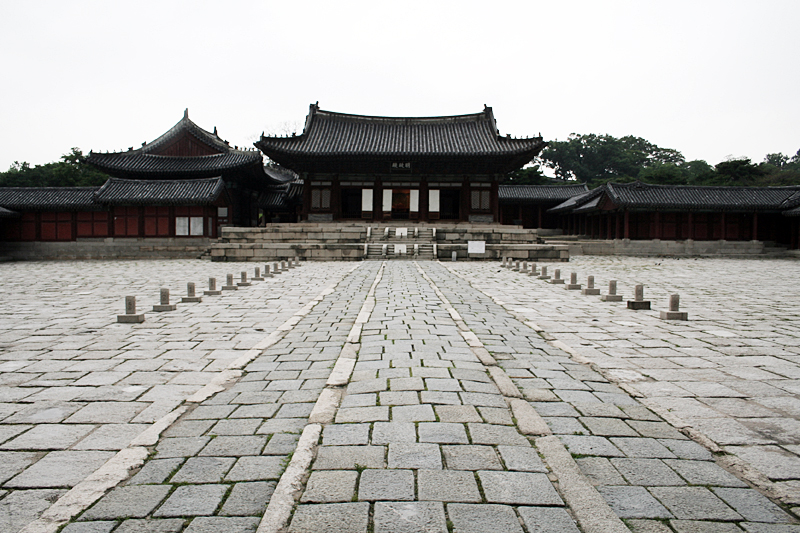
Changgyeonggung (kor. 창경궁; hancha: 昌慶宮) to pałac położony w Seulu, w Korei Południowej.
Pałac zbudował w połowie XV wieku król Sejong dla swego ojca, Taejonga. Pierwotnie nazywał się „Suganggung”, lecz odnowiono go i rozbudowano w 1483 roku za króla Seongjonga, gdy otrzymał obecną nazwę. Wiele budowli zniszczono podczas wojny Imjin, prób podboju Korei i inwazji na Chiny podejmowanych przez Japonię pod koniec XV i w XVI wieku (1592). Odbudowywali go kolejni królowie z dynastii Joseon, lecz ponownie w dużej mierze zniszczyli go Japończycy na początku XX wieku. Tym razem rozebrano go metodycznie, by zrobić miejsce na nowoczesny park, wystawową atrakcję imperium, na wzór tokijskiego Parku Ueno.
W okresie japońskiej kolonizacji Japończycy zbudowali na tym miejscu zoo, ogród botaniczny i muzeum. Nazywano je „parkiem Changgyeongwon”, gdzie „won” oznacza po koreańsku „ogród”. Po odzyskaniu niepodległości w 1945 roku oraz zawierusze i zniszczeniach wojny koreańskiej w latach 1950–1953, zoo odbudowano dzięki darowiznom zamożnych Koreańczyków, a także darom z zagranicznych ogrodów zoologicznych. W 1983 roku zoo i ogród botaniczny przeniesiono do dzisiejszego Seoul Grand Park.
Tłumaczenie maszynowe artykułu „Changgyeonggung” w angielskiej Wikipedii, CC BY-SA 4.0.
Changgyeonggung zajmuje 361. miejsce na 8134 w rankingu rozpoznawalności zamków tego atlasu i 4. wśród 58 obiektów w Korei Południowej. Data powstania — ok. 1450, wcześniejsza niż u 49% datowanych obiektów atlasu — jeden z 455 obiektów atlasu powstałych w XV wieku. Artykuły o tym obiekcie w Wikipedii otwarto 12 766 razy w ciągu ostatnich 60 dni — więcej niż 95% obiektów atlasu. W promieniu 25 km stoi 15 innych obiektów atlasu. Najbliższy przewodnik na jednodniowy wypad to Seul, 2 km stąd. Zobacz w statystykach zamków, jak wypada Korea Południowa.
Zobacz na interaktywnej mapie zamków →Najczęstsze pytania
Gdzie znajduje się Changgyeonggung?
Changgyeonggung znajduje się w Korei Południowej, na współrzędnych 37.57843°, 126.99598°.
Z którego roku pochodzi Changgyeonggung?
Atlas podaje rok powstania: ok. 1450. Wcześniejsze budowle mogły stać w tym miejscu — to najstarszy udokumentowany rok.
Które miejsce w rankingu zajmuje Changgyeonggung?
W rankingu rozpoznawalności tego atlasu: 361. miejsce na 8134, 4. miejsce w Korei Południowej. Rozpoznawalność łączy liczbę wersji językowych Wikipedii z liczbą czytelników.
Changgyeonggung — który zamek leży najbliżej?
Changdeokgung, około 1 km stąd.
Inne zamki w Korei Południowej
- Gyeonghuigung Korea Południowa · XVII wiek
- Wolseong Korea Południowa · II wiek
- Bukhansanseong Korea Południowa · II wiek
- Naganeupseong Korea Południowa · XIV wiek
Inne obiekty: pałace
- Pałac Zarzuela Hiszpania · XVII wiek
- Świątynia Harmonii i Pokoju Chiny · XVII wiek
- Pałac Prezydencki w Wilnie Litwa · XIV wiek
- Pałac Na Wyspie Polska · XVII wiek