Palace
Changgyeonggung
 South Korea · 15th century
- Founded
- c. 1450
- Heritage status
- Historic sites of South Korea
- Location
- Seoul
- Coordinates
- 37.57843°, 126.99598°
- Open data
- Wikidata Q482852
- Links
- Wikimedia Commons
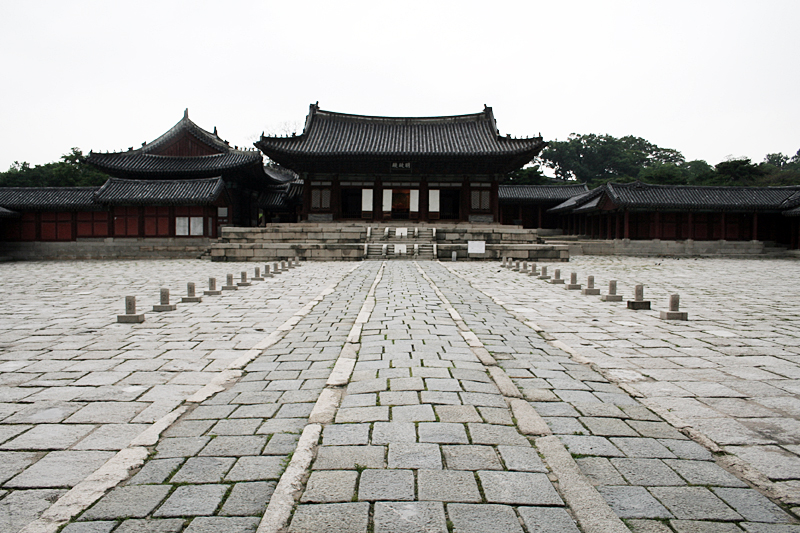
Description
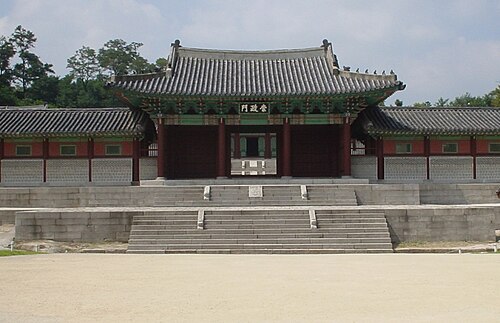
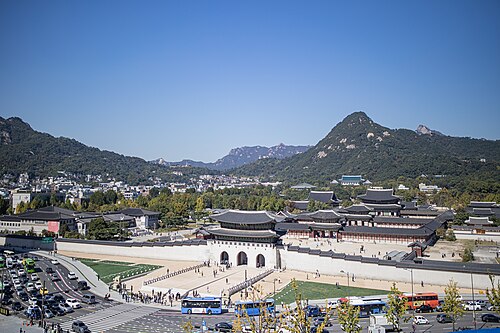
Changgyeonggung (Korean: 창경궁; Hanja: 昌慶宮) is a palace located in Seoul, South Korea.
The palace was built in the mid-15th century by King Sejong for his father, Taejong. It was originally named "Suganggung", but it was renovated and enlarged in 1483 by King Seongjong, at which time it received its current name. Many structures were destroyed during the Imjin War, Japan's late 15th to 16th (1592) century attempts to conquer Korea and invade China. It was rebuilt by successive Joseon Kings but was once again largely destroyed by the Japanese in the early 20th century. This time, it was torn down methodically to make room for a modern park, a showplace for the empire, akin to Tokyo's Ueno Park.
During the Japanese colonial period, the Japanese built a zoo, botanical garden, and museum on the site. It was called "Changgyeongwon park", the "won" standing for the Korean word 'garden'. After independence in 1945 and the turmoil and destruction of the 1950-53 Korean War, the zoo was restocked through donations of wealthy Koreans as well as gifts from foreign zoos. In 1983, the zoo and botanical garden were relocated to present-day Seoul Grand Park.
Text adapted from “Changgyeonggung” on Wikipedia, CC BY-SA 4.0.
In the rankings
Changgyeonggung ranks #520 of 9,902 worldwide in the atlas's castle fame ranking, and #6 of the 59 mapped in South Korea. Founded c. 1450, it is older than 47% of the atlas's dated landmarks, one of 596 atlas entries founded in the 15th century. Its Wikipedia articles were opened 7,761 times in the last 60 days, more than 92% of the atlas. 14 more atlas landmarks stand within 25 km. The nearest day-trip guide is Seoul, 2 km away. See how South Korea compares in the castle statistics.
Castles nearby
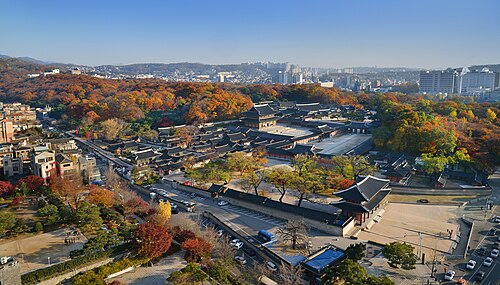
- Changdeokgung1 km · South Korea
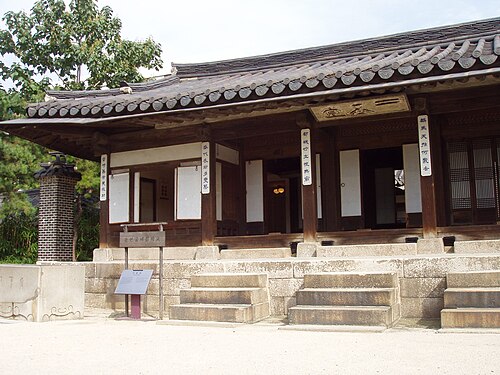
- Unhyeongung1 km · South Korea
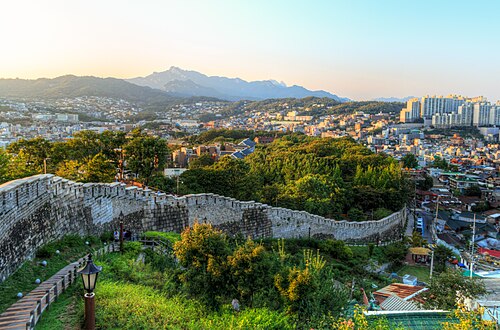
- Seoul City Wall1 km · South Korea
- Gyeongbokgung2 km · South Korea
More castles in South Korea
- GyeonghuigungSouth Korea · 17th century
- Donggung Palace and Wolji PondSouth Korea · 7th century
- WolseongSouth Korea · 2nd century
- BukhansanseongSouth Korea · 2nd century