 Georgia
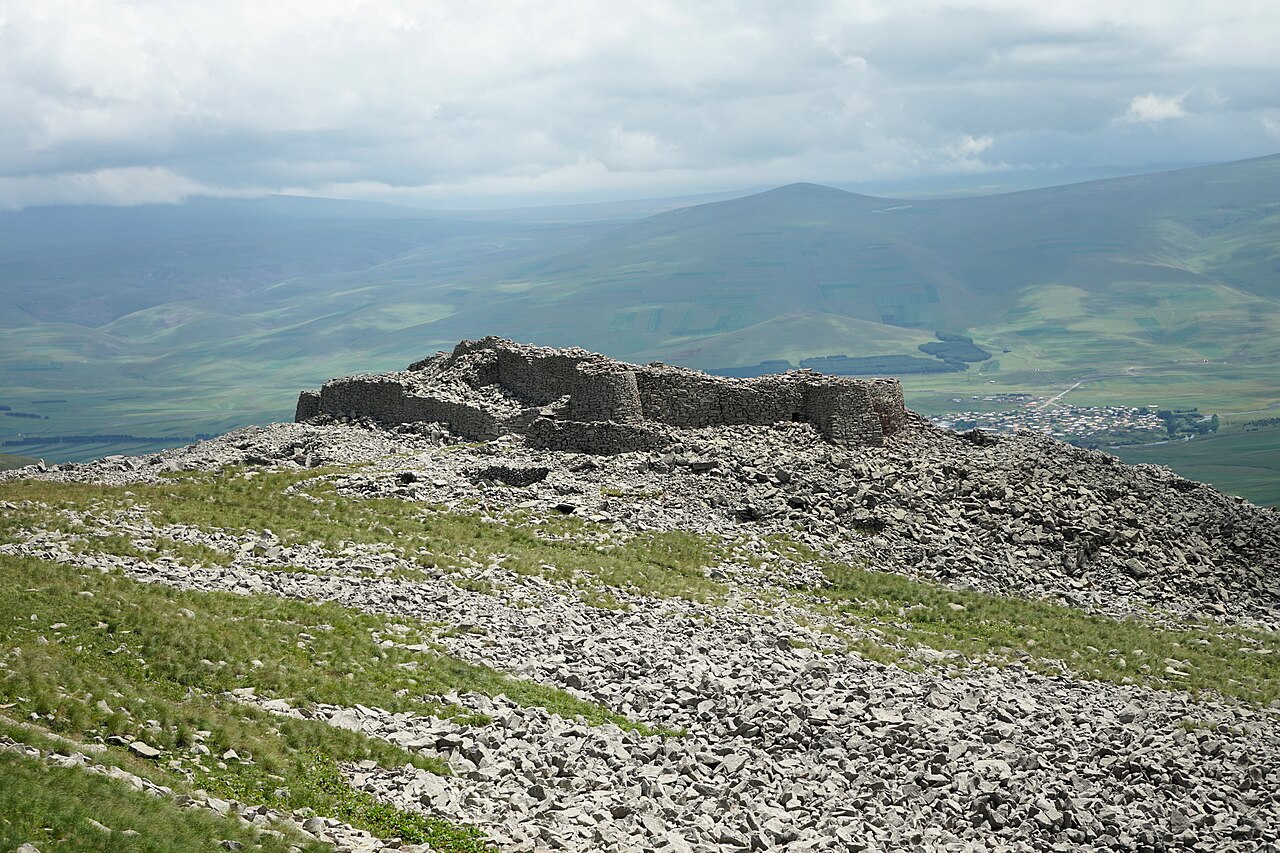
The Abuli fortress (Georgian: აბულის ციხე) is a prehistoric megalithic structure in the Akhalkalaki Municipality of Samtskhe–Javakheti, Georgia, located on the southern slope of Mount Patara Abuli in the Lesser Caucasus mountains, at an elevation of 2,670 metres (8,760 ft) above sea level. Constructed using large basalt blocks with dry-stone cyclopean masonry, the fortress consists of a central fortified "citadel" area measuring approximately 60 by 40 metres (200 by 130 ft), surrounded by a complex of multi-level dwellings and hideouts forming a residential zone.
Although the exact date of construction remains uncertain due to the absence of archaeological excavations, Abuli fortress is attributed to the Middle to Late Bronze Age, and is part of a broader cultural phenomenon of cyclopean hillforts across the South Caucasus. These structures are thought to reflect emerging social hierarchies and the consolidation of power among regional elites, serving both defensive and economic roles by controlling arable land and strategic resources.
Abuli fortress is listed among the Immovable Cultural Monuments of National Significance of Georgia and, as of 2019, has been included in a national archaeological initiative to study and conserve Georgia’s megalithic heritage.
Text adapted from “Abuli fortress” on Wikipedia, CC BY-SA 4.0.
Abuli Fortress ranks #2,843 of 9,035 worldwide in the atlas's castle fame ranking, and #17 of the 47 mapped in Georgia. 1 more atlas landmarks stand within 25 km. The nearest day-trip guide is Gyumri, 67 km away. See how Georgia compares in the castle statistics.
View on the interactive castle map →