 Georgia · 18th century BC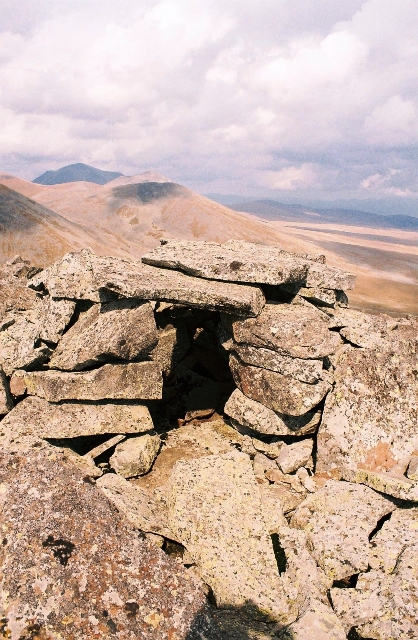
The Shaori fortress (Georgian: შაორის ციხე, romanized: shaoris tsikhe) (Georgian: შაორის ციხე) is a prehistoric megalithic structure in the Akhalkalaki Municipality of Samtskhe–Javakheti, Georgia, situated on the rocky summit of Mount Shaori at an elevation of 2,752 metres (9,029 ft) above sea level in the Lesser Caucasus mountains, northwest of Paravani Lake. Constructed using large basalt blocks without mortar in the cyclopean dry-stone tradition, the fortress features an unusual rhomboid plan with circular interior spaces. It is divided into two parts located on separate peaks, with the central fortified area accessed via a narrow gate on the eastern slope. The structure, now in ruins, shares topographical and architectural similarities with nearby Bronze Age hillforts, including the Abuli fortress.
The date of Shaori's construction remains uncertain due to the absence of archaeological excavations. However, similarities with the Trialeti burial mounds suggest a construction period in the first half of the 2nd millennium BC. Like other cyclopean hillforts in the South Caucasus, Shaori reflects Middle-to-Late Bronze Age processes of social stratification and elite control over arable land and strategic resources. While its steep location and internal layout make domestic use unlikely, some scholars have proposed a ritual or religious function for the site.
Shaori fortress is listed among the Immovable Cultural Monuments of National Significance of Georgia. It was first mentioned in historical sources by the 18th-century Georgian geographer Prince Vakhushti and was systematically studied in the 20th century by Leon Melikset-Bek.
Text adapted from “Shaori fortress” on Wikipedia, CC BY-SA 4.0.
Shaori fortress ranks #2,514 of 9,079 worldwide in the atlas's castle fame ranking, and #14 of the 48 mapped in Georgia. Founded c. 1750 BC, it is older than 99% of the atlas's dated landmarks — one of 6 atlas entries founded in the 18th century BC. Its Wikipedia articles were opened 1,143 times in the last 60 days, more than 54% of the atlas. 2 more atlas landmarks stand within 25 km. The nearest day-trip guide is Gyumri, 78 km away. See how Georgia compares in the castle statistics.
View on the interactive castle map →