 Belarus · 19th century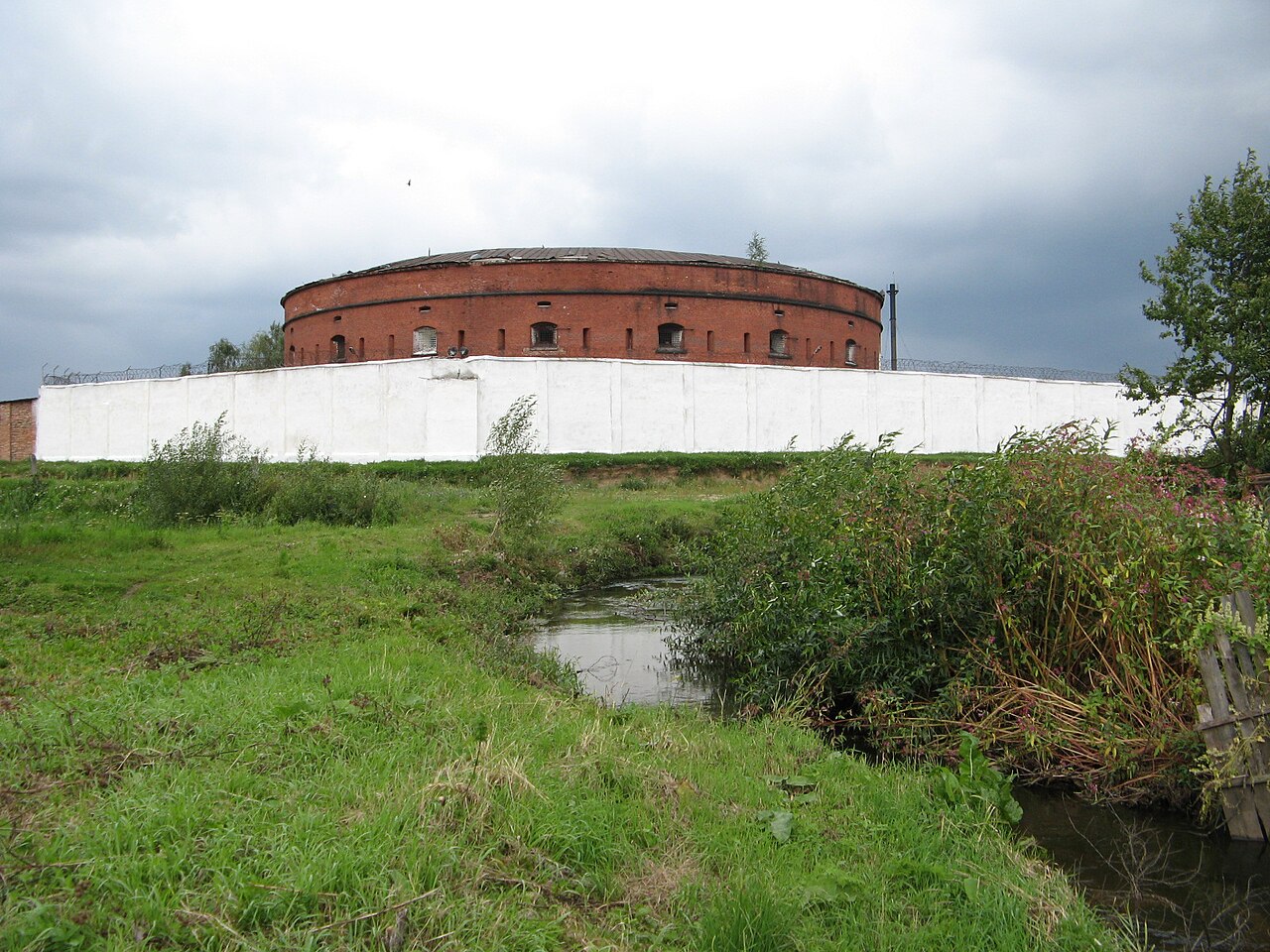
Babruysk Fortress (Belarusian: Бабруйская крэпасць; Russian: Бобруйская крепость) is a historic fortress in the city of Babruysk, Belarus, that was built between 1810 and 1836. It is one of the best surviving examples of fortification architecture and design in the first half of the 19th century. The fortress was constructed in the historic center of the city, at the confluence of the Babruyka and Berezina rivers. It was one of the western Russian fortresses.
In 1810, Tsar Alexander I sent out his military engineer Teodor Narbutt to find a site suitable for building a fortress somewhere on the Dnieper, between Mogilev and Rogachev in order to prepare for the looming threat in Western Europe. However, after his investigation, Narbut advised his superiors that a more strategic position would be on the shore of the Berezina river near Babruysk. This decision was approved by the Chief of Military Engineers, Count Carl Operman, who at the time had authority over all of Russian forts. On June 4, 1810, the Tsar issued an order for the Babruysk fortress to be constructed. Narbut had to resign for health reasons and was replaced by General Major Gabriel Ignatiev.
The early fortress comprised five bastions, multiple soil ridges, and water channels. The basis for the Babruysk fortress was the Babruysk Jesuit house and a smaller Polish fortress, which were built earlier.
Only partially completed, the fortress had to face Napoleon's invading army in the summer of 1812. After the French army captured Minsk, General Ignatiev took command of the fort and the city of Babruysk, which served as a holdout for the retreating Russian forces. Soldiers from The Second Russian Army were provided with food and the wounded received medical treatment. After that they were ferried by the Berezina and Dniper to Smolensk, where the main Russian army was stationed.
Text adapted from “Babruysk fortress” on Wikipedia, CC BY-SA 4.0.
Babruysk Fortress ranks #2,252 of 9,079 worldwide in the atlas's castle fame ranking, and #15 of the 45 mapped in Belarus. Founded 1810, it is older than 11% of the atlas's dated landmarks — one of 717 atlas entries founded in the 19th century. Its Wikipedia articles were opened 2,983 times in the last 60 days, more than 78% of the atlas. 1 more atlas landmarks stand within 25 km. See how Belarus compares in the castle statistics.
View on the interactive castle map →