 Algeria · 10th century
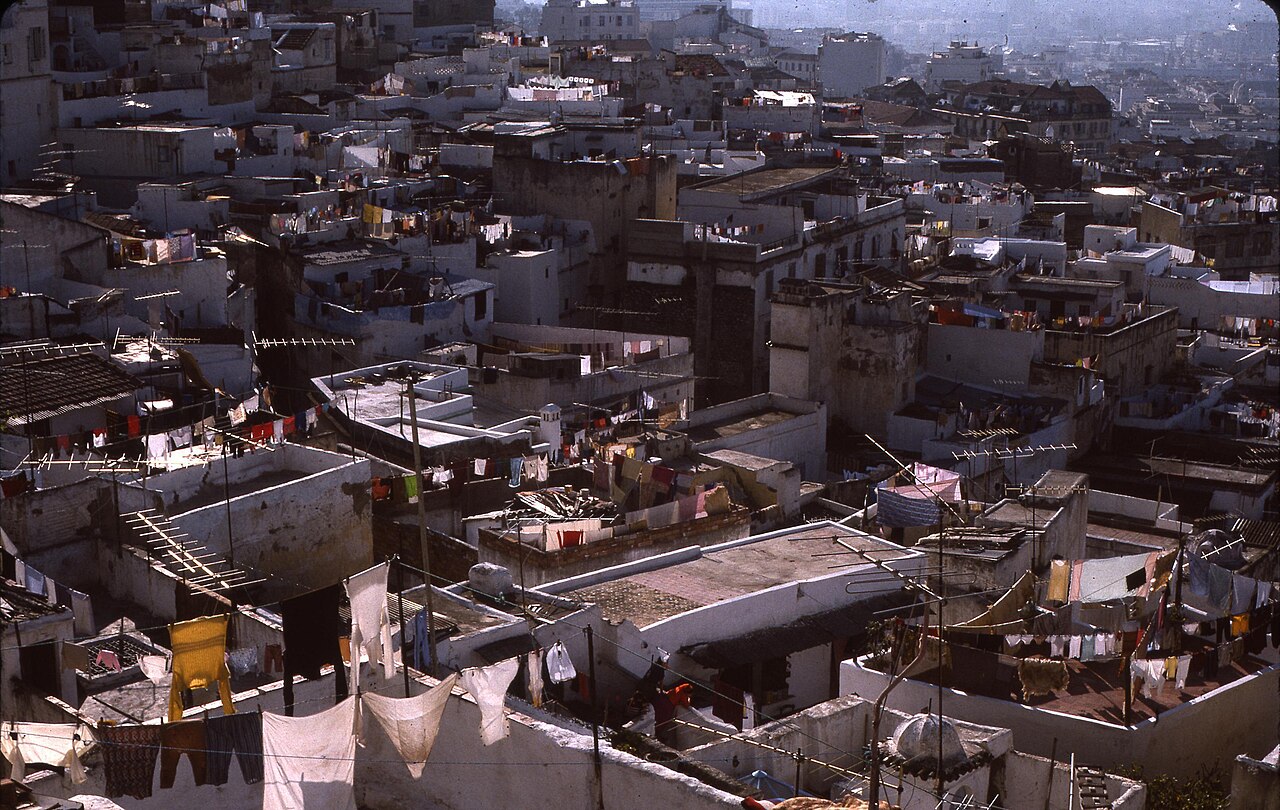
Casbah of Algiers ranks #155 of 9,040 worldwide in the atlas's castle fame ranking, and #1 of the 24 mapped in Algeria. Founded 944, it is older than 94% of the atlas's dated landmarks, one of 192 atlas entries founded in the 10th century. Its Wikipedia articles were opened 17,546 times in the last 60 days, more than 97% of the atlas. 7 more atlas landmarks stand within 25 km. See how Algeria compares in the castle statistics.
The Casbah of Algiers, commonly referred to as the Casbah (Arabic: القصبة, Al-qaṣabah, meaning "citadel"), corresponds to the old town or medina of Algiers, founded in 944 by the Zirids. It is a historic district that has been listed as a UNESCO World Heritage Site since 1992. Administratively, it is located within the municipality of Casbah, in the province of Algiers.
Likely inhabited since the Neolithic period, as were various sites in the Algiers Sahel, the first mentions of the city date back to Antiquity, when it was initially a Phoenician port, later becoming Berber and eventually Roman. The current urban framework was designed in the 10th century by the Berbers under the Zirid dynasty, later enriched by contributions from other Berber dynasties that successively ruled the central Maghreb. The Casbah reached its peak during the period of the Regency of Algiers, serving as the seat of political power. Colonized by the French in 1830, it was gradually marginalized as power centers shifted to the new city. During the Algerian War, the Casbah played a crucial role, as a stronghold for FLN independence fighters. After Algeria gained independence in 1962, the Casbah did not reclaim its former central role and remained a marginalized city area.
An example of Islamic architecture and urban planning characteristic of Arab-Berber medinas, the Casbah is also a symbol of Algerian culture, a source of artistic inspiration, and home to an ancestral artisanal heritage. Local actors continue to fight to preserve and sustain its tangible and intangible heritage.
Text adapted from “Casbah of Algiers” on Wikipedia, CC BY-SA 4.0.
View on the interactive castle map →