 Spain · 10th century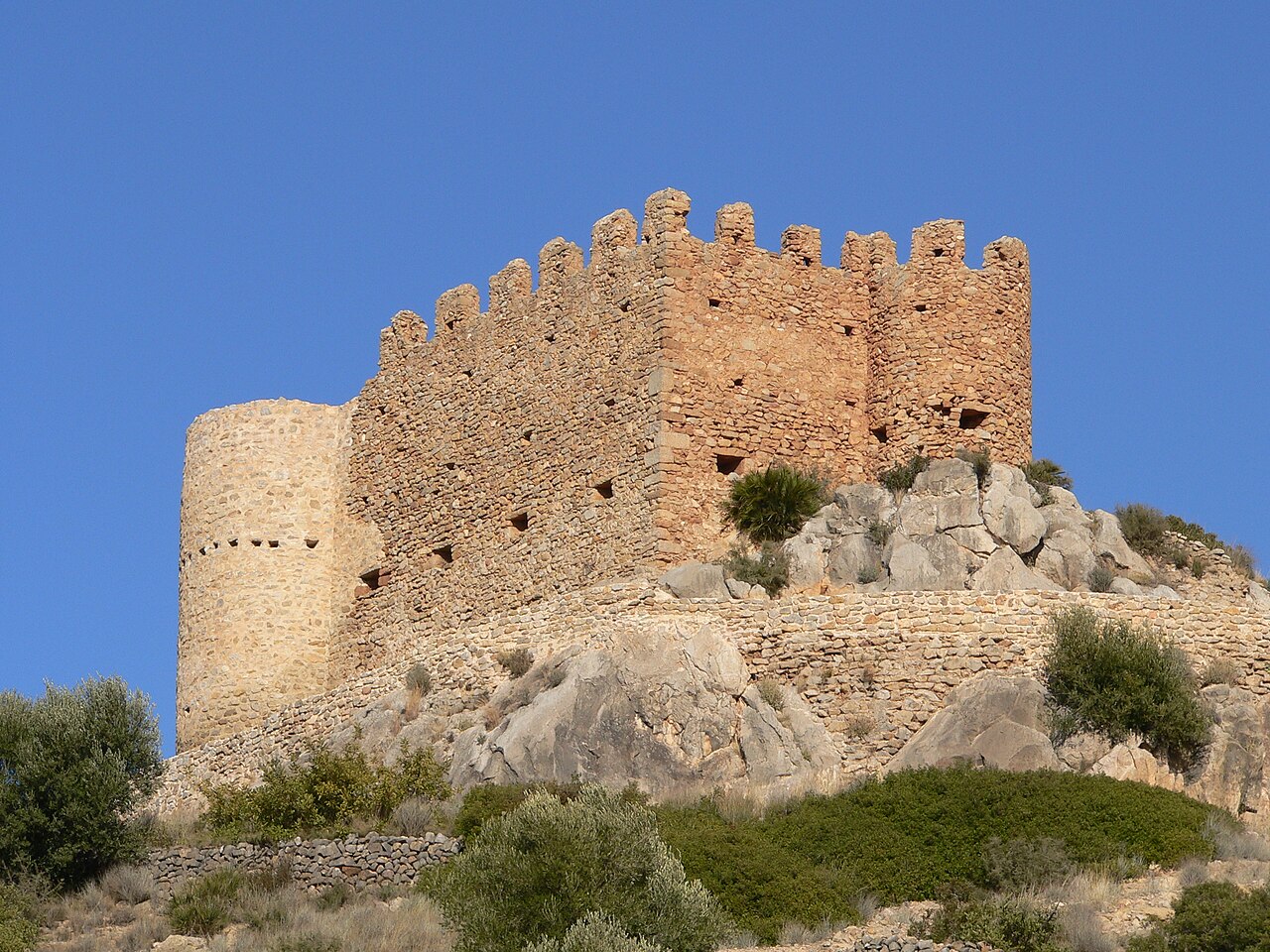
The castle of Alcalatén, situated on the hill of San Salvador in the municipality of Alcora (Province of Castellón, Spain), is a fortress of Islamic architecture with medieval architectural alterations, built between the 10th and 13th centuries.
James I granted the castle and the title of baron to the Aragonese knight Ximén d'Urrea in 1233, after the conquest of the stronghold of Borriana.
Of scattered triangular plan, it has a surface area of 150 square metres, a main enclosure surrounded by a wall-walk, with a cistern and an abandoned settlement and a village.
In the highest part two walls forming a right angle and topped with battlements are preserved, continued by two towers, one circular to the north and the other semicircular towards the south. A third tower is known, of which only rubble remains from the demolition carried out in the 15th century. The eastern area is completely razed. At the foot of the alcazaba a rectangular cistern survives, built of mortar and stone, forming an enclosure of approximately 4 x 10 metres. The masonry of the complex is rubblework.
Its entrance is on the south side, with two circular towers and bastions and a battlemented "barbican"-type wall.
Machine-translated from “Castillo de Alcalatén” on the Spanish Wikipedia, CC BY-SA 4.0.
Castell de l'Alcalatén ranks #8,496 of 9,079 worldwide in the atlas's castle fame ranking, and #529 of the 607 mapped in Spain. Founded c. 1000, it is older than 91% of the atlas's dated landmarks — one of 193 atlas entries founded in the 10th century. 14 more atlas landmarks stand within 25 km. The nearest day-trip guide is Castellón de la Plana, 18 km away. See how Spain compares in the castle statistics.
View on the interactive castle map →