 Spain · 12th century
Castle of Bou Negre ranks #8,099 of 9,040 worldwide in the atlas's castle fame ranking, and #462 of the 606 mapped in Spain. Founded 1178, it is older than 78% of the atlas's dated landmarks, one of 763 atlas entries founded in the 12th century. 14 more atlas landmarks stand within 25 km. The nearest day-trip guide is Castellón de la Plana, 29 km away. See how Spain compares in the castle statistics.
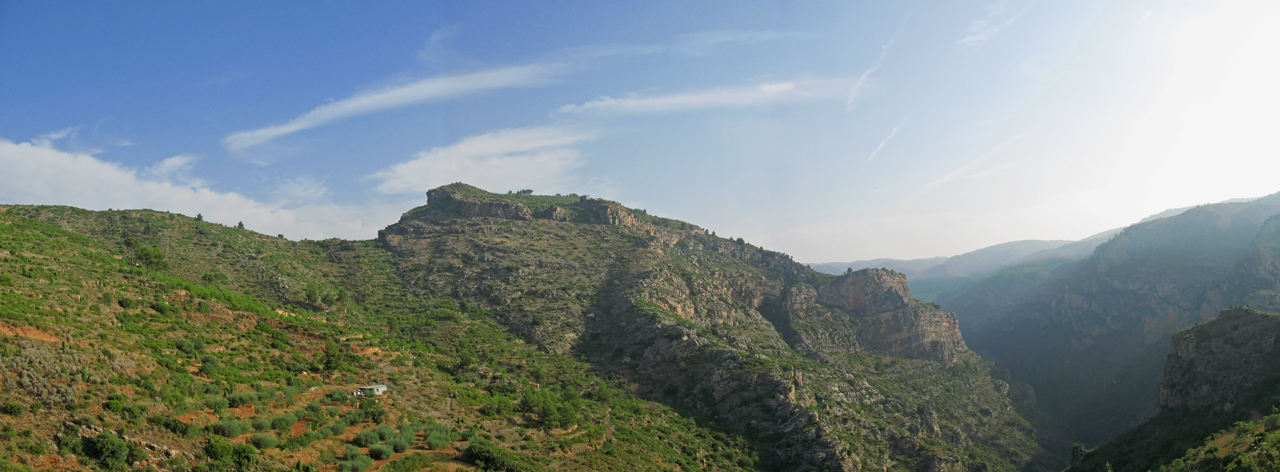
The Castle of Bou Negre, also called the castle of la Mola, is set on a high mountain on the boundary between the municipalities of Argelita and Ludiente (province of Castellón, Spain), on the rocky parapet that falls away above the narrows formed by the river Villahermosa before it reaches the town, at an altitude of 748 m.
The castle has been known practically since the 12th century. Its origin is considered Muslim. The military complex corresponds to medieval work documented in 1178, and forms part of the group of castles that marked out the diocese of Tortosa at the time of the royal grant by Alfonso II of Aragon on the consecration of the new cathedral of Tortosa.
Within this fortified enclosure stands the tower, of slightly rectangular plan, built of robust ashlar stone and considered by some authors to be Roman, since pottery of that period was found in its surroundings.
The enclosure defined by the defensive structures is one of the largest in the province and in the Valencian Community, since the steep edges of the plateau were used along with other specific stretches where curtain walls were raised to enclose the whole summit.
The existence of cisterns and wells inside the enclosure undoubtedly increased its strategic value as a place in which to withstand a siege.
Although the upper part of the structures is much destroyed, it can be seen that most of them had battlements at their crown and that the towers had small windows or splayed arrow slits, of which only the bases survive.
Machine-translated from “Castillo del Buey Negro” on the Spanish Wikipedia, CC BY-SA 4.0.
View on the interactive castle map →