 Germany · 17th century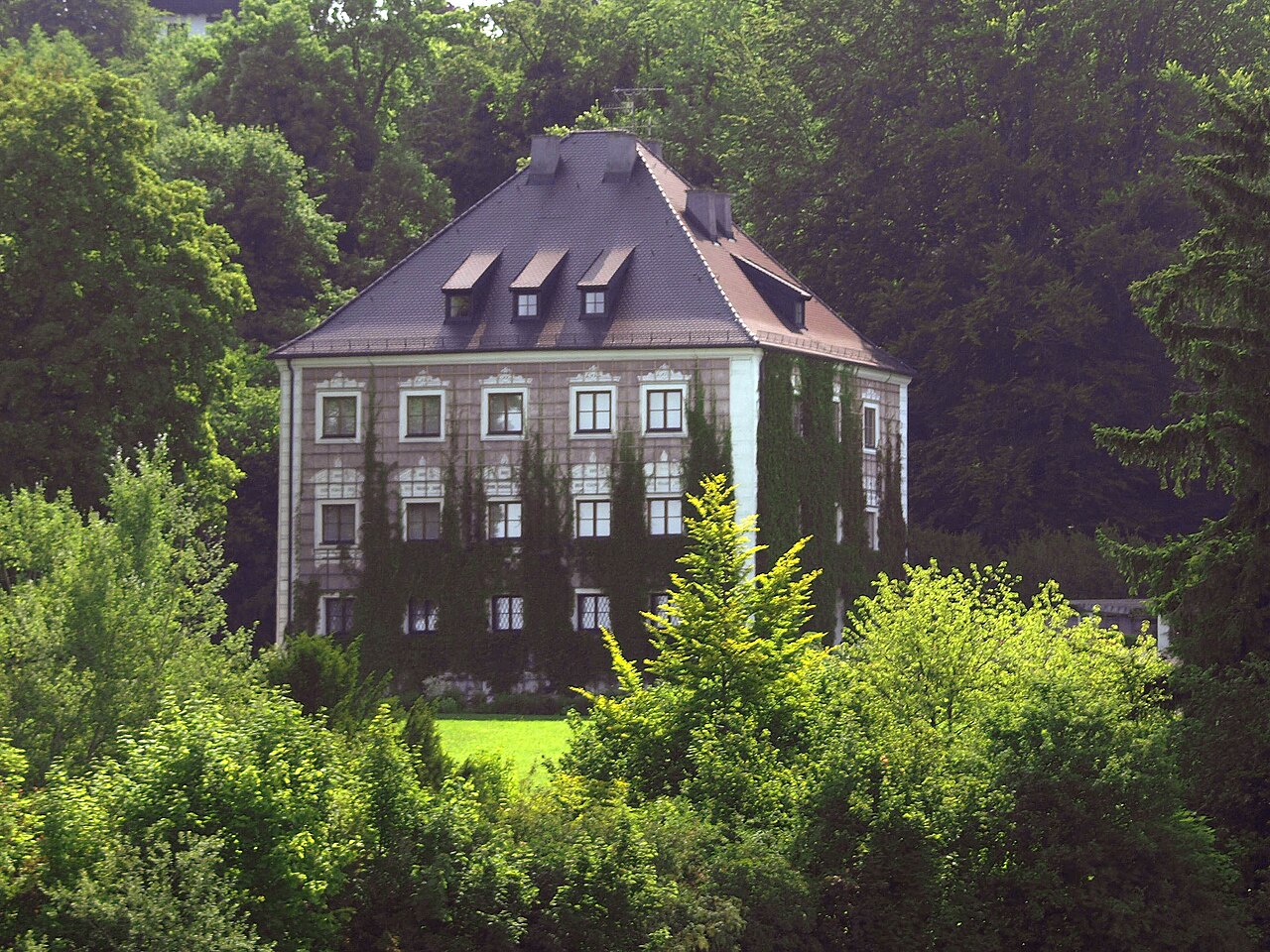
Berg Palace (German: Schloss Berg) is a manor house situated on the east bank of Lake Starnberg in the village of Berg in Upper Bavaria, Germany. The site became widely known as the last residence of King Ludwig II of Bavaria and location of his disputed death. Today, it serves as residence of Franz, Duke of Bavaria, head of the house of Wittelsbach.
The building was built in 1640 in the style of an Italian Renaissance villa by Hans Georg von Hörwarth on the site of an older manor house. Hörwarth came from an Augsburg patrician family that had previously owned several properties in the area. The manor house is located on the shore of Lake Starnberg, opposite Possenhofen Castle.
In 1676 Ferdinand Maria, Elector of Bavaria, acquired the estate from the Hörwarth family. He used it as a hunting lodge, for excursions from his summer castle in Starnberg, and for festivities. It reached its zenith under his successors, elector Max Emanuel, who sailed on the lake with a fleet of magnificent ships, and Emperor Charles VII, when it served as the ambiance for spectacular entertainment and hunting events.
Between 1849 and 1851 King Maximilian II instructed the architect Eduard Riedel to redesign the site in Neo-Gothic style, with added crenellations and four towers, for which the king bought additional land. Maximilian's son Ludwig II of Bavaria had a fifth tower constructed, which he called Isolde. In 1853 Maximilian had a small private harbour built.
Ludwig II used the site as his summer residence, moving here regularly every year on 11 May. For this purpose he established a telegraph line from Berg to the capital Munich.
In 1868 the Czarina of Russia Maria Alexandrovna visited Berg upon the King's invitation. Ludwig made it her residence for the duration of her visit and had it magnificently decorated for the occasion, as the site was otherwise rather modestly appointed by Ludwig's standards. He held a legendary festival in her honor with lanterns throughout the park and fireworks.
The surrounding park was fashioned and cultivated by his predecessors according to contemporary ideas of garden design, from a formal Baroque garden to an English landscape garden. Ludwig had the "Moorish Kiosk" set up here which Franz von Seitz had designed and built for the Winter Garden on the roof of the Munich Residenz. In 1876 the King had a small chapel built.
Text adapted from “Berg Palace (Bavaria)” on Wikipedia, CC BY-SA 4.0.
Castle Berg ranks #1,061 of 9,079 worldwide in the atlas's castle fame ranking, and #82 of the 711 mapped in Germany. Founded 1640, it is older than 27% of the atlas's dated landmarks — one of 721 atlas entries founded in the 17th century. Its Wikipedia articles were opened 10,818 times in the last 60 days, more than 94% of the atlas. 9 more atlas landmarks stand within 25 km. The nearest day-trip guide is Munich, 25 km away. It is stop 5 of 6 on Ludwig II’s castles, Hohenschwangau to Herrenchiemsee. See how Germany compares in the castle statistics.
View on the interactive castle map →