 Canada · 17th century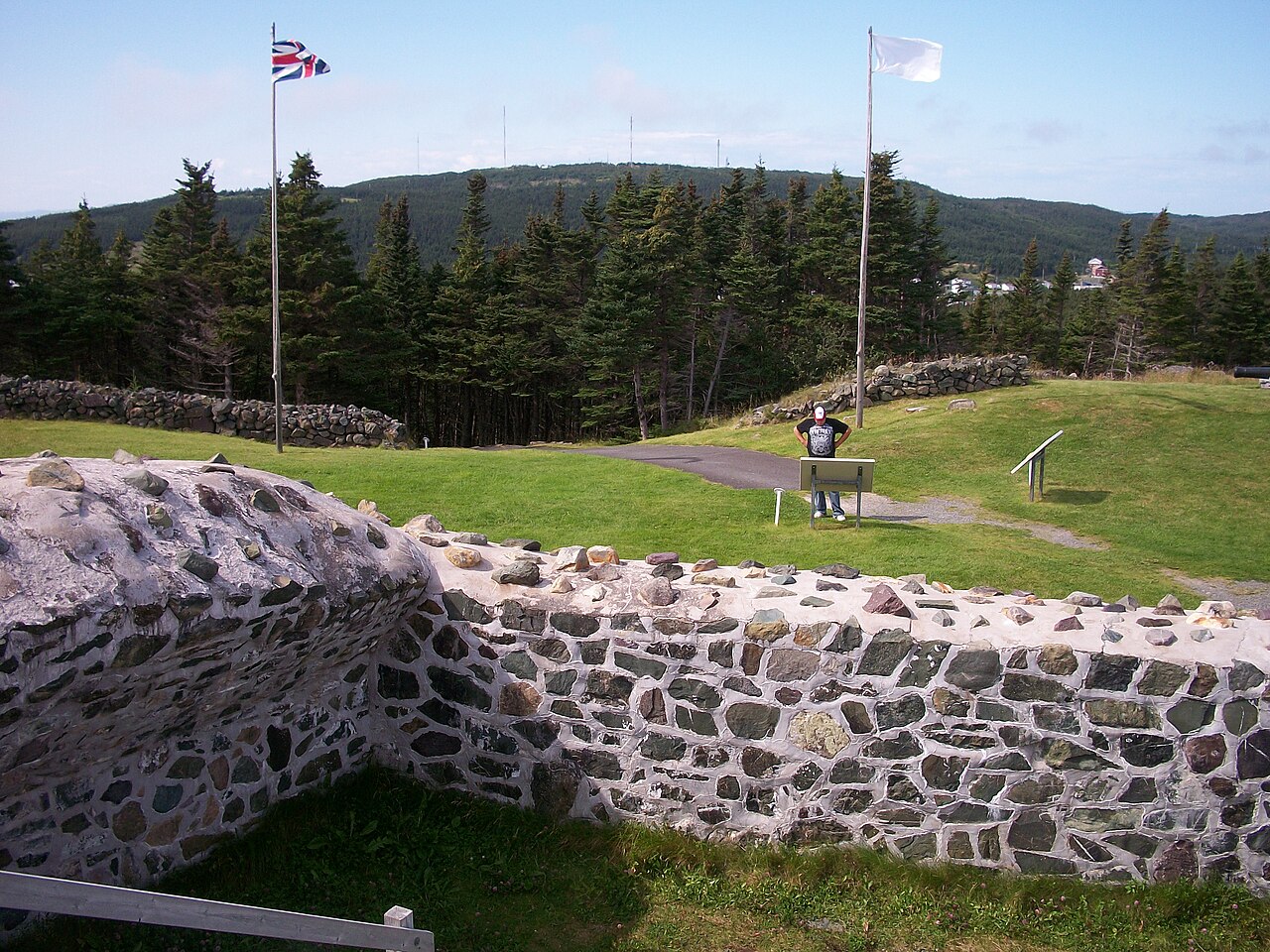
Castle Hill is an area containing the remains of both French and British fortifications, overlooking the town of Placentia (French: Plaisance) in Newfoundland and Labrador, Canada. The site was originally established in order to protect the French fishing interests in Terre-Neuve (Newfoundland) and the approaches to the French colony of Canada.
In order to protect the bay, there was one fort erected, Fort Plaisance (1662) (also known as Vieux Fort) between 1662 and 1690.
During King William's War, on 25 February 1690, 45 British freebooters from Ferryland led by Herman Williamson attacked Plaisance by land. After killing two soldiers and wounding governor Louis de Pastour de Costebelle, they took possession of the town and destroyed the fort. The population was imprisoned in the church for six weeks, until the English left on 5 April with the colony's supplies.
The French replaced former Fort Plaisance with Fort Saint-Louis (1691), with 50 French soldiers. In the fall of 1692, in the Battle of Placentia (1692), under the command of Commodore Thomas Gillam (Williams), five English ships armed with 62 cannon and 800 men. The English damaged several houses with cannon fire, and on 23 September the fleet withdrew. The French made attacks on St. John's in 1692 and 1694.
Fort Royal was built in 1693. French forces successfully raided British settlements during times of war while Fort Royal, atop Castle Hill, protected the colony from attack by British warships. At the end of 1693 the garrison had about 60 soldiers. Governor Jacques-François de Monbeton de Brouillan (1691–97) mobilized a frigate and eight ships to attack English Newfoundland. He took possession of about 30 fishing boats, captured prisoners and seized a large amount of fish. De Monbeton was joined on this expedition by Pierre Le Moyne d'Iberville, who marched overland from Plaisance to spearhead a punishing attack on the English settlements in a famous Avalon Peninsula Campaign. A strong British relief force of 1500 troops reoccupied St. John's in the summer of 1697: they found the town abandoned, pillaged and every building destroyed. The following year construction was begun at St. John's on a well-engineered fortification - Fort William - which was completed in 1700.
During Queen Anne's War, the arrival of Governor Daniel d'Auger de Subercase in 1702 was beneficial.
Text adapted from “Castle Hill, Newfoundland and Labrador” on Wikipedia, CC BY-SA 4.0.
Castle Hill (Placentia) ranks #7,104 of 9,035 worldwide in the atlas's castle fame ranking, and #26 of the 26 mapped in Canada. Founded 1662, it is older than 24% of the atlas's dated landmarks, one of 708 atlas entries founded in the 17th century. See how Canada compares in the castle statistics.
View on the interactive castle map →