 Portugal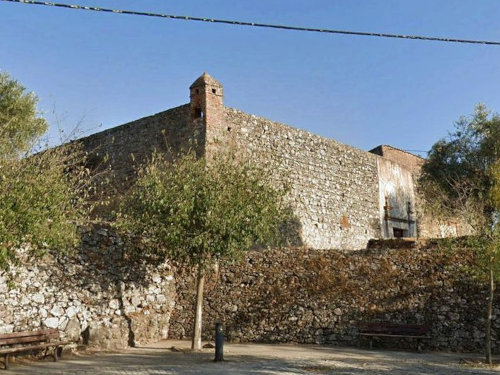
The Castle of Barbacena (Portuguese: Castelo de Barbacena/Fortificações de Barbacena) is a former-medieval castle/fort in the civil parish of Barbacena e Vila Fernando, municipality of Elvas in the Portuguese Alentejo, classified as a Property of Public Interest (Imóvel de Interesse Público).
The settlement of Barbacena was definitively reconquered by King D. Sancho II, in the first half of the 13th century. The settlement of the site, which possibly developed from a pre-Roman castro, developed from its gift to D. Estêvão Anes, chancellor of King D. Afonso III (who was married to the illegitimate daughter of the monarch, and Master of Alvito in 1251. The first foral was signed by its new master in 1273, still in the reign of King Afonso. During the reign of King D. John I, there is reference to two partisan noblemen, João Fernandes Pacheco and Martim Afonso de Melo. The latter was the king's bodyguard (guarda-mor) and alcalde of Évora, to whom was later granted the lordship of Barbacena. João Fernandes Pacheco, who was a supporter of the Master of Avis, lost this and other lordships for betraying the King, and Barbacena was given to Martim Afonso de Melo.
On 15 December 1519, D. Manuel I provided the town with a new foral, ordering the re-construction of the castle, which it can be assumed was in a bad state of repair. A few years later, in 1536, Barbacena was a morgadio of D. Jorge Henriques, huntsman to King D. John III, to whom was attributed the beginning of the construction of the castle, but this terminated on the death of its founder, in 1572. Three years later, the fortification was purchased by Diogo de Castro do Rio, Knight in the Order of Christ and Nobleman in the Royal House, who was the first to use the title Master of Barbacena. At this time, the castle was already erected, following a rectangular layout, on the site of a previous medieval project. It was short-lived: in 1587, the morgadio was once again auctioned off to Martim de Castro, under the condition of removing the two corbels and the keep tower.
In the 17th century, during the context of the Restoration Wars, the fortress underwent public works in order to improve its strategic worth, resulting in the construction of a modern bastion. The principal entranceway, which included a stone portico and frontispiece with sculpted pinnacles, was constructed during this era.
Text adapted from “Castle of Barbacena” on Wikipedia, CC BY-SA 4.0.
Castle of Barbacena ranks #8,188 of 9,079 worldwide in the atlas's castle fame ranking, and #186 of the 212 mapped in Portugal. 11 more atlas landmarks stand within 25 km. The nearest day-trip guide is Évora, 68 km away. It is one of the 48 landmarks on the atlas's regional map of the Alentejo. See how Portugal compares in the castle statistics.
View on the interactive castle map →