 Italy · 12th century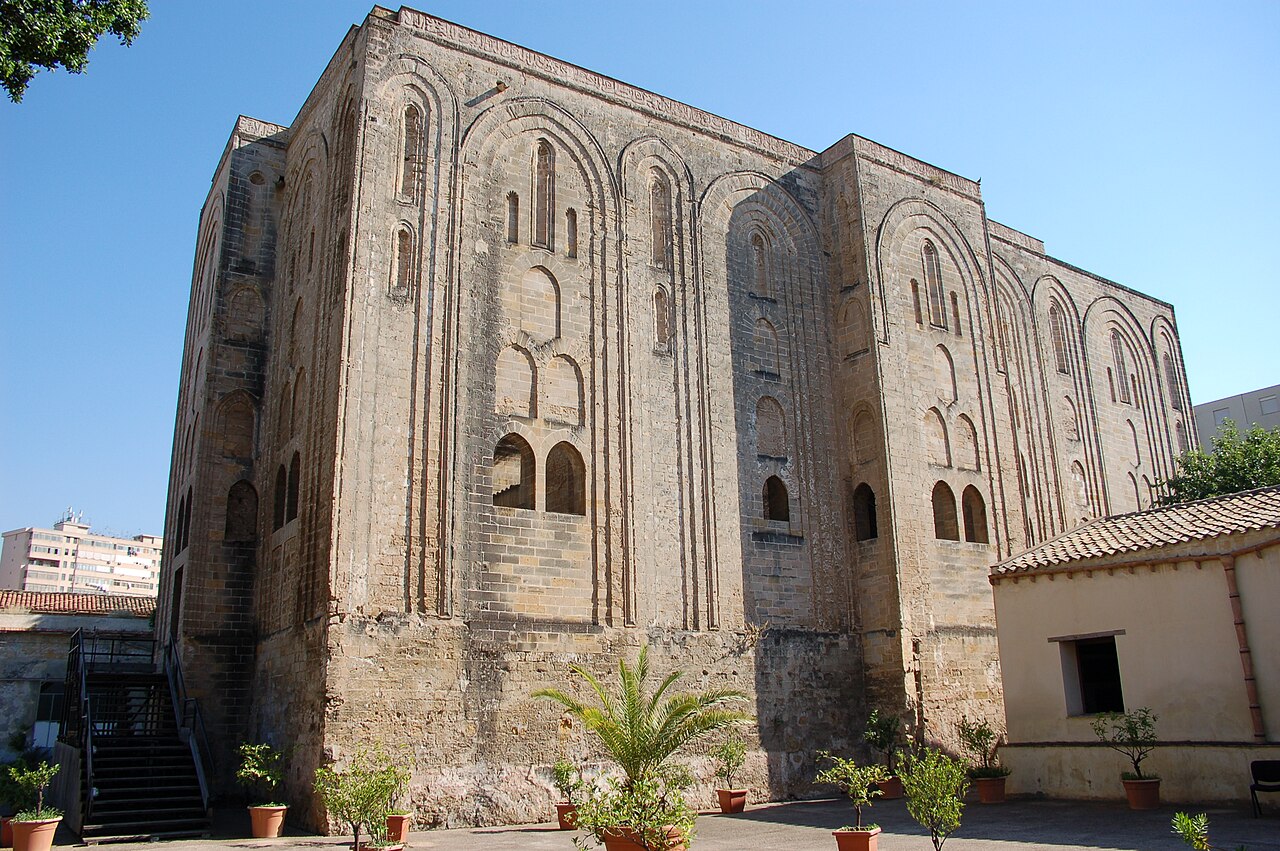
The Cuba (Sicilian: La Cuba) is a recreational palace in the Sicilian city of Palermo, originally part of the Sollazzi Regi group of Norman palaces. It was built in 1180 by William II of Sicily in his Royal Park, together with an artificial lake. The name Cuba derives either from its cubical form, or the Arabic Qubba, "dome". It is an imitation of the Zisa palace.
It is also called "Cuba sottotana" to distinguish it from the Cubula, or Little Cuba, a small pavilion built by William II for the Genoardo park. The Cuba shows strong Fatimid art influences, as it was (at least partially) designed by Arab artists still living in Palermo after the Norman conquest.
Text adapted from “Cuba Palace” on Wikipedia, CC BY-SA 4.0.
Cuba Palace ranks #1,773 of 9,079 worldwide in the atlas's castle fame ranking, and #131 of the 560 mapped in Italy. Founded 1180, it is older than 78% of the atlas's dated landmarks — one of 756 atlas entries founded in the 12th century. Its Wikipedia articles were opened 2,402 times in the last 60 days, more than 73% of the atlas. Wikidata records about 2,806 visitors in 2023. 8 more atlas landmarks stand within 25 km. It is one of the 32 landmarks on the atlas's regional map of Sicily. See how Italy compares in the castle statistics.
View on the interactive castle map →