 Ethiopia · 17th century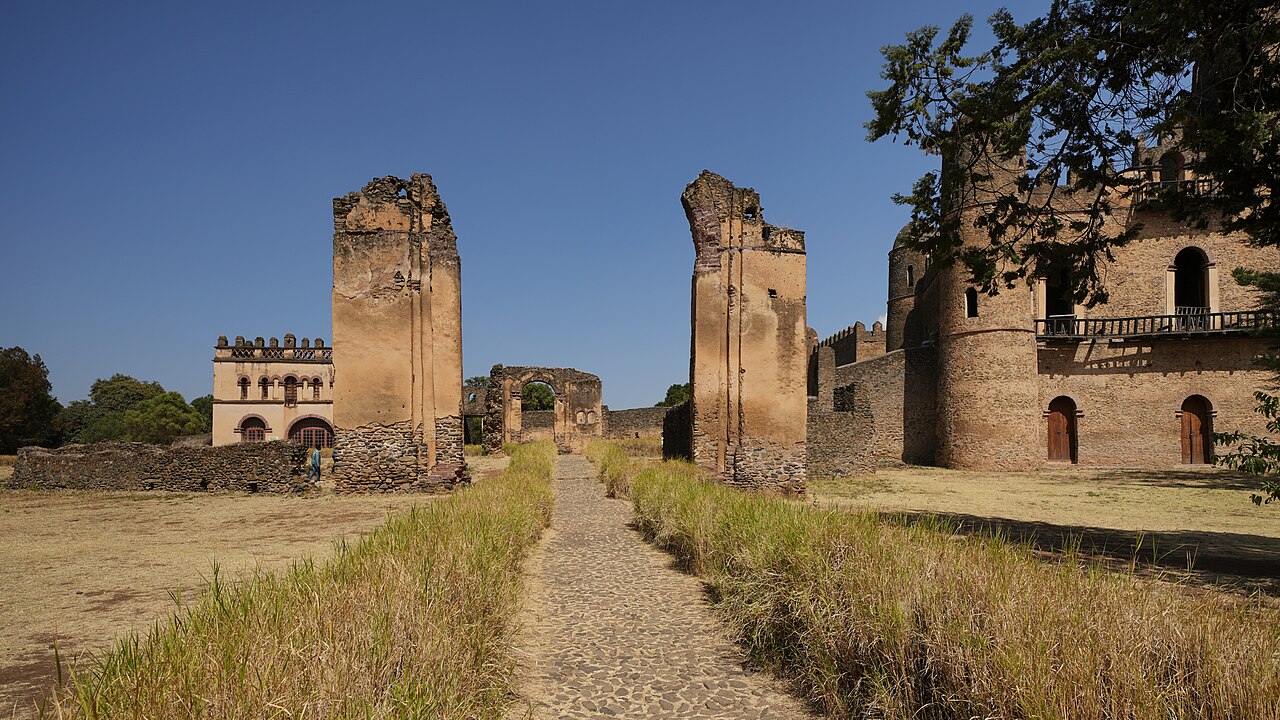
The Fasil Ghebbi (Amharic: ፋሲል ግቢ) is a fortress located in Gondar, Amhara Region, Ethiopia. It was founded in the 17th century by Emperor Fasilides and was the home of Ethiopian emperors. Its unique architecture shows diverse influences including Portuguese, Hindu, and Arab characteristics. Because of its historical importance and architecture, the fortress was inscribed as a UNESCO World Heritage Site in 1979. Ghebbi is an Amharic word for a compound or enclosure.
The complex of buildings includes Fasilides' castle, Iyasu I's palace, Dawit III's Hall, Empress Mentewab's castle, a chancellery and library from Yohannes I, a banqueting hall from the emperor Bakaffa, stables, and three churches: Asasame Qeddus Mikael, Elfign Giyorgis and Gemjabet Mariyam. In 2025, the Fasil Ghebbi underwent preservation efforts.
Text adapted from “Fasil Ghebbi” on Wikipedia, CC BY-SA 4.0.
Fasil Ghebbi ranks #302 of 9,079 worldwide in the atlas's castle fame ranking, and #1 of the 3 mapped in Ethiopia. Founded c. 1650, it is older than 25% of the atlas's dated landmarks — one of 721 atlas entries founded in the 17th century. Its Wikipedia articles were opened 8,675 times in the last 60 days, more than 92% of the atlas. See how Ethiopia compares in the castle statistics.
View on the interactive castle map →