 Belgium · 19th century
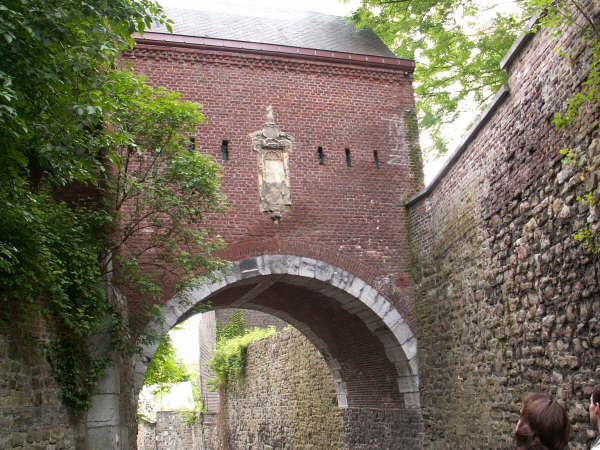
Fort de la Chartreuse ranks #3,164 of 9,040 worldwide in the atlas's castle fame ranking, and #33 of the 128 mapped in Belgium. Founded 1817, it is older than 11% of the atlas's dated landmarks, one of 705 atlas entries founded in the 19th century. Its Wikipedia articles were opened 1,585 times in the last 60 days, more than 63% of the atlas. 30 more atlas landmarks stand within 25 km. The nearest day-trip guide is Liège, 2 km away. See how Belgium compares in the castle statistics.
The Fort de la Chartreuse, which dominates the Amercœur neighborhood of Liège in Belgium, was built between 1817 and 1823 to defend the city.
The fort is built on a strategic height that dominates the valley of the Meuse, which had been occupied by a Carthusian (Ordre des Chartreux) monastery until the French Revolution. The fort was built by the Dutch, who at the time administered southern Belgium. After the Belgian Revolution, the Kingdom of Belgium used Fort de la Chartreuse as a barracks for the Fortified Position of Liège, having built twelve new forts around the city in the late 19th century as part of the country's overall National Redoubt.
In 1891 a royal decree downgraded the fort and the nearby Citadel of Liège, following the construction of twelve modern forts surrounding Liége. The fort was thereafter used as a barracks. From 1914 to 1918 the Germans used it as a prison, and again from 1940 to 1944. In 1944-1945 it was used by the Americans as a military hospital. The Belgian army left the site in 1988.
The greater part of the fort occupies a green space that is being reforested. The ramparts and glacis are covered with vegetation.
Text adapted from “Fort de la Chartreuse” on Wikipedia, CC BY-SA 4.0.
View on the interactive castle map →