 Ghana · 18th century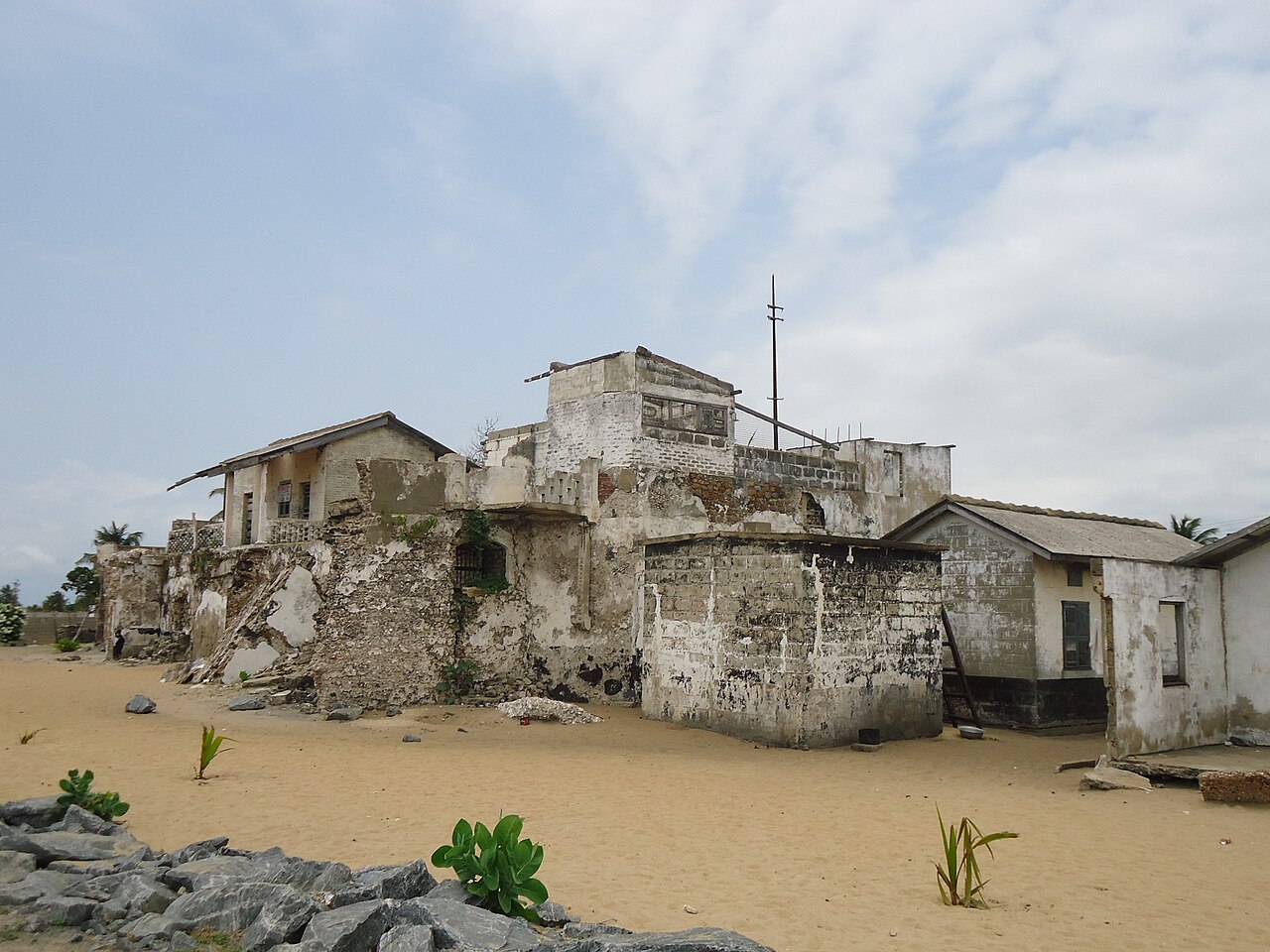
Fort Prinzenstein (Danish: Fort Prinsensten) is a fort located at Keta, Ghana, which was used in the slave trade. Many such forts were built in Africa, but Prinzenstein is one of the few that lie east of the Volta River. Keta served as an open port until the Tema Harbour commenced its operation to the west in 1962. The fort has been designated a World Heritage Site (along with several other castles and forts in Ghana) because of its historical importance and testimony to the Atlantic slave trade.
It was built by Danish traders in 1784 for defensive purposes after the Sagbadre War against the Anlo Ewe and to keep the area safe from other colonial powers. The majority of the materials, especially the stone used for the building of the fort, came from Accra. The fort is among the four major structures that were built by the Danish. The fort significantly played an important part in the slave trade, which involved Europeans in West Africa. Aside from the slave trade, the fort served an active purpose in the trade of imported and exported goods such as gold and ivory in a give-and-take for muskets, brandy, iron rods, textiles, cowries shells etc.
Text adapted from “Fort Prinzenstein” on Wikipedia, CC BY-SA 4.0.
Fort Prinzenstein ranks #2,319 of 9,079 worldwide in the atlas's castle fame ranking, and #5 of the 35 mapped in Ghana. Founded 1734, it is older than 19% of the atlas's dated landmarks — one of 696 atlas entries founded in the 18th century. Its Wikipedia articles were opened 1,188 times in the last 60 days, more than 55% of the atlas. See how Ghana compares in the castle statistics.
View on the interactive castle map →