Fortress
Fort Winiary
🇵🇱 Poland · 19th century
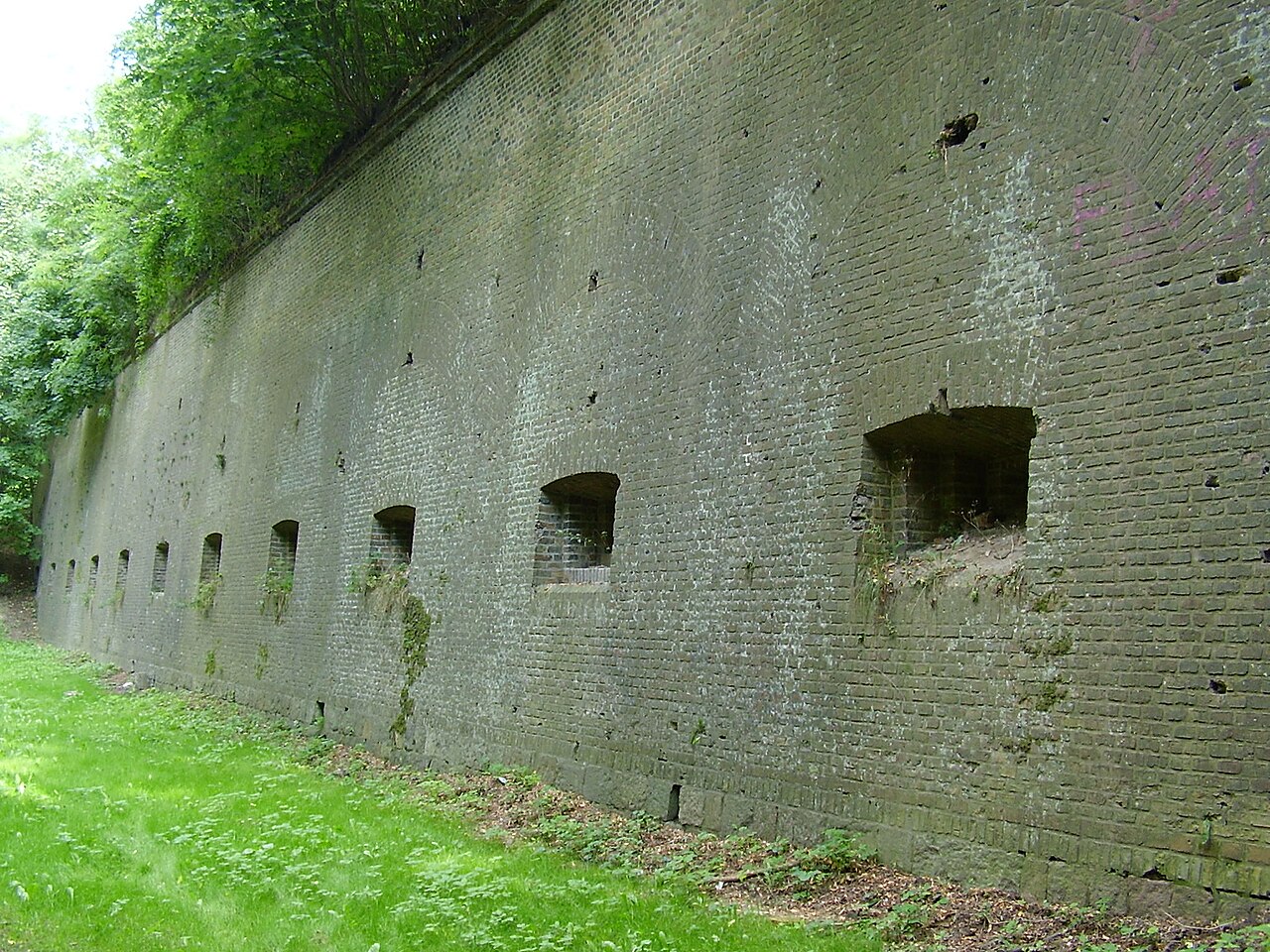
Fort Winiary was part of Festung Posen ("Fortress Poznań"), a system of defensive fortifications around the Polish city of Poznań.
Fort Winiary was first constructed under Prussian rule in the 19th century. It was the main fort in that system, and was among the first elements to be constructed. Detailed plans were approved on 21 February 1829, and the name "Fort Winiary" soon came to be applied, as the fort was situated on a hill where there were two villages called Winiary (the name alluding to the vine cultivation which had once taken place there). The fort would later become popularly known as Poznań's citadel (cytadela).
On 10 October 1829 an order was made restricting civilian building in a strip in front of the planned fort. In May and June 1830, the villages of Winiary and the nearby Bonin farm were evacuated, the inhabitants being moved to an area to the north-west (Neu Winiary). This is the neighbourhood known as Winiary today, part of the city's Jeżyce district (there is also an estate there named Bonin).
The fort had a main reduit (Kernwerk) on the southern (city) side, flanked by four redoubts (Redoute I and Redoute II to the west; Redoute IV and Redoute III to the east). At the eastern and western extremes were Ravelin I and Ravelin IV. The northern side of the fort consisted of (from west to east) Bastion I, Ravelin II, Bastion II, Ravelin III and Bastion III. The first and third redoubt were the first to be completed, in 1830, and the main réduit was finished in 1832. In 1834 three infantry battalions were garrisoned there. The third and fourth ravelins were finished in 1838 and 1839, completing the fort.
On 15 October 1856 the bastions were renamed Bastion Johann, Bastion Leopold and Bastion Ludwig, these being the forenames of the chief architect of Festung Posen and of the fort itself, Johann Leopold Ludwig Brese (later von Brese–Winiary).
Between 1865 and 1873 work was done to reinforce the fort's powder stores (Kriegs-Pulver-Magazin No. 1 and No. 2). In the early 1890s an artillery laboratory (Spezial-Kriegs-Laboratorium) was built within the fort.
In 1903 a telegraph station was added. The fort was further reinforced in 1910.
Unlike the bulk of the city's inner fortifications, Fort Winiary was not demolished during the early twentieth century.
Text adapted from “Fort Winiary” on Wikipedia, CC BY-SA 4.0.
Fort Winiary ranks #3,709 of 8,134 worldwide in the atlas's castle fame ranking, and #130 of the 374 mapped in Poland. Founded 1839, it is older than 10% of the atlas's dated landmarks — one of 607 atlas entries founded in the 19th century. Its Wikipedia articles were opened 2,273 times in the last 60 days, more than 70% of the atlas. 4 more atlas landmarks stand within 25 km. The nearest day-trip guide is Poznań, 1 km away. See how Poland compares in the castle statistics.
View on the interactive castle map →Frequently asked questions
Where is Fort Winiary?
Fort Winiary stands in Poland, at 52.42147°, 16.93528°.
When was Fort Winiary built?
The atlas dates its founding to 1839. Earlier structures may have stood on the site; this is the earliest documented founding year.
How famous is Fort Winiary?
In this atlas's fame ranking: #3,709 of 8,134 worldwide, and #130 in Poland. Fame here combines how many Wikipedia language editions cover a landmark with how many people read them.
What is the nearest castle to Fort Winiary?
Poznań Fortress, about 1 km away.
More castles in Poland
- Iłża Castle Poland · 14th century
- Szczerba Castle Poland
- Świecie Castle (Silesia) Poland
- Słupsk Castle Poland · 16th century
More fortresses
- Letychiv Fortress Ukraine · 16th century
- Fort of Buenos Aires Argentina · 16th century
- Izmail Fortress Ukraine · 16th century
- Fortress of Santa Cruz Brazil