 Germany · 18th century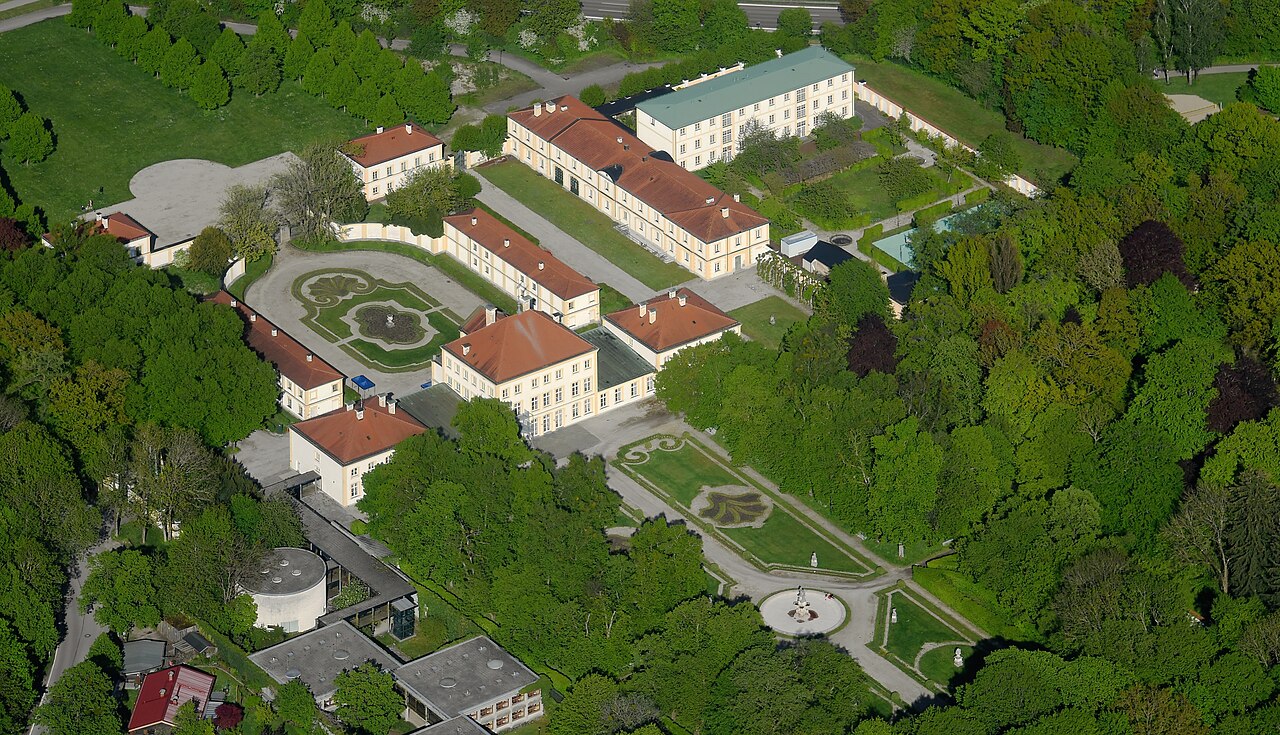
Fürstenried Palace is a Baroque maison de plaisance and hunting lodge in Munich, Germany. It was built from 1715 to 1717 for Elector Maximilian II Emanuel. Today the palace serves as spiritual house for archdiocese and as pastoral center.
It was built by Joseph Effner for Elector Maximilian II Emanuel in 1715–17 as a hunting lodge and maison de plaisance. It was the extension and modification of an already existing noble mansion.
In 1726 a fire damaged the Fürstenried Palace. The following year, at the birth of the future Maximilian III Joseph, Fürstenried went as puerperal gift to the Princess Maria Amalia of Austria, the wife of the son of Maximilian Emanuel, Elector Charles Albert. From 1777 to 1797 Fürstenried Palace was the residence of the former Electress Maria Anna of Saxony, the widow of Maximilian III Joseph. In September 1796, Munich was surrounded by the French Republican Army that fought against the Austro-Imperial forces. Here, the Fuerstenried castle was plundered. In 1798 the palace temporarily became an asylum for French Tappistines, With the introduction of compulsory schooling in Bavaria, King Maximilian Joseph I. allowed to use an adjoining building of the castle as the first schoolhouse for the surrounding villages of Forstenried and Großhadern between 1805 and 1824.
During the German war in 1866 and the Franco-German war 1870/71 the castle was used as a military hospital. The palace served as domicile for the ill King Otto of Bavaria from 1883 until his death in 1916. The King lived in an elegantly furnished apartment on the ground floor, while his servants lived on the first floor. After the First World War, the castle served as a military hospital again. Since 1925 the Catholic Retreat Hostel for spiritual exercises has been housed in Fürstenried Palace. Only the surrounding wall friezes of the Blue Cabinet on the second floor of the main building have been preserved from the interiors.
During the Second World War the palace again served as military hospital. War From 1946 to 1949 the castle was used as accommodation of the Theological Faculty of LMU Munich and the Georgianum. Pope Benedict XVI, who was student of the faculty, has said that, prior to his ordination as a deacon in the fall of 1950, he pondered his vocation to the priesthood "as I walked in the beautiful park of Fürstenried ... .
Text adapted from “Fürstenried Palace” on Wikipedia, CC BY-SA 4.0.
Fürstenried Palace ranks #1,958 of 9,079 worldwide in the atlas's castle fame ranking, and #152 of the 711 mapped in Germany. Founded 1717, it is older than 20% of the atlas's dated landmarks — one of 696 atlas entries founded in the 18th century. Its Wikipedia articles were opened 2,603 times in the last 60 days, more than 75% of the atlas. 15 more atlas landmarks stand within 25 km. The nearest day-trip guide is Munich, 8 km away. See how Germany compares in the castle statistics.
View on the interactive castle map →