 Japan · 13th century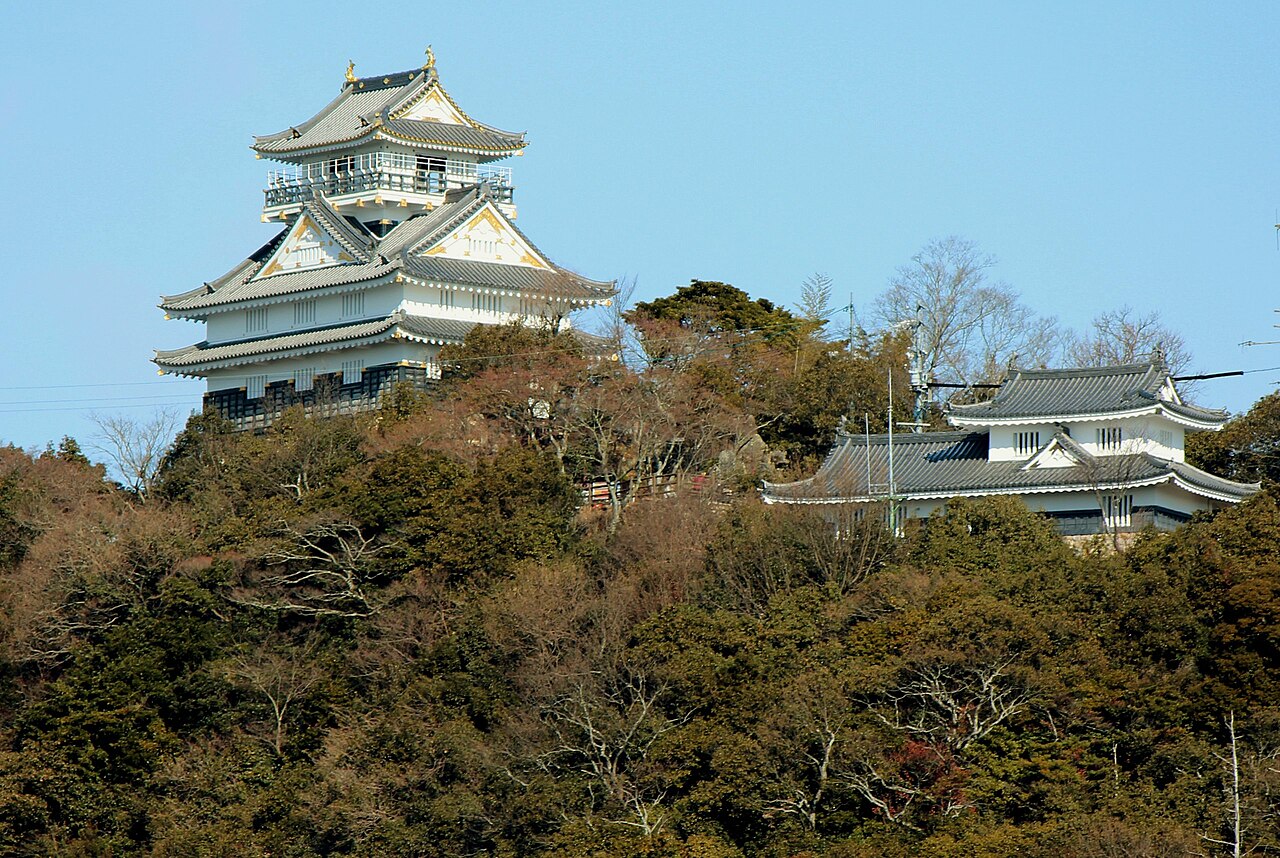
Gifu Castle (岐阜城, Gifu-jō) is a Japanese castle located in the city of Gifu, Gifu Prefecture, Japan. Along with Mount Kinka and the Nagara River, it is one of the main symbols of the city. The castle is also known as Inabayama Castle (稲葉山城, Inabayama-jō). It was designated a National Historic Site in 2011.
Gifu Castle is located on Mount Kinkazan to the northeast of central Gifu, facing the Nagara River. Prior to a severe flood in 1586, the Kiso River ran through north of its current riverbed and was much closer to the castle, so Gifu Castle was protected by two large rivers. It also commanded the main route into Mino Province from then Tōkaidō highway which connected Kyoto with the eastern provinces of Japan.
The first Gifu Castle was first built by the Nikaidō clan between 1201 and 1204 during the Kamakura period. Originally little more than a small fort, it was reconstructed on a much larger scale in the Muromachi period by Saitō Toshinaga (d.1460). Toshinaga had served the title of shugo of Mino Province, but due to internal conflicts, the Saitō clan had been supplanted in turn by the Toki clan. The clan's fortunes were restored in the form of an adventurer from Kyoto who assumed the name of Saitō Dōsan. Also known as the "Viper of Mino", Saitō Dōsan ruthlessly overcame his enemies, expelled the Toki clan, and defeated an invasion from neighboring Owari Province led by Oda Nobuhide. Saitō Dōsan was killed in a revolt by his own son, Saitō Yoshitatsu. Although Yoshiyasu showed promise as a ruler, he died at the age of 34, leaving Inabayama Castle to his son Saitō Tatsuoki.
During the Sengoku period a samurai in the service of the Saitō clan by the name of Takenaka Hanbei went to Inabayama Castle, ostensibly to visit his sick brother. This was a ruse, and in reality, he went to the castle intending to assassinate Saitō Tatsuoki. When Hanbei struck at him, Tatsuoki was very confused—believing an enemy army had come to attack him—and fled. Thus, Takenaka Hanbei obtained Inabayama Castle with relative ease and with only 13 retainers. Later, he returned the castle to his lord, but Tatsuoki had lost an immeasurable amount of reputation and honor due to his perceived cowardly flight from the castle and many of his retainers left his service.
Text adapted from “Gifu Castle” on Wikipedia, CC BY-SA 4.0.
Gifu Castle ranks #286 of 9,079 worldwide in the atlas's castle fame ranking, and #18 of the 296 mapped in Japan. Founded 1201, it is older than 75% of the atlas's dated landmarks — one of 1080 atlas entries founded in the 13th century. Its Wikipedia articles were opened 19,538 times in the last 60 days, more than 97% of the atlas. 6 more atlas landmarks stand within 25 km. The nearest day-trip guide is Gifu, 2 km away. See how Japan compares in the castle statistics.
View on the interactive castle map →