 Northern Cyprus · 11th century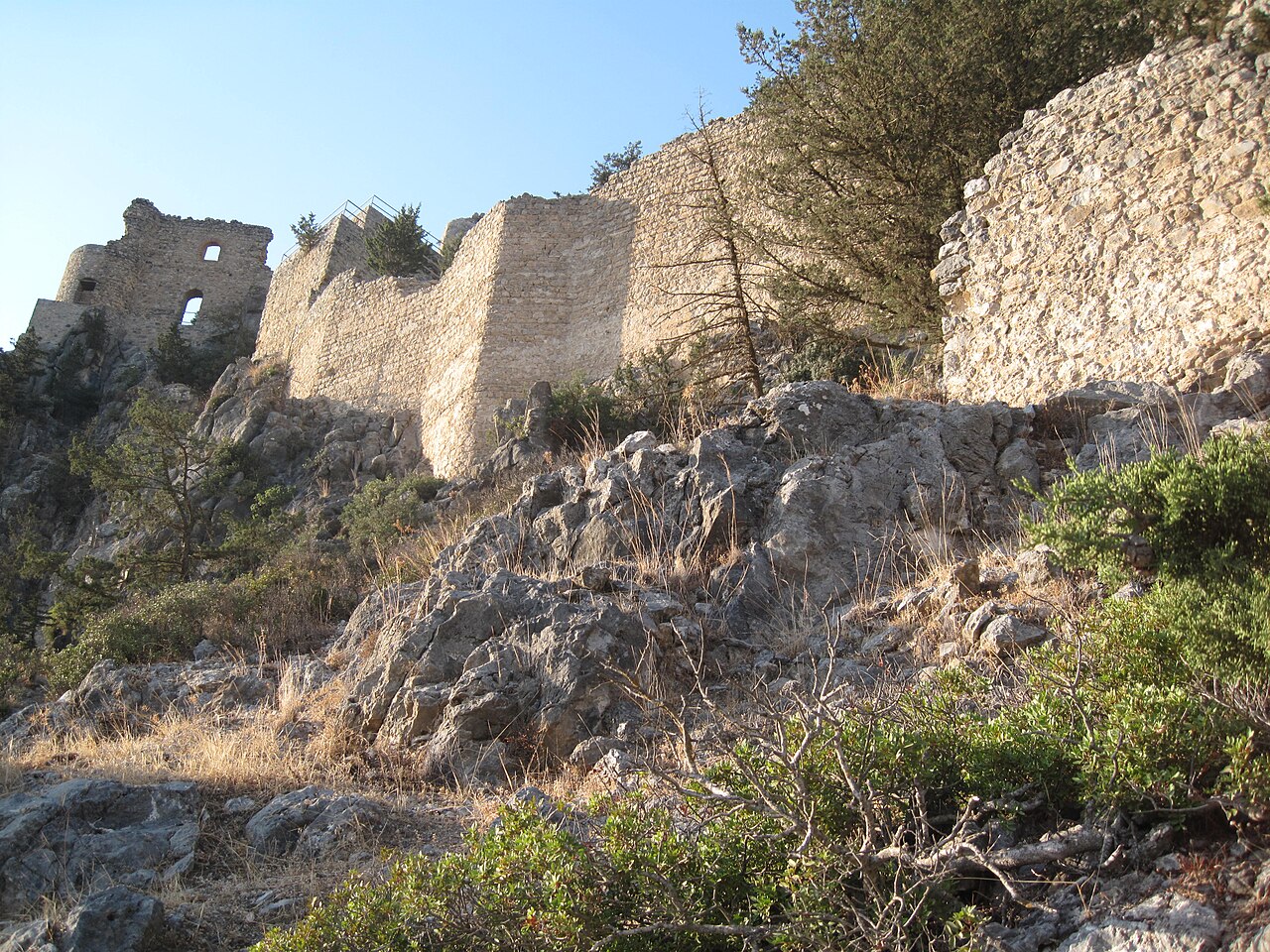
Buffavento Castle (Greek: Kάστρο Βουφαβέντο, Turkish: Buffavento Kalesi) is a castle in Northern Cyprus. The exact date of its construction remains unknown, the most plausible theory being the Byzantine period. It combines Byzantine and Frankish architectural elements. It fell into disuse in the 14th century.
Buffavento Castle stands between Saint Hilarion Castle to the west and Kantara Castle to the east forming a protective axis in the Kyrenia Mountains of Northern Cyprus. Buffavento in particular guarded the mountain passage from Kythrea to the north coast. As the other castles are visible from Buffavento, it was used to pass signals between them. The castles were built in conjunction during the Byzantine period, however the exact date of their commission remains unknown. Noting the middle Byzantine (11th–12th century) architectural features present in the castle and the otherwise scarcity of archaeological evidence, D. M. Metcalf writes that "it is reasonable" to suggest that the castle was built with Saint Hilarion Castle as part of a major programme of works in the wake of the Seljuk advance in the late 11th century.
Among the other theories put forward to explain their origin are: In 965 (after the expulsion of the Arabs from the island), in 1091 by the rebel Rhapsomates, during the rule of Eumathios Philokales (1091–1094), at the beginning of the 12th century as a countermeasure for the spread of the Crusader states. A Lusignan period legend claims that the castle was built by a Cypriot noblewoman who was seeking shelter from the Knights Templar in 1191, as such the castle was known as Leonne (Lion's Castle) or Queen's Castle. The name Buffavento is of Italian origin and means "Defier of the Winds", the name may have been borrowed from a monastery in the Koutzoventi village.
Serving mainly as a watchtower for pirate raids and a place of incarceration the castle saw next to no fighting. In 1191, it was taken by Richard the Lionheart during his campaign against the island's ruler Isaac Komnenos of Cyprus. Since the castle's defenses have been described as very strong it is believed that the defenders of Buffavento surrendered after Kantara and Saint Hilarion fell into English hands. Richard subsequently sold the island to the Knights Templar whose rule abruptly ended after a major revolt in Nicosia. Cyprus was then resold to Guy of Lusignan.
Text adapted from “Buffavento Castle” on Wikipedia, CC BY-SA 4.0.
Buffavento Castle ranks #1,732 of 9,079 worldwide in the atlas's castle fame ranking, and #4 of the 6 mapped in Northern Cyprus. Founded c. 1050, it is older than 89% of the atlas's dated landmarks — one of 436 atlas entries founded in the 11th century. Its Wikipedia articles were opened 1,495 times in the last 60 days, more than 62% of the atlas. 4 more atlas landmarks stand within 25 km. The nearest day-trip guide is Limassol, 76 km away. See how Northern Cyprus compares in the castle statistics.
View on the interactive castle map →