 Estonia · 13th century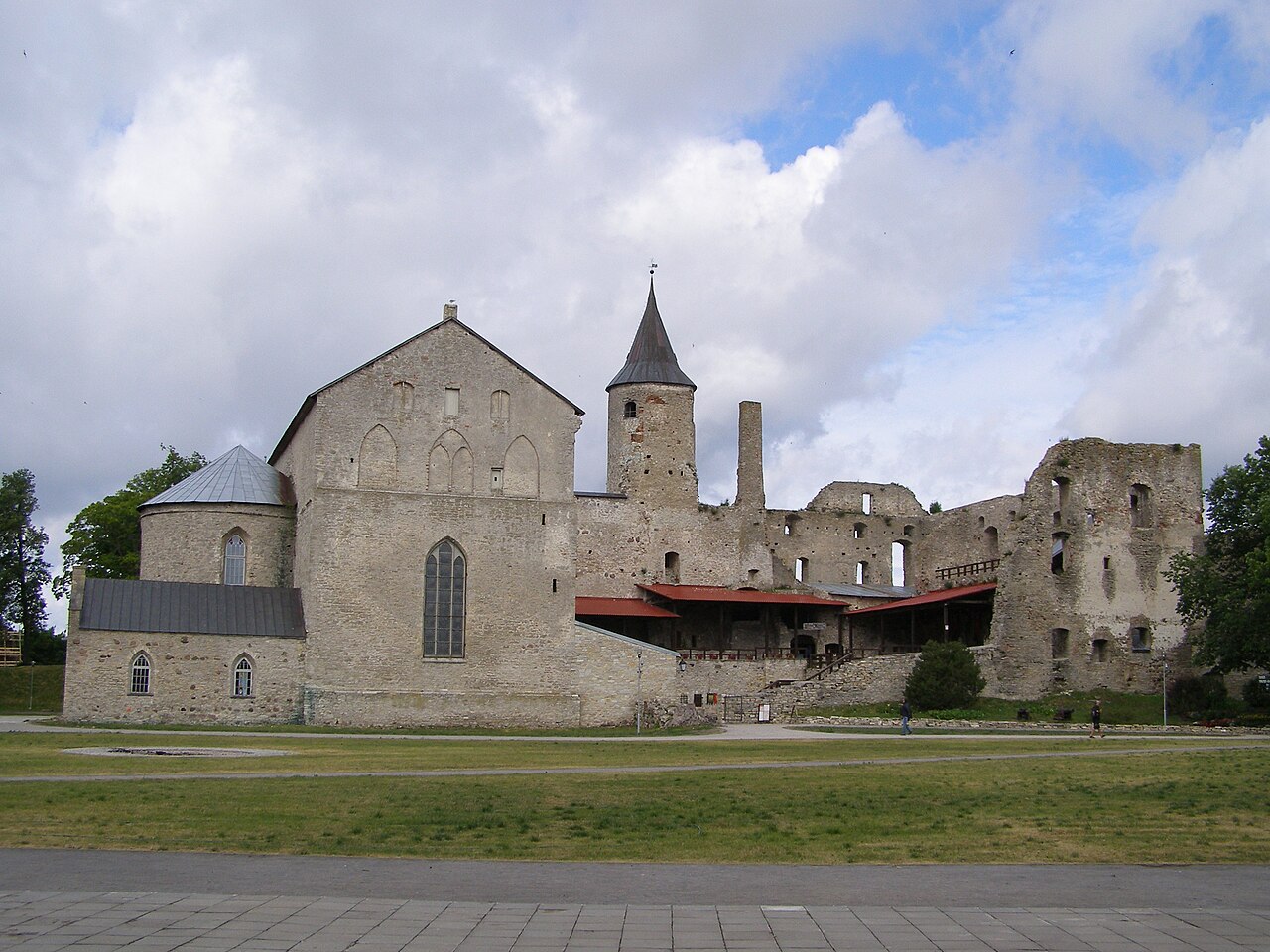
Haapsalu Castle (also Haapsalu Episcopal Castle, Estonian: Haapsalu piiskopilinnus, or more simply Bishop's Castle) is a castle with cathedral in Haapsalu, Estonia, founded in the thirteenth century as the seat of the Bishopric of Ösel-Wiek. According to legend, during full moons in August, an image of a maiden, The White Lady, appears on the inner wall of the chapel.
In 1228, the Archbishop of Riga, Albert of Riga formed a new diocese consisting of Läänemaa, Saaremaa and Hiiumaa and designated Gottfried, an abbot of Dünamünde Cistercian monastery, as the bishop. The bishopric was created as a state of the Holy Roman Empire on 1 October 1228, by Henry, King of the Romans. Papal legate Wilhelm of Modena fixed these borders permanently in 1234. The first residence of the Bishopric of Ösel-Wiek was located in Lihula Castle, where with the help of the Livonian Brothers of the Sword, a stronghold was built of stone. In an attempt to avoid conflicts with the influential Order, the Bishop transferred the diocese's residence to Perona, where it was burned by Lithuanians ten years later. A new center for the diocese was chosen in Haapsalu, where an Episcopal stronghold and cathedral were started. Construction of the castle continued for three centuries.
The building, widening and reconstruction of the stronghold went on throughout several centuries, with the architecture changing according to the development of weapons. The stronghold achieved its final dimensions – area of more than 30,000 square metres, thickness of the wall between 1.2 and 1.8 meters (3.9 and 5.9 ft), and maximum height over 10 metres (33 ft) – under the reign of Bishop Johannes IV Kievel (1515–1527). The western side of the castle houses a 29-metre (95 ft) watchtower dating from the 13th century, later used as a bell tower. The walls were later raised to 15 metres (49 ft).
The inner trenches and blindages, which were built for cannons and as a shelter from bombing, date back to the Livonian War (1558–1582), during which the stronghold was severely damaged. The walls of the small castle and the outer fortification were left partly destroyed.
In the 17th century, the castle was no longer used as a defensive building by the Swedes who now ruled the Swedish Estonian Province.
Text adapted from “Haapsalu Castle” on Wikipedia, CC BY-SA 4.0.
Haapsalu Castle ranks #1,049 of 9,079 worldwide in the atlas's castle fame ranking, and #8 of the 36 mapped in Estonia. Founded c. 1201, it is older than 75% of the atlas's dated landmarks — one of 1080 atlas entries founded in the 13th century. Its Wikipedia articles were opened 2,807 times in the last 60 days, more than 76% of the atlas. The nearest day-trip guide is Tallinn, 88 km away. See how Estonia compares in the castle statistics.
View on the interactive castle map →