 Estonia · 13th century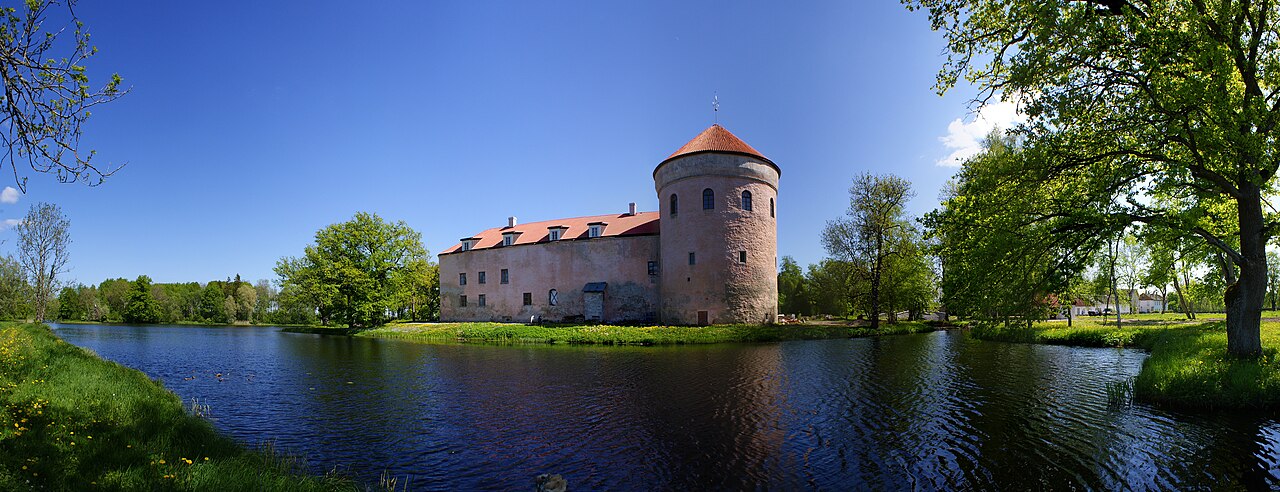
Koluvere Castle (Estonian: Koluvere linnus; German: Schloss Lohde), also Koluvere Episcopal Castle, (Estonian: Koluvere piiskopilinnus), is a castle in Koluvere, Lääne County, in western Estonia.
A castle has existed on a strategic location since the 13th century. In 1439, it came into possession of the bishop of Saare-Lääne (German: Ösel-Wiek) and functioned as one of the main residences of the bishop. During the Livonian War, a battle between an outnumbered Swedish army and a Russian army, resulting in a Swedish victory, was fought nearby. The clash, which took place in 1573, is known as the Battle of Lode. In 1560, insurgents during a peasant uprising reputedly also tried to storm the castle.
Between 1646 and 1771, the castle belonged to the von Löwen family. By then it had lost its military significance and was henceforth used as an aristocratic residence. In 1771 it passed into the hands of Grigory Orlov after which it became the property of the Empress Catherine the Great. In 1786, the Empress found a use for the castle as a place of exile for Duchess Augusta of Brunswick-Wolfenbüttel who had asked the Empress for protection from her violent husband, Prince Frederick of Würtemberg. She died at the estate under unclear circumstances, only 23 years old. Her grave is located in the nearby Kullamaa church, and her life has inspired plenty of local lore. In 1797, Emperor Paul I presented the estate as a gift to general Friedrich Wilhelm von Buxhoeveden. It remained in the possession of his heirs until 1919.
Between 1924 and 2001, it was used by various welfare institutions.
The castle is built on an artificial island created in a dammed up part of Liivi river. The high, square-shaped tower belongs to the oldest part of the castle and probably dates from the early 13th century, making it one of the oldest castle towers in Estonia. With the development of firearms, a large, round cannon-tower was added in the 16th century. From around this period a sculpted stone with the coat of arms of Reinhold von Buxhoeveden, bishop of Saare-Lääne 1532–1541 also dates.
During the time of the ownership of the von Löwen family (et), the castle lost its military importance. It was instead converted into a comfortable home. Thus, in about 1770 the interior was extensively redecorated in Rococo style.
Text adapted from “Koluvere Castle” on Wikipedia, CC BY-SA 4.0.
Koluvere Castle ranks #2,088 of 9,079 worldwide in the atlas's castle fame ranking, and #14 of the 36 mapped in Estonia. Founded c. 1250, it is older than 67% of the atlas's dated landmarks — one of 1080 atlas entries founded in the 13th century. Its Wikipedia articles were opened 1,357 times in the last 60 days, more than 59% of the atlas. The nearest day-trip guide is Tallinn, 69 km away. See how Estonia compares in the castle statistics.
View on the interactive castle map →