 Armenia · 17th century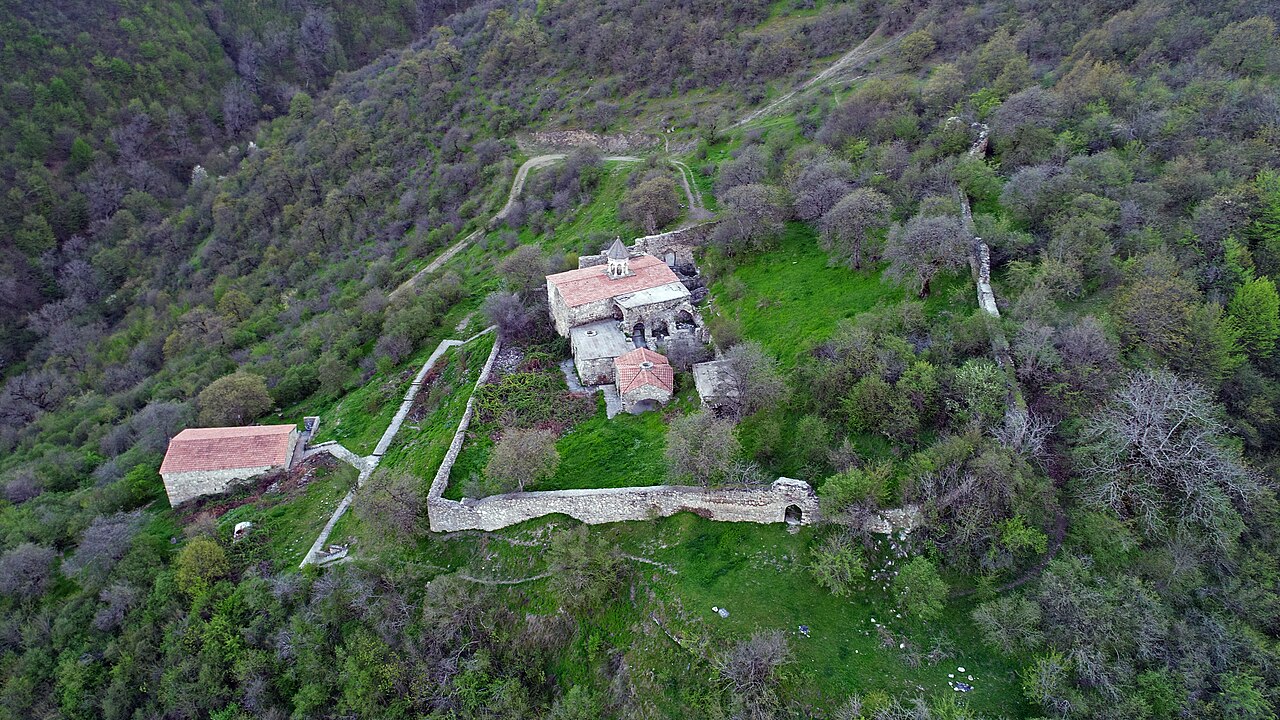
The fortress of Halidzor (Armenian: Հալիձորի բերդ) is along a hill overlooking the Voghji River to the north, near the town of Kapan, which is 1 kilometre (0.6 mi) southwest in the Syunik Province of Armenia. Halidzor Fortress is 1,051 metres (3,448 ft) above sea level.
Halidzor was originally built by Armenian meliks in the 17th century to serve as a nunnery. It later served as a fortress for the Melik Parsadanian family for a short time.
During the 18th century, the famous Armenian military commander and liberator David Bek and his chief lieutenant and successor Mkhitar Sparapet used the site as their main headquarters as well as an administrative center for Syunik in their fight against the forces of the Ottoman Empire and the Iranians. Between 1723 and 1727, Bek along with 300 other soldiers, 13 bishops, and three priests defended the fortress in a seven-day siege from an invading army of 70,000 Ottoman Turks. The defensive nature of the location gave Bek's soldiers an advantage when fighting the enemy, but the siege left the defenders of the fortress weary with little food. Feeling that they were trapped and outnumbered he led a suicidal charge down the hill that terrified the invading army. The Turks hastily fled the area purportedly leaving 12,000 enemy soldiers dead on the field below.
David Bek later died at the fortress after coming down with an illness in 1728. Oral tradition tells that after his death, an elderly bishop from Tatev came and held a very large funeral service in his honor. Bek is reputedly buried in the cemetery just outside the fortress walls. The tombstone is said to have a single flower carved on its underside so that the enemy would not recognize that it is the leader's final resting place.
After David Bek's death, the Ottoman army captured Halidzor and notified the defenders that they would take control of the fortress but leave the battalion and residents unharmed. The priest (Der Avedis) wanted solely to negotiate with the Turks, but Mkhitar Sparapet who was now in command of the fortress and the priest together went to negotiate. When they opened doors to the fortress, some of the defenders were slain.
The walls of the fortress are laid out in an irregular quadrangle site plan.
Text adapted from “Halidzor Fortress” on Wikipedia, CC BY-SA 4.0.
Halidzor Fortress ranks #2,257 of 9,079 worldwide in the atlas's castle fame ranking, and #10 of the 27 mapped in Armenia. Founded c. 1650, it is older than 25% of the atlas's dated landmarks — one of 721 atlas entries founded in the 17th century. Its Wikipedia articles were opened 1,256 times in the last 60 days, more than 57% of the atlas. 1 more atlas landmarks stand within 25 km. See how Armenia compares in the castle statistics.
View on the interactive castle map →