 Croatia · 16th century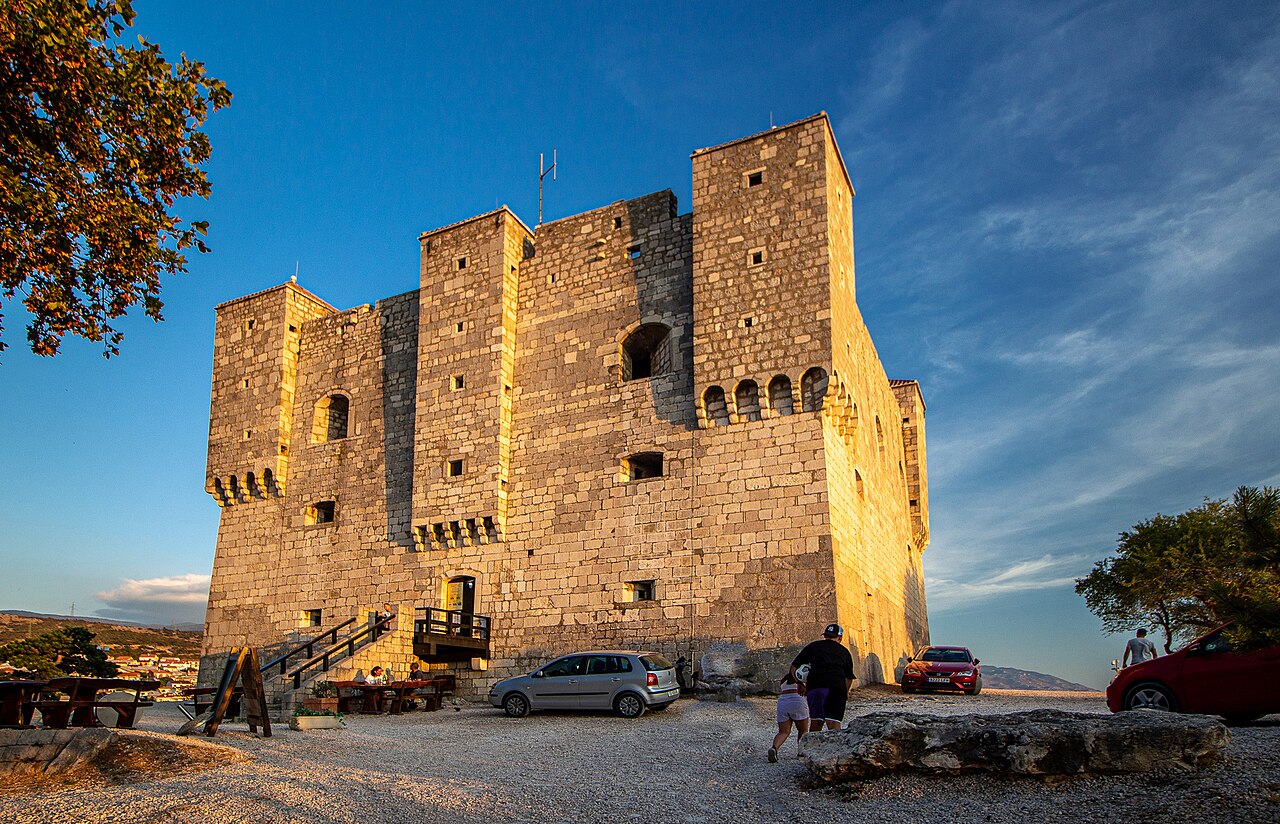
The Nehaj Fortress (Croatian: Tvrđava Nehaj [tʋr̩dʑaʋa nexaj]) is a fortress on the hill Nehaj in the town of Senj, Croatia.
The name Nehaj comes from the Croatian term Ne hajati, which means 'don't care'. In Croatian this fortress has also other names, which are: Kula Nehaj, what means Nehaj Tower, and Nehajgrad, what means Nehajtown.
This name was given to the hill and the Fortress by the Uskoks, who built on the top of this hill the Fortress for defensive purposes. They gave the hill and the Fortress such a name because they wanted to emphasize to the citizens of the town of Senj, and all of those that lived in the vicinity of the town of Senj, that they should not worry that someone will conquer this hill or the Fortress as long as they are there.
The fortress is 18 metres (59 ft) tall and 23 metres (75 ft) wide, and square shaped with walls averaging from 2 to 3 metres (6.6 to 9.8 ft) in thickness. There are five towers on top of the Fortress, and eleven large cannon openings along the walls. Inside the Fortress, there are displays of cannons and other household items, as well as a collection of costumes and weapons of the Uskoks of Senj. There is also an annual medieval festival that is held in Senj, and an important part of it is when the "Uskoks" march up to the fortress on horseback. There are also crafting workshops and other medieval themed attractions around the fortress at this time; as well as a detailed overview of its history.
Today, the fortress serves primarily as a museum. With exhibits of weapons, clothing, drawings and models of various things from the time when the fortress was actively used.
The fortress was built by Croatian army general Ivan Lenković, a captain of the Uskoks, on the hill Nehaj. Finished in 1558, it was built on the remains of ruined churches, monasteries and houses which were situated outside of the walls of Senj. These buildings were scrapped since it was concluded that they would not survive anyway if they were outside the city walls, as the Ottomans would loot them or use them as housing during sieges. The fortress was mainly built to fight the Ottoman Empire, and to be used as a base for the Uskoks.
Text adapted from “Nehaj Fortress” on Wikipedia, CC BY-SA 4.0.
Nehaj Fortress ranks #1,254 of 9,079 worldwide in the atlas's castle fame ranking, and #11 of the 79 mapped in Croatia. Founded c. 1600, it is older than 31% of the atlas's dated landmarks — one of 891 atlas entries founded in the 16th century. Its Wikipedia articles were opened 3,873 times in the last 60 days, more than 83% of the atlas. 2 more atlas landmarks stand within 25 km. The nearest day-trip guide is Rijeka, 53 km away. See how Croatia compares in the castle statistics.
View on the interactive castle map →