Fortress
James Joyce Tower and Museum
🇮🇪 Ireland · 19th century
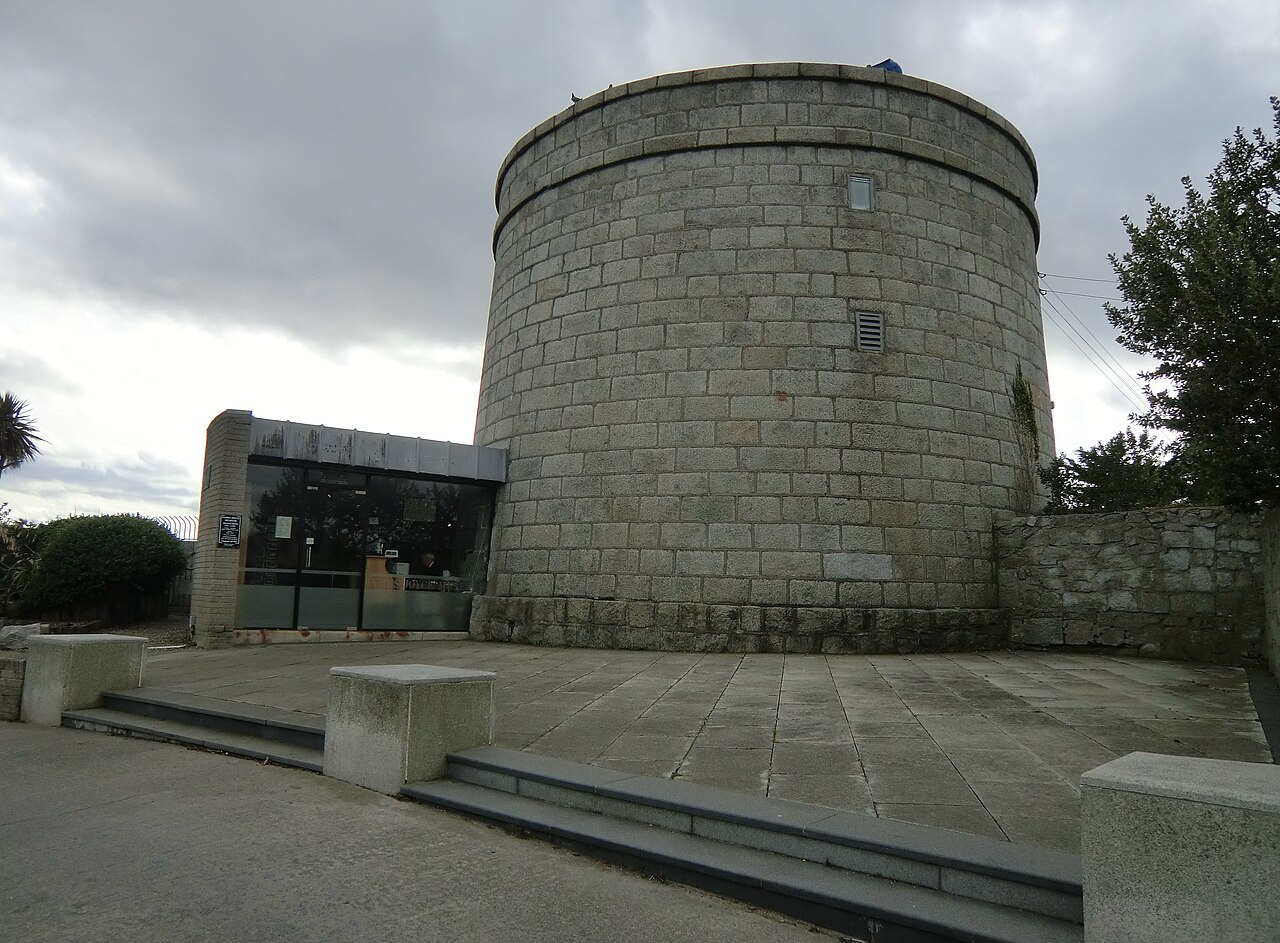
The James Joyce Tower and Museum is a Martello tower in Sandycove, Dublin, where James Joyce spent six nights in 1904. The opening scenes of his 1922 novel Ulysses take place here, and the tower is a place of pilgrimage for Joyce enthusiasts, especially on Bloomsday. Admission is free.
The tower was leased from the War Office by Joyce's university friend Oliver St. John Gogarty, with the purpose of "Hellenising" Ireland. Joyce stayed there for six days, from 9 to 14 September in 1904. Gogarty later attributed Joyce's abrupt departure to a midnight incident with a loaded revolver.
The opening scenes of Ulysses are set the morning after a fictionalised version of this incident. Gogarty is immortalised as "Stately, plump Buck Mulligan" (the opening words of the novel).
The tower now contains a museum dedicated to Joyce and displays some of his possessions and other ephemera associated with Ulysses (e.g., "Plumtree's Potted Meat" pot). The living space is set up to resemble its 1904 appearance, and contains a ceramic panther to represent one seen in a dream by a resident.
It was purchased in 1954 by architect Michael Scott who had built his house, Geragh next door in 1937 on a former quarry. In 1962, he donated the tower for the purpose of making it a museum. Michael Scott is co-founder, with financial assistance by John Huston, of the James Joyce Museum at the Joyce Tower.
The Tower became a museum opening on 16 June 1962 through the efforts of Dublin artist John Ryan. Ryan also rescued the front door to 7 Eccles Street (now at the James Joyce Centre) from demolition and organised, with Brian O'Nolan, the first Bloomsday Celebration in 1954.
The James Joyce Tower is open Thursday–Sunday, 10am–4pm Admission is free, though visits can be booked in advance on the website for a small donation. The museum is run by the Friends of Joyce Tower Society on a voluntary basis.
Text adapted from “James Joyce Tower and Museum” on Wikipedia, CC BY-SA 4.0.
James Joyce Tower and Museum ranks #1,397 of 8,134 worldwide in the atlas's castle fame ranking, and #20 of the 173 mapped in Ireland. Founded 1804, it is older than 13% of the atlas's dated landmarks — one of 607 atlas entries founded in the 19th century. Its Wikipedia articles were opened 4,172 times in the last 60 days, more than 82% of the atlas. 17 more atlas landmarks stand within 25 km. The nearest day-trip guide is Dublin, 12 km away. See how Ireland compares in the castle statistics.
View on the interactive castle map →Frequently asked questions
Where is James Joyce Tower and Museum?
James Joyce Tower and Museum stands in Ireland, at 53.2887°, -6.11376°.
When was James Joyce Tower and Museum built?
The atlas dates its founding to 1804. Earlier structures may have stood on the site; this is the earliest documented founding year.
How famous is James Joyce Tower and Museum?
In this atlas's fame ranking: #1,397 of 8,134 worldwide, and #20 in Ireland. Fame here combines how many Wikipedia language editions cover a landmark with how many people read them.
What is the nearest castle to James Joyce Tower and Museum?
Dalkey Castle, about 1 km away.
More castles in Ireland
- Swords Castle Ireland · 12th century
- Leap Castle Ireland · 13th century
- Dunguaire Castle Ireland · 16th century
- Spike Island Ireland · 18th century
More fortresses
- Castra Pinnata Scotland
- Castrum Segontium Wales
- Castra Deva Victrix England · 1st century
- Ujarma Fortress Georgia