 North Korea · 10th century
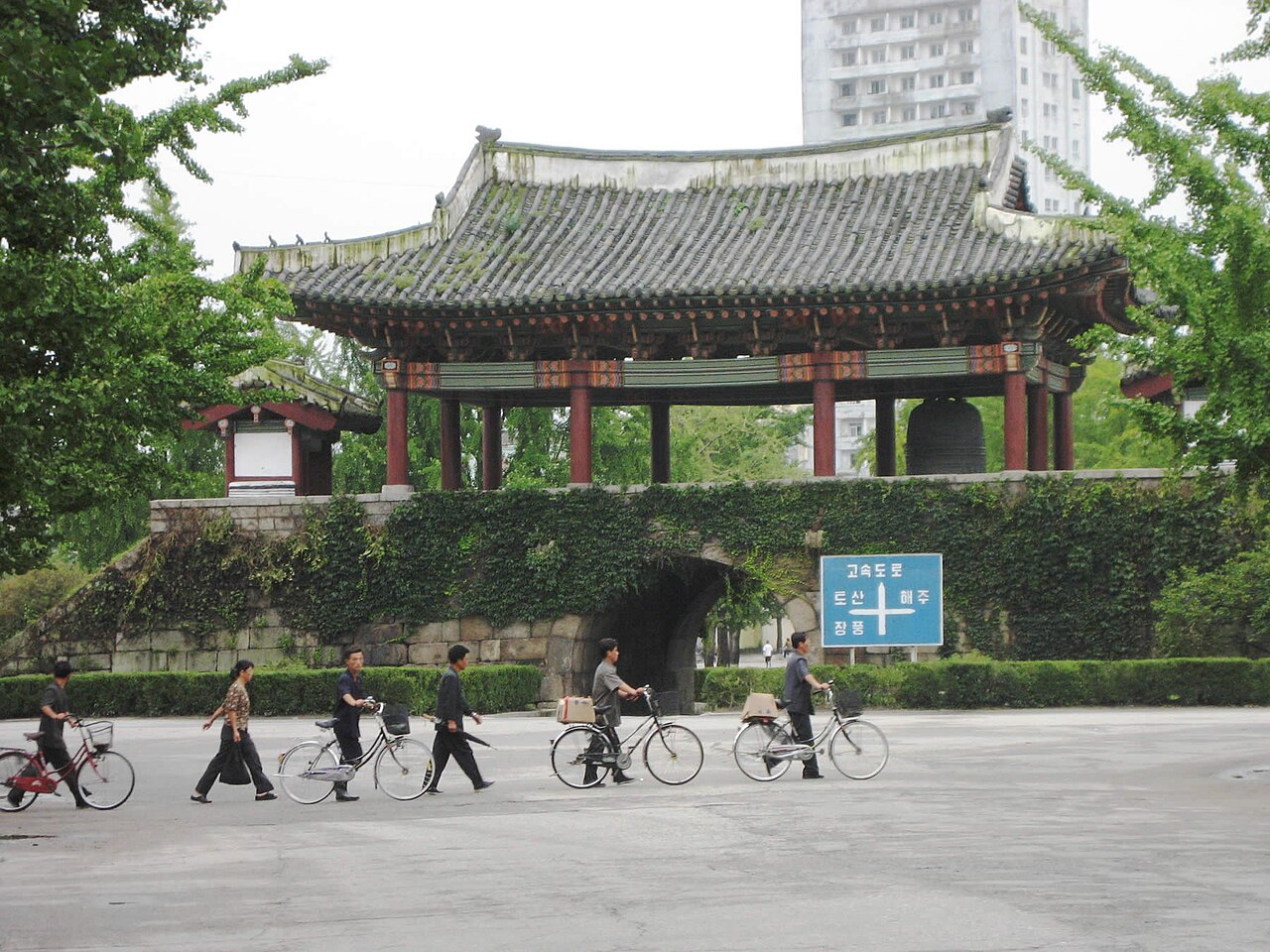
Kaesong Walls ranks #6,952 of 9,040 worldwide in the atlas's castle fame ranking, and #5 of the 5 mapped in North Korea. Founded 919, it is older than 94% of the atlas's dated landmarks, one of 192 atlas entries founded in the 10th century. 1 more atlas landmarks stand within 25 km. The nearest day-trip guide is Paju, 28 km away. See how North Korea compares in the castle statistics.
The Walled City of Kaesong surround the royal castle, Manwoldae. The walls have a total length of 23 km and are partially preserved.
The walls were built using the surrounding landscape as a defensive structure (Korean city walls were generally constructed on the crests of hills), following the principles of geomancy. The inner walls were first constructed in 919 while outer walls were built between 1009 and 1029. Small walls have likely been present on the site since the Silla period; the walls were made from beaten earth during the Koryo dynasty. Many portions were rebuilt with stone during the 14th Century. A large portion of the stone walls still exist into modern times, and parts of the earthen walls are still visible. The exterior wall date from the 11th Century and the interior wall from the 14th Century.
The walls had around twenty gates, many of which survive today. It is listed as a National Treasures of North Korea.
Text adapted from “Kaesong city walls” on Wikipedia, CC BY-SA 4.0.
View on the interactive castle map →