Fortress
Ganghwa Sanseong
🇰🇷 South Korea · 13th century
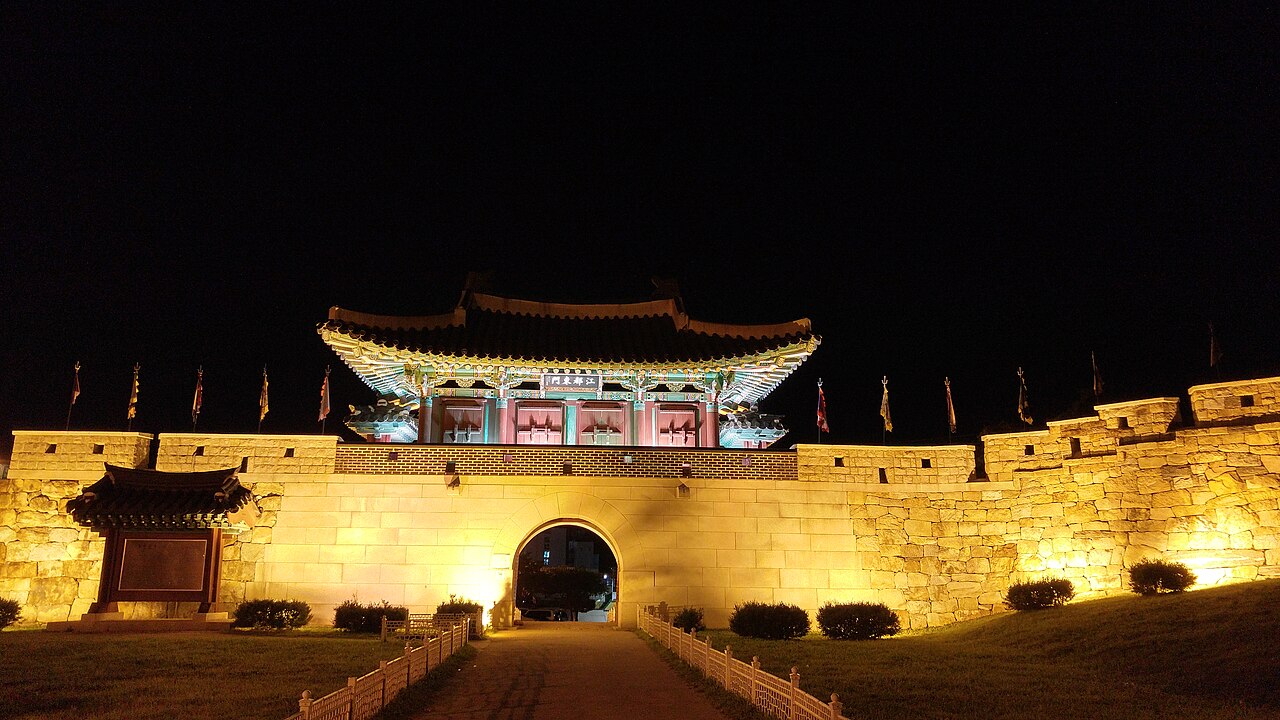
Ganghwasanseong Fortress (Korean: 강화산성; Hanja: 江華山城) was a fortress that started construction in 1232 to serve as the capital of the Goryeo kingdom. It was built following the relocation of the Goryeo court from Kaesong to Ganghwa Island during the Mongol invasions of Korea. Although it was destroyed as part of a peace deal with the Mongols, parts were later rebuilt and continued to serve a defensive purpose until the 20th century.
The original structure consisted of three layers of rammed earth walls. This reflected the triple-layer design of the Kaesong city walls. The inner wall surrounded the palace site, and the outer wall extended down Ganghwa Island's eastern coastline. This defensive system was intended to prevent invasions from the mainland. The inner and outer walls were rebuilt during the Joseon period, however the middle wall was never rebuilt. Both the inner and outer walls were eventually reconstructed in stone.
The strategic location of the fortress, protecting the mouth of the Han River, meant it remained an important military site. It was damaged during the 1866 French expedition to Korea and the 1871 United States expedition to Korea. The Japan–Korea Treaty of 1876 was signed at the site. The inner fortress was designated a Historic Site in 1964, and has seen significant restoration work since. The outer walls were designated a separate Historic Site in 2003.
Text adapted from “Ganghwasanseong Fortress” on Wikipedia, CC BY-SA 4.0.
Ganghwa Sanseong ranks #6,838 of 8,134 worldwide in the atlas's castle fame ranking, and #28 of the 58 mapped in South Korea. Founded 1232, it is older than 74% of the atlas's dated landmarks — one of 861 atlas entries founded in the 13th century. 1 more atlas landmarks stand within 25 km. The nearest day-trip guide is Paju, 31 km away. See how South Korea compares in the castle statistics.
View on the interactive castle map →Frequently asked questions
Where is Ganghwa Sanseong?
Ganghwa Sanseong stands in South Korea, at 37.75556°, 126.47694°.
When was Ganghwa Sanseong built?
The atlas dates its founding to 1232. Earlier structures may have stood on the site; this is the earliest documented founding year.
How famous is Ganghwa Sanseong?
In this atlas's fame ranking: #6,838 of 8,134 worldwide, and #28 in South Korea. Fame here combines how many Wikipedia language editions cover a landmark with how many people read them.
What is the nearest castle to Ganghwa Sanseong?
Ganghwa Gapgotdon, about 4 km away.
More castles in South Korea
- Garimseong Fortress South Korea · 6th century
- Namsansinseong South Korea · 6th century
- Myeonghwalseong Fortress South Korea · 7th century
- Gyeongju Eupseong South Korea
More fortresses
- Changnyeong Mokmasanseong Fortress South Korea
- Fortress of Ghat Libya
- Urabi Fortress Egypt
- Dzivgis Cave Fortress Russia