Fortress
Fortress of Lappeenranta
🇫🇮 Finland · 18th century
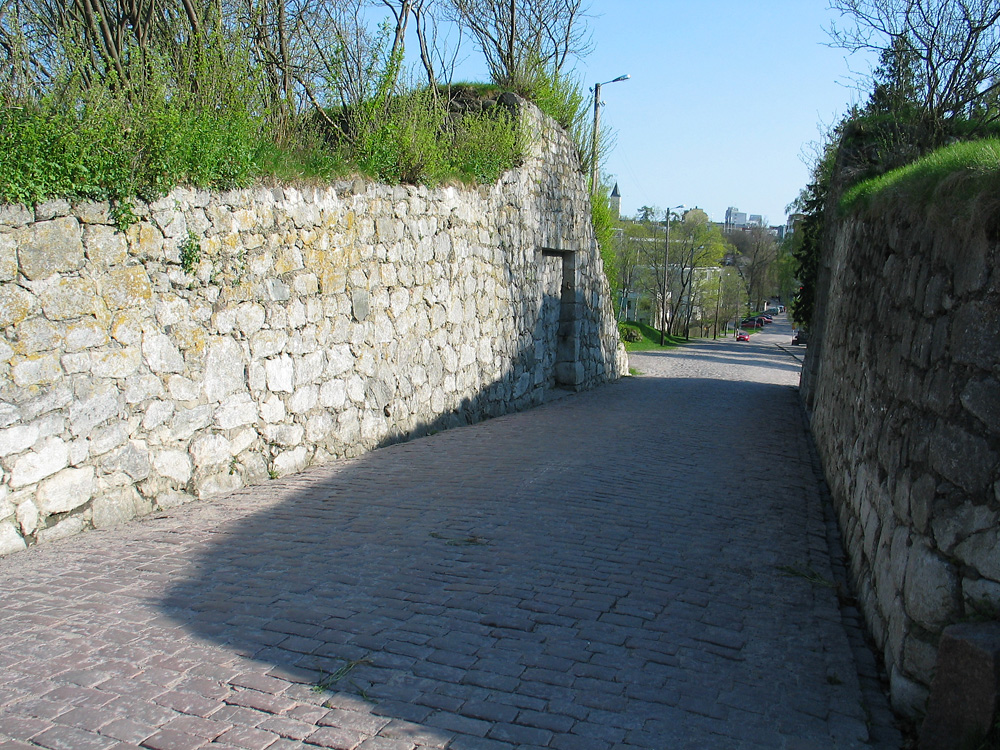
Lappeenranta Fortress (Finnish: Lappeenrannan linnoitus) is a fortress located in Lappeenranta, Finland.
In 1649, after a visit to Vipuri, the Governor-General of Finland, Per Brahe the Younger, decided to establish a new town near the waterways. The land use plan was compiled in 1649 by Erik Nilsson Aspgren.
On September 20, 1652, the Diet of Stockholm decided to grant special rights to Lappeenranta. In early 1653, Erik Nilsson Aspgren handed over special rights to the governor Johann Rosenhan.
After the Treaty of Nystad, in the fall of 1721, Sweden established a border commission headed by Axel Löwen, general and state counsellor. In 1722, Axel Löwen established a small garrison to ensure the crossing of the border and the return of refugees. Axel Löwen, Johann Henrik Friesenheim and Brent-Olof Stockenberg then decided to strengthen Lappeenranta. To secure the Lappeenranta bitumen trade, pits and chevaux de frise were set up and 112 soldiers were sent to protect the trading post. In 1723, the brothers Carl Friedrich and Anders Johann Nordenberg were chosen to design the castle along with Jacob Johann Faber. Most of the construction work was done between 1722 and 1728.
When the Hat Party came to power in the late 1730s, it allocated additional funds to expand the fortifications, led by Adam Reinhardt Bruno. However, the fortification work was stopped by the Russo-Swedish War of 1741–1743.
At the beginning of Russian rule, the border guard regiments were often changed. The Lappeenranta fortifications were rebuilt in the 1750s. In the 1790s, the castle came under the command of Alexander Suvorov, who continued to develop it as part of the fortification system of southeastern Finland. During the Russo-Swedish War, the Saimaa fleet became the third garrison of Lappeenranta.
In 1785, during the Russian period, the Orthodox Church of Lappeenranta was also built, making it the oldest Orthodox church of Finland.
After the Finnish Civil War, the White Guards (Finland) established the Lappeenranta prison camp at the castle, which was notorious for the arbitrary executions that took place there. This camp had nearly 3000 Red Guard prisoners, about 500 of whom were executed.
Text adapted from “Lappeenranta Fortress” on Wikipedia, CC BY-SA 4.0.
Fortress of Lappeenranta ranks #4,026 of 8,134 worldwide in the atlas's castle fame ranking, and #20 of the 27 mapped in Finland. Founded 1721, it is older than 21% of the atlas's dated landmarks — one of 556 atlas entries founded in the 18th century. Its Wikipedia articles were opened 1,723 times in the last 60 days, more than 63% of the atlas. See how Finland compares in the castle statistics.
View on the interactive castle map →Frequently asked questions
Where is Fortress of Lappeenranta?
Fortress of Lappeenranta stands in Finland, at 61.06589°, 28.18279°.
When was Fortress of Lappeenranta built?
The atlas dates its founding to 1721. Earlier structures may have stood on the site; this is the earliest documented founding year.
How famous is Fortress of Lappeenranta?
In this atlas's fame ranking: #4,026 of 8,134 worldwide, and #20 in Finland. Fame here combines how many Wikipedia language editions cover a landmark with how many people read them.
What is the nearest castle to Fortress of Lappeenranta?
Kärnäkoski Fortress, about 33 km away.
More castles in Finland
- Brahelinna Finland · 17th century
- Fortress of Loviisa Finland · 18th century
- Stenberga Castle Finland
- Suomenlinna Finland · 18th century
More fortresses
- Cherven Bulgaria · 11th century
- Stalać Fortress Serbia · 14th century
- Kulič Fortress Serbia
- Fort Lillo Belgium · 16th century