Castle
Kameyama Castle (Mie)
🇯🇵 Japan · 16th century
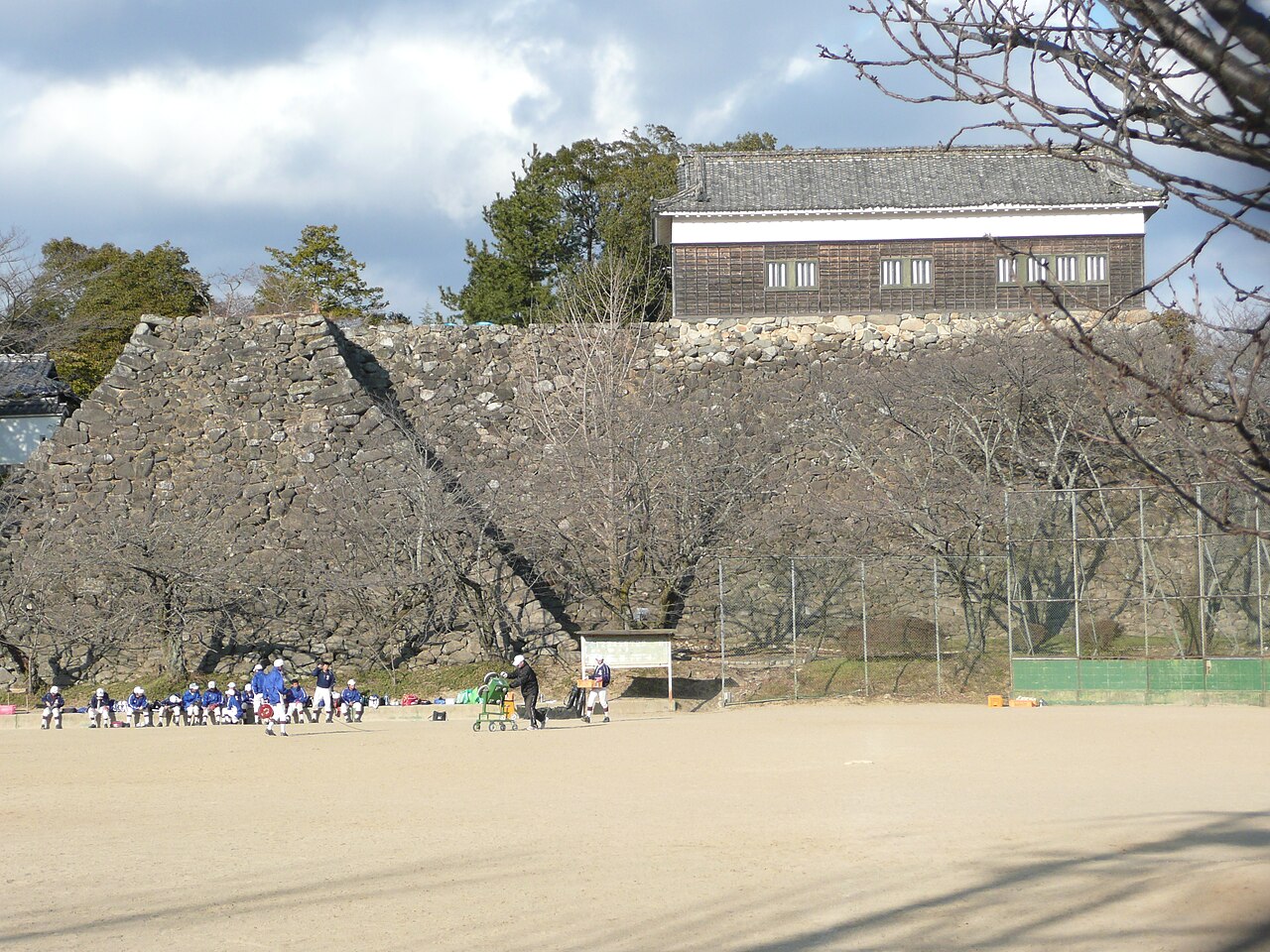
Kameyama Castle (亀山城, Kameyama-jō) is a Japanese castle located in Kameyama, northern Mie Prefecture, Japan. At the end of the Edo period, Kameyama Castle was home to the Ishikawa clan, daimyō of Ise-Kameyama Domain. The castle was also known as "Kochō-jō" (粉蝶城).
The original Kameyama Castle was founded by Seki Sanetada in 1264 to the west of the present Kameyama Castle, and was one of the five fortifications guarding the clan domains in northern Ise Province. It came under occasional attack by the Oda clan to the north, and was overrun when Oda Nobunaga extended his authority over Ise Province. In 1583, Hideyoshi defeated Takigawa Kazumasu at Kameyama castle. When Seki Kazumasa was relocated to Shirakawa in 1590, Okamoto Munenori, a retainer of Toyotomi Hideyoshi was given control of the castle. Okamoto moved the castle to the southeast and reconstructed all the main structures.
Under the Tokugawa shogunate, the castle became the headquarters of Ise-Kameyama Domain, and the surrounding castle town prospered as a post station on the Tōkaidō highway connecting Edo with Kyoto.
In 1632, while under control of the Miyake clan, the tenshu was demolished in error by Horio Torizane, who had confused ambiguously-worded orders by the shogunate with a command to rebuild the keep of Kameyama Castle in Tanba Province. Despite the error, the shogunate refused permission to rebuild the tenshu. Kameyama Castle served as a lodging facility for visits by the shoguns Tokugawa Ieyasu, Tokugawa Hidetada, and Tokugawa Iemitsu when making formal visits to the Imperial Court in Kyoto. A specially-constructed palace was built in the main enclosure for the exclusive use of the Shogun, and the daimyō of the castle was forced to reside in the Ni-no-Maru Second Bailey.
In 1636, Honda Toshitsugu received permission to build a yagura on the raised base of the former tenshu. Named the "Tamon-yagura", this is one of the few surviving structures of the castle and was declared a historic site by the prefectural government in 1953. In 1873, as per government decrees following the Meiji Restoration, most of the remaining castle structures were demolished. One survivor is the entrance to the Ni-no-maru daimyō residence, which is incorporated into the main hall of the temple of Tensho-ji in the Nishimachi neighborhood of Kameyama.
Text adapted from “Kameyama Castle (Mie)” on Wikipedia, CC BY-SA 4.0.
Kameyama Castle (Mie) ranks #3,392 of 8,134 worldwide in the atlas's castle fame ranking, and #175 of the 297 mapped in Japan. Founded 1590, it is older than 35% of the atlas's dated landmarks — one of 755 atlas entries founded in the 16th century. Its Wikipedia articles were opened 1,960 times in the last 60 days, more than 66% of the atlas. 2 more atlas landmarks stand within 25 km. The nearest day-trip guide is Tsu, 16 km away. See how Japan compares in the castle statistics.
View on the interactive castle map →Frequently asked questions
Where is Kameyama Castle (Mie)?
Kameyama Castle (Mie) stands in Japan, at 34.85615°, 136.45059°.
When was Kameyama Castle (Mie) built?
The atlas dates its founding to 1590. Earlier structures may have stood on the site; this is the earliest documented founding year.
How famous is Kameyama Castle (Mie)?
In this atlas's fame ranking: #3,392 of 8,134 worldwide, and #175 in Japan. Fame here combines how many Wikipedia language editions cover a landmark with how many people read them.
What is the nearest castle to Kameyama Castle (Mie)?
Tsu Castle, about 16 km away.
More castles in Japan
- Hiji Castle Japan · 17th century
- Iwatsuki Castle Japan · 15th century
- Shiryōkaku Japan · 19th century
- Noda Castle Japan · 16th century
More castles
- Alara Castle Turkey · 13th century
- Wanås Castle Sweden
- Sövdeborg Castle Sweden · 16th century
- Sävstaholm Castle Sweden · 17th century