Ruin
Kaneyama Castle
🇯🇵 Japan · 16th century
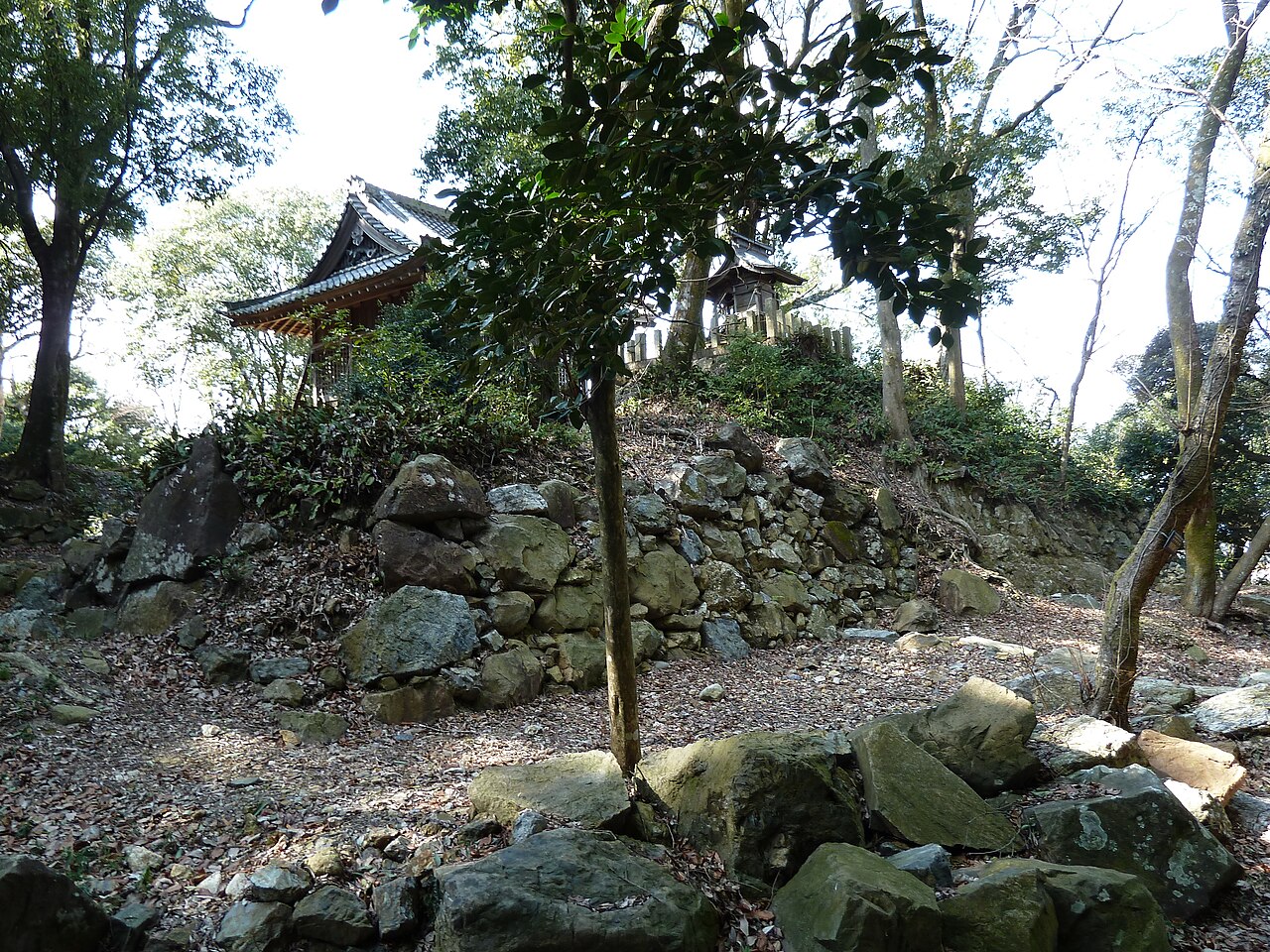
Mino Kaneyama Castle (美濃金山城, Mino Kaneyama-jō) was a Sengoku period Japanese castle located in Kani, Gifu Prefecture, Japan. In 1981, the ruins were designated as a National Historic Site. It was also known as Karasumine Castle (烏峰城, Karasumine-jō).
Kaneyama Castle is located on the 273-meter Mount Kojo next to the Kiso River in former Mino Province, at the northeastern end of the Nōbi Plain near the center of modern Gifu Prefecture. The castle commanded a fork in the road connecting the Nakasendō highway with the Masuda kaidō, a road connecting Mino and Hida Provinces. The site is approximately a 60 minute walk from Akechi Station on the Meitetsu Hiromi Line railway.
Kaneyama Castle was a mountain-top fortification with a roughly square inner bailey approximately 50 meters square, with a wide entrance to the east. A tenshu or watchtower existed near this entrances, connected to the barracks. Secondary and tertiary enclosures were to the west of the inner bailey, using the natural slope of the mountain and masugata box-gates, and stone walls for defense. To the east of the inner bailey was a large flat area, which may have been used for storage or for drilling troops. Past this area was a long, narrow secondary redoubt. In total, the castle extended for 300 meters across the mountaintop.
A castle was built on this location in 1537 by Saitō Masayoshi, the son of Saitō Dōsan. However, he was murdered by Toki Eigoro of neighboring Kukuri Castle in 1548 and the castle was without a master for some time. When the Saitō clan was destroyed by Oda Nobunaga, Kaneyama was awarded to Nobunaga's general, Mori Yoshinari, in 1565. Mori Yoshinari renovated the castle and renamed it "Kaneyama". Yoshinari fought in many of Nobunaga's battles and was a distinguished commander, but he fell in battle against the combined Azai-Asakura forces, along with armed monks, in 1570, and was succeeded by second his son, Mori Nagayoshi. Under Nagayoshi, the castle was expanded, and Nobunaga appointed Nagayoshi as the lord over eastern Mino Province. Nobunaga also accepted his younger brother Mori Ranmaru as one of his pages.
Nagayoshi was noted for his violent temper and ruthlessness in battle, even to the point of killing men on his own side who got in the way of his target.
Text adapted from “Kaneyama Castle” on Wikipedia, CC BY-SA 4.0.
Kaneyama Castle ranks #4,911 of 8,134 worldwide in the atlas's castle fame ranking, and #240 of the 297 mapped in Japan. Founded 1537, it is older than 42% of the atlas's dated landmarks — one of 755 atlas entries founded in the 16th century. Its Wikipedia articles were opened 1,930 times in the last 60 days, more than 66% of the atlas. 2 more atlas landmarks stand within 25 km. The nearest day-trip guide is Gifu, 31 km away. See how Japan compares in the castle statistics.
View on the interactive castle map →Frequently asked questions
Where is Kaneyama Castle?
Kaneyama Castle stands in Japan, at 35.45665°, 137.09732°.
When was Kaneyama Castle built?
The atlas dates its founding to 1537. Earlier structures may have stood on the site; this is the earliest documented founding year.
How famous is Kaneyama Castle?
In this atlas's fame ranking: #4,911 of 8,134 worldwide, and #240 in Japan. Fame here combines how many Wikipedia language editions cover a landmark with how many people read them.
What is the nearest castle to Kaneyama Castle?
Inuyama Castle, about 16 km away.
More castles in Japan
- Kōnomine Castle Japan · 16th century
- Uda Matsuyama Castle Japan
- Katsuyama-date Japan · 15th century
- Kamaha Castle Japan
More ruins
- Shinpu Castle Japan · 16th century
- Takatenjin Castle Japan
- Sugaya Yakata Japan
- Shibushi Castle Japan