 Romania · 15th century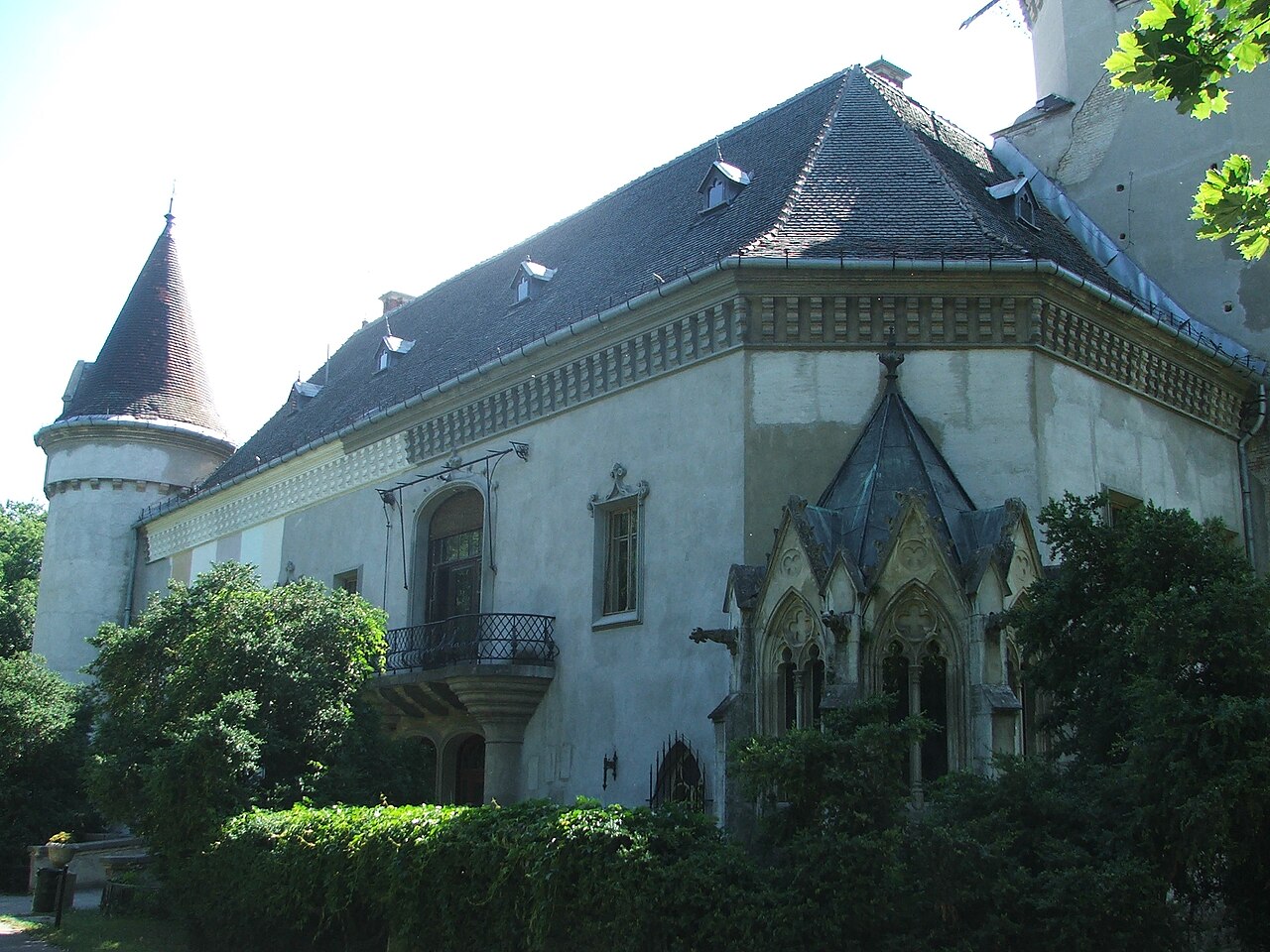
Károlyi Castle is a Gothic Revival castle located in Carei, Satu Mare County, Romania. Originally built as a fortress around the 15th century, it was converted to a castle in 1794, undergoing further transformations during the 19th century. The manor is surrounded by an arboretum which contains a great variety of species of trees and plants.
László Károlyi Lancz began building the fortress in 1482. In 1526, the Károlyi banderium set out from the castle for the Battle of Mohács. In 1592, Mihály Károlyi equipped the castle with four defensive bastions against the Turks, widened the moats, and reinforced the raised defensive rampart with palisades. The Turks besieged the castle once, unsuccessfully.
In 1598, it was inhabited by 276 taxpayer families, but in the 17th century, its population dwindled due to repeated destruction by the Imperial Army. In 1615, the envoys of Matthias II and Gabriel Bethlen held talks in the castle about ending hostilities in the Satu Mare region. In 1622, Ferdinand II and Bethlen began the negotiations for the Peace of Nikolsburg in the castle.
After the Károlyi family converted to Catholicism, long disputes began between the family and the city's mostly Reformed industrial and noble population. In 1649, Jesuits settled in the city. In 1703, while Francis II Rákóczi, soon to be Prince of Transylvania, was returning from the Transylvanian campaign, he was stopped by Krisztina Barkóczi, on the orders of her husband, Sándor Károlyi, who had meanwhile sided with the Kurucs, opened the castle gates to him. Rákóczi stayed in the castle for 28 days, which later became one of the Kurucs' centers. In 1711, Sándor Károlyi and János Pálffy began negotiations for the Peace of Szatmár here.
After the peace, Károlyi began the repopulation of the settlement. In 1741, his son, Ferenc Károlyi donated fifty plots of land to what became Zsidóköz. From 1780 it was the seat of Satu Mare County and by 1828, the town had 11,000 inhabitants. It was hit by an earthquake in 1834. A casino was established in 1836 and a hospital in 1845. In the middle of the 19th century it held seven national fairs a year. The Swabian, Ruthenian, Romanian and Slovak population became Magyarized in their language during the 19th century.
Text adapted from “Károlyi Castle (Carei)” on Wikipedia, CC BY-SA 4.0.
Károlyi Mansion, Carei ranks #5,084 of 9,035 worldwide in the atlas's castle fame ranking, and #48 of the 125 mapped in Romania. Founded 1482, it is older than 44% of the atlas's dated landmarks, one of 556 atlas entries founded in the 15th century. Its Wikipedia articles were opened 1,394 times in the last 60 days, more than 60% of the atlas. The nearest day-trip guide is Nyíregyháza, 63 km away. See how Romania compares in the castle statistics.
View on the interactive castle map →