 Morocco · 12th century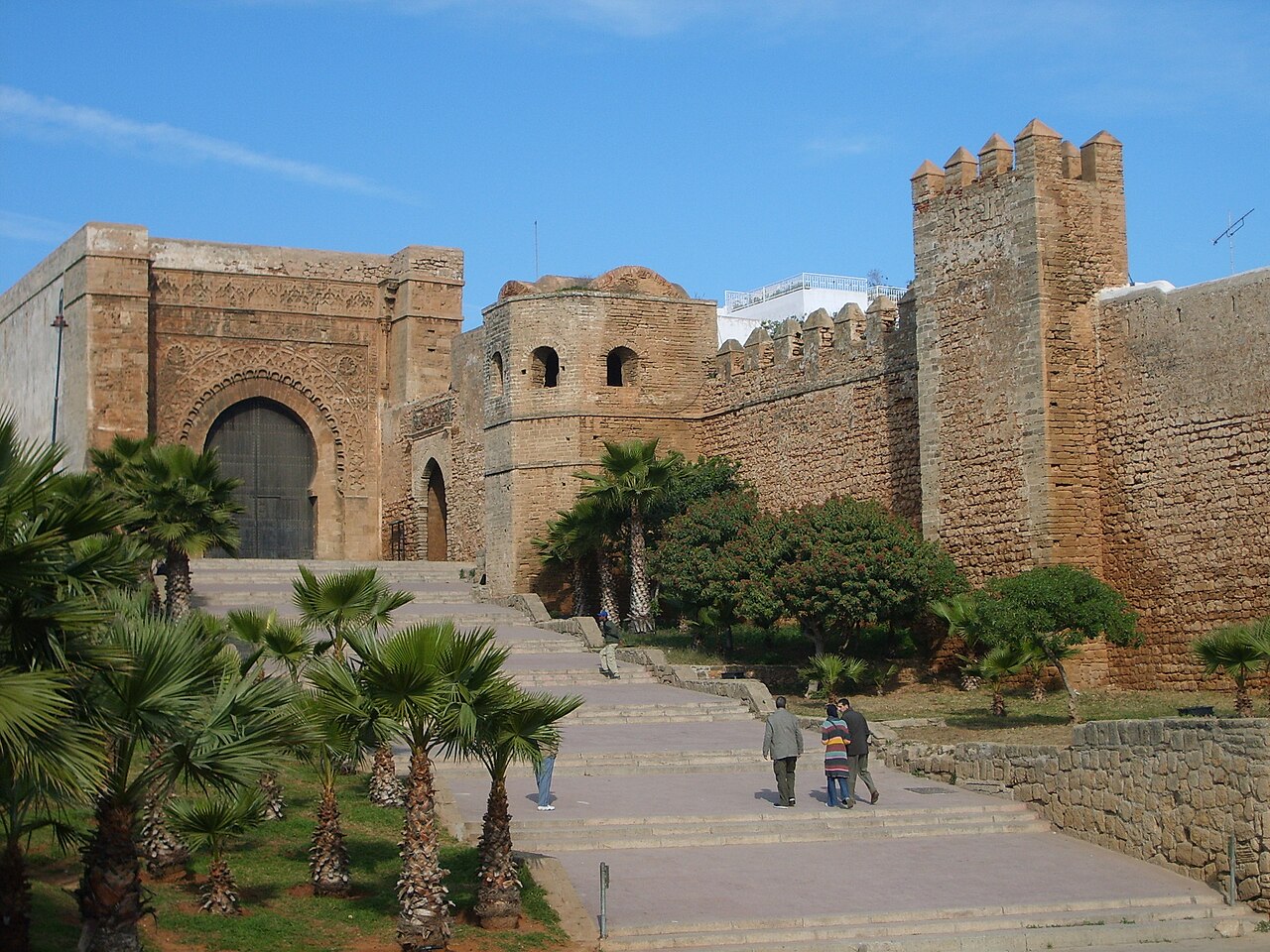
The Kasbah of the Udayas (Arabic: قصبة الأوداية, romanized: Qaṣbat al-Awdāya), also spelled Kasbah of the Oudaias or of the Oudayas, is a kasbah (citadel) in Rabat, Morocco. It is located on a hill at the mouth of the Bou Regreg opposite Salé, and adjacent to the Medina quarter of Rabat. It is listed, along with other sites in Rabat, as a UNESCO World Heritage Site.
The kasbah takes its name from the Udaya tribe. This name only became associated with the kasbah in the 19th century after the tribe was permanently expelled from Fez. A fraction of the tribe settled in the then previously almost uninhabited kasbah. The use of al-Widaya (الوداية) instead of al-Awdāya has become popular in Morocco.
In the 10th century the Umayyads of Cordoba, or their Zenata Berber allies in the region, founded a ribat or fortified monastery/outpost in this area, to defend against the Barghawata Berbers, who had established a Kharijite state to the south. This ribat was most likely on the same site as the current Kasbah of the Udayas, but its location has not been confirmed by historians. One of the last Almoravid emirs, Tashfin ibn Ali (ruled 1143-45) built a new ribat on the site of the current kasbah during his efforts to repel the Almohad Caliphate, but the Almohads defeated the Almoravids and destroyed the ribat.
In 1150 or 1151 the Almohad caliph Abd al-Mu'min built a new kasbah (citadel) over the site of the former ribat, within which he included a palace and a mosque. He also had an underground canal dug to divert a water source to the area, allowing for future settlement and urbanization. The later caliph Yaqub al-Mansur (ruled 1184–1199) embarked on a huge project to construct a new fortified imperial capital, called al-Mahdiyya or Ribat al-Fath, on the site of what is now the medina (old city) of Rabat, with new walls extending over a vast area beyond the old kasbah. This project also included the construction of an enormous mosque (the remains of which include the Hassan Tower) and of new grand gateways including Bab er-Rouah, a major gate in the city's western wall, and what is now called Bab Udaya or Bab al-Kbir, the gate of the Kasbah.
After Abu Yusuf Ya'qub's death in 1199 the mosque and the capital remained unfinished and his successors lacked the resources or the will to finish it. The kasbah itself became essentially abandoned.
Text adapted from “Kasbah of the Udayas” on Wikipedia, CC BY-SA 4.0.
Kasbah of the Udayas ranks #445 of 9,079 worldwide in the atlas's castle fame ranking, and #2 of the 42 mapped in Morocco. Founded c. 1150, it is older than 80% of the atlas's dated landmarks — one of 756 atlas entries founded in the 12th century. Its Wikipedia articles were opened 10,565 times in the last 60 days, more than 94% of the atlas. 2 more atlas landmarks stand within 25 km. The nearest day-trip guide is Tiflet, 49 km away. See how Morocco compares in the castle statistics.
View on the interactive castle map →