Castle
Kellie Castle
SCT Scotland · 14th century
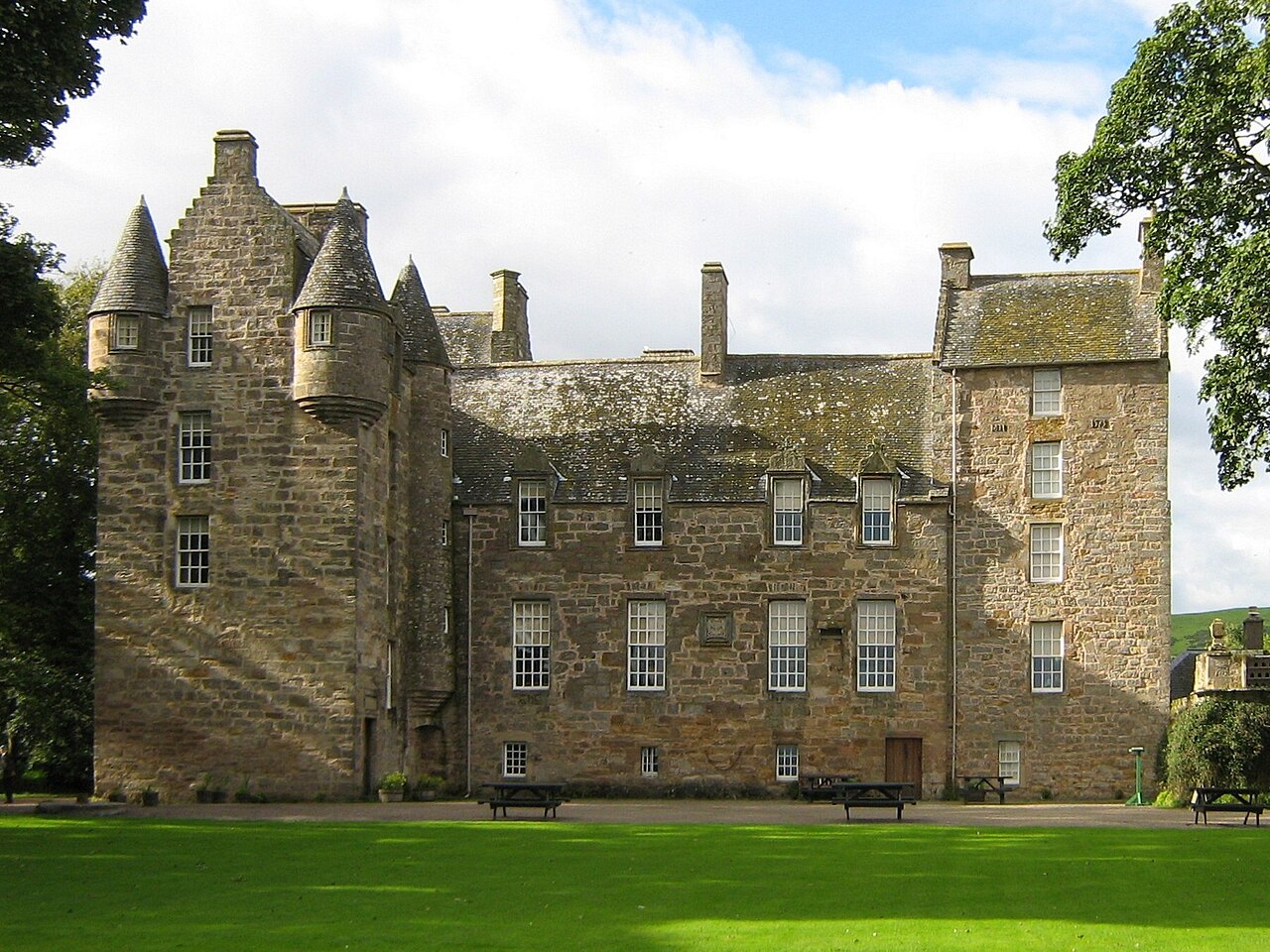
Kellie Castle is a castle just outside Arncroach and below the dominant hill in the area, Kellie Law. It is about 4 kilometres north of Pittenweem in the East Neuk of Fife, Scotland.
The exact origins of the castle are unknown, but likely originate with the now armigerous Clan Kelly who were minor earls and barons.
The earliest records of Kellie go back to 1150 where it is mentioned in a charter issued by King David I. The first known owner was Robert of London, the illegitimate son of King William the Lion. By 1266 Kellie had passed to the Siward family, who had hailed from Northumbria and had assisted King Malcolm Canmore to overthrow Macbeth. The Siewards supported England during the wars of independence (1296–1328) and as a result Sir Richard Sieward forfeited his lands in Scotland after Bannockburn. However his daughter Helena Sieward, “Lady Kellie” retained Kellie. None of the buildings they occupied appear to have survived.
In about 1360 Helena, or Elena, assigned Kellie to her kinsman Walter Olifard (or Oliphant) of Aberdalgie who was married to Elizabeth, a daughter of Robert the Bruce. Thus began 250 years of occupation by the Oliphant family. The estate was signed over to a Siward relative, Walter Oliphant, in 1360 and the castle remained in the ownership of the Oliphant family until 1613. It was purchased by Sir Thomas Erskine, who had saved the life of King James VI during the Gowrie Conspiracy by killing Sir Alexander Ruthven. The King stayed at Kellie in 1617 during his only visit to Scotland after the Union of the Crowns, and he appointed Erskine as Earl of Kellie in 1619.
It is likely that the ceiling of what is now the library in the 1573 east tower was decorated in plaster in anticipation of a Royal visit by King James. This room may be the first in Scotland where plaster decoration was used ‘in the London style’ in preference to the painted beams and boarded ceilings that were generally fashionable in the early 17th century. Incorporated in the ceiling is the date "1617" and monogram "T V F" for Thomas Viscount Fenton, which title the King awarded Thomas Erskine in 1606.
Originally a simple tower house, the lower section of what now constitutes the northwest tower is the oldest part of the castle, dating from around 1360, and is said to be haunted.
Text adapted from “Kellie Castle” on Wikipedia, CC BY-SA 4.0.
Kellie Castle ranks #2,466 of 8,134 worldwide in the atlas's castle fame ranking, and #82 of the 168 mapped in Scotland. Founded 1360, it is older than 56% of the atlas's dated landmarks — one of 604 atlas entries founded in the 14th century. Its Wikipedia articles were opened 2,429 times in the last 60 days, more than 71% of the atlas. 4 more atlas landmarks stand within 25 km. The nearest day-trip guide is Dundee, 28 km away. See how Scotland compares in the castle statistics.
View on the interactive castle map →Frequently asked questions
Where is Kellie Castle?
Kellie Castle stands in Scotland, at 56.23694°, -2.77611°.
When was Kellie Castle built?
The atlas dates its founding to 1360. Earlier structures may have stood on the site; this is the earliest documented founding year.
How famous is Kellie Castle?
In this atlas's fame ranking: #2,466 of 8,134 worldwide, and #82 in Scotland. Fame here combines how many Wikipedia language editions cover a landmark with how many people read them.
What is the nearest castle to Kellie Castle?
St Andrews Castle, about 12 km away.
More castles in Scotland
- Midhope Castle Scotland · 16th century
- Duns Castle Scotland · 14th century
- Culcreuch Castle Scotland · 13th century
- Neidpath Castle Scotland · 13th century
More castles
- Ruthin Castle Wales · 13th century
- Rockingham Castle England · 10th century
- Lydford Castle England · 12th century
- Morpeth Castle England · 11th century