 Scotland · 13th century
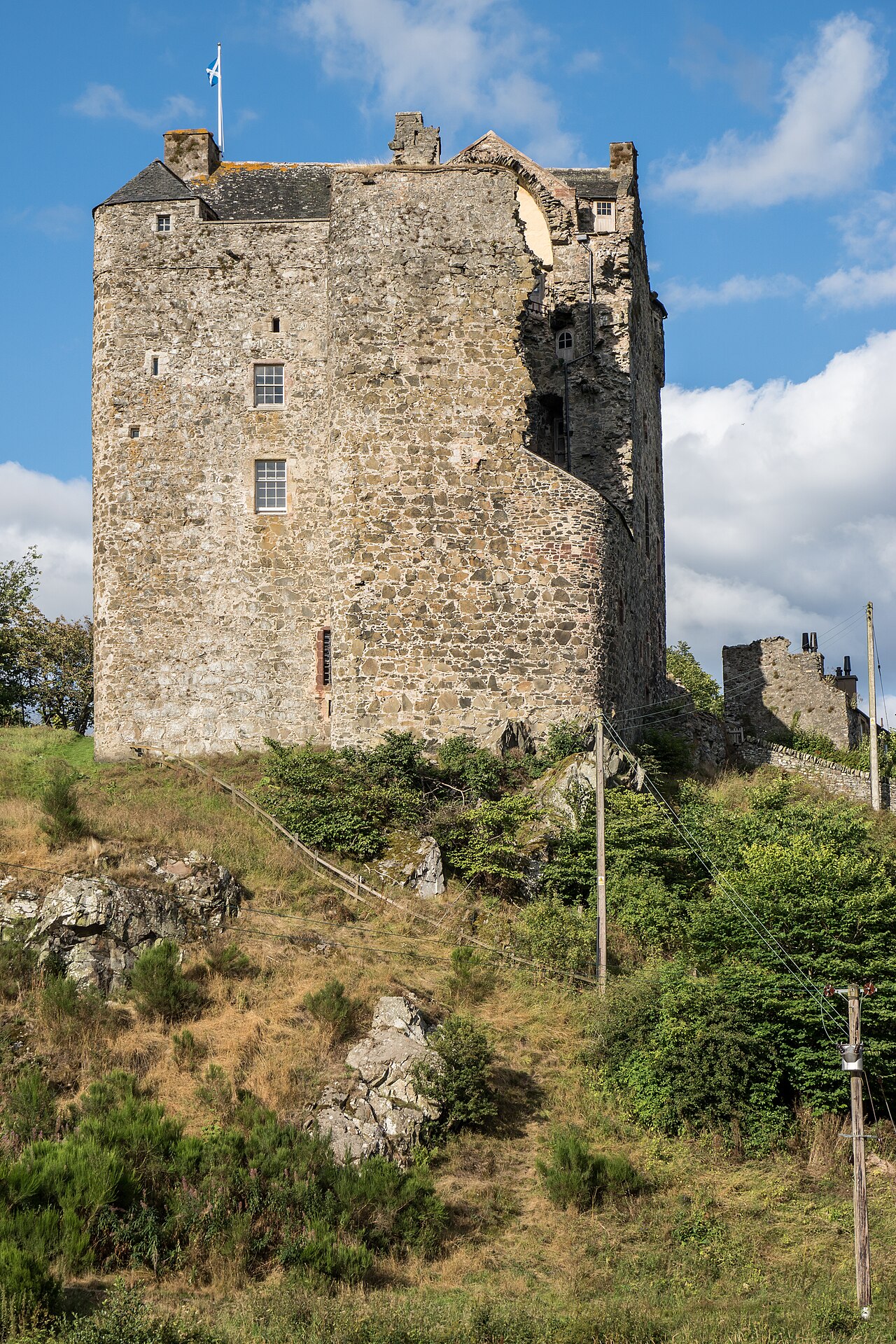
Neidpath Castle ranks #2,941 of 9,040 worldwide in the atlas's castle fame ranking, and #102 of the 225 mapped in Scotland. Founded 1263, it is older than 66% of the atlas's dated landmarks, one of 1091 atlas entries founded in the 13th century. Its Wikipedia articles were opened 1,468 times in the last 60 days, more than 61% of the atlas. 6 more atlas landmarks stand within 25 km. The nearest day-trip guide is Edinburgh, 34 km away. See how Scotland compares in the castle statistics.
Neidpath Castle is an L-plan rubble-built tower house, overlooking the River Tweed about 1 mile (1.6 km) west of Peebles in the Borders of Scotland. The castle is both a wedding venue and filming location and can be viewed by appointment.
An early castle was probably built here by Simon Fraser of Oliver Castle between 1263 and 1266, while he held the office of High Sheriff of Tweeddale. The barony of Neidpath was acquired by the Hay family, through marriage in the early 14th century to the heiress Margaret, a daughter of the sheriff's son, Simon Fraser of Oliver and Neidpath. Sir William de Haya (d.c.1390) probably built the present castle in the late 14th century. It was held by them until the 17th century, although Sir William's son, Sir Thomas Hay, married the daughter and heiress of Sir Hugh Gifford of Yester, acquiring Yester Castle, which became the principal family seat, although Neidpath continued to be used. It was visited by Mary, Queen of Scots in 1563, and by her son James VI in 1587.
In 1645, Neidpath was garrisoned against the Royalist forces of James Graham, 1st Marquess of Montrose, although the following year, John Hay of Yester joined the King's party, and was created 1st Earl of Tweeddale by King Charles II. During Oliver Cromwell's invasion of Scotland in 1650, Neidpath was attacked. Mike Salter states that the castle was surrendered without a fight, although other sources suggest that it required the longest assault on any stronghold south of the River Forth to force it to surrender. James Taylor, writing in 1887, states that the 13th-century tower was demolished by artillery during the siege and the Listed building report notes that there was damage to the west wing.
During the 1660s, the 2nd Earl of Tweeddale remodelled the castle, and constructed outbuildings. The 2nd Earl was an agricultural "improver", who planted an avenue of yews, of which one side remains. However, he was declared bankrupt, and sold Neidpath to William Douglas, 1st Duke of Queensberry in 1686.
In 1693, Queensberry gave the castle to his second son William Douglas, later the 1st Earl of March. His son William, the 2nd Earl, made alterations to the castle in the 18th century. The 3rd Earl inherited the title and estates of the Duke of Queensberry in 1778, and subsequently let Neidpath to tenants. These included the philosopher and historian Adam Ferguson.
Text adapted from “Neidpath Castle” on Wikipedia, CC BY-SA 4.0.
View on the interactive castle map →