 Germany · 12th century
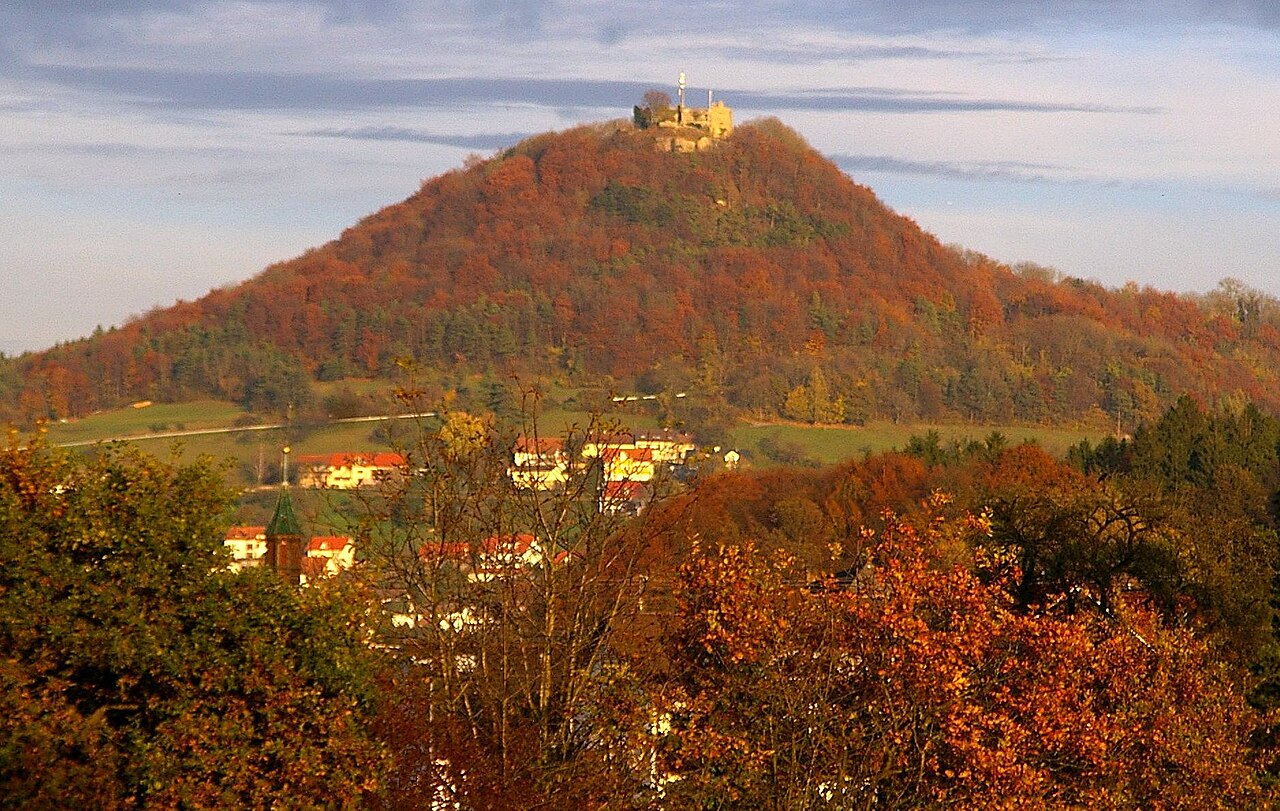
Küssaburg ranks #5,685 of 9,040 worldwide in the atlas's castle fame ranking, and #495 of the 714 mapped in Germany. Founded 1125, it is older than 84% of the atlas's dated landmarks, one of 763 atlas entries founded in the 12th century. 12 more atlas landmarks stand within 25 km. The nearest day-trip guide is Winterthur, 30 km away. See how Germany compares in the castle statistics.
The Küssaburg, also known as Küssenberg or Küssaberg Castle (German: Burg Küssaberg) is a ruined hilltop castle located at an elevation of 634 m above sea level (NN) in Bechtersbohl, a village in the municipality of Küssaberg, in the county of Waldshut in the German state of Baden-Württemberg.
The name may be derived from the Roman personal name, Cossinius, or from the German Kissen (Alemannic Chüssi) which means "cushion", after the shape of the mountain on which it stands.
The hill castle is one of the most important historic buildings on the High Rhine and a landmark of the county of Waldshut. It was probably constructed between 1125 and 1141. The present ruins were owned inter alia by the counts of Küssenberg, the Bishopric of Constance and the counts of Sulz. The castle, which was later developed into a fortress, was destroyed by a fire started by its garrison on 8 March 1634 when the Swedish Army approached it during the Thirty Years' War and by a landslide on 25 December 1664. In the 19th century work began on uncovering the ruins which have since become a popular destination in the region.
Text adapted from “Küssaburg” on Wikipedia, CC BY-SA 4.0.
View on the interactive castle map →