 Austria · 8th century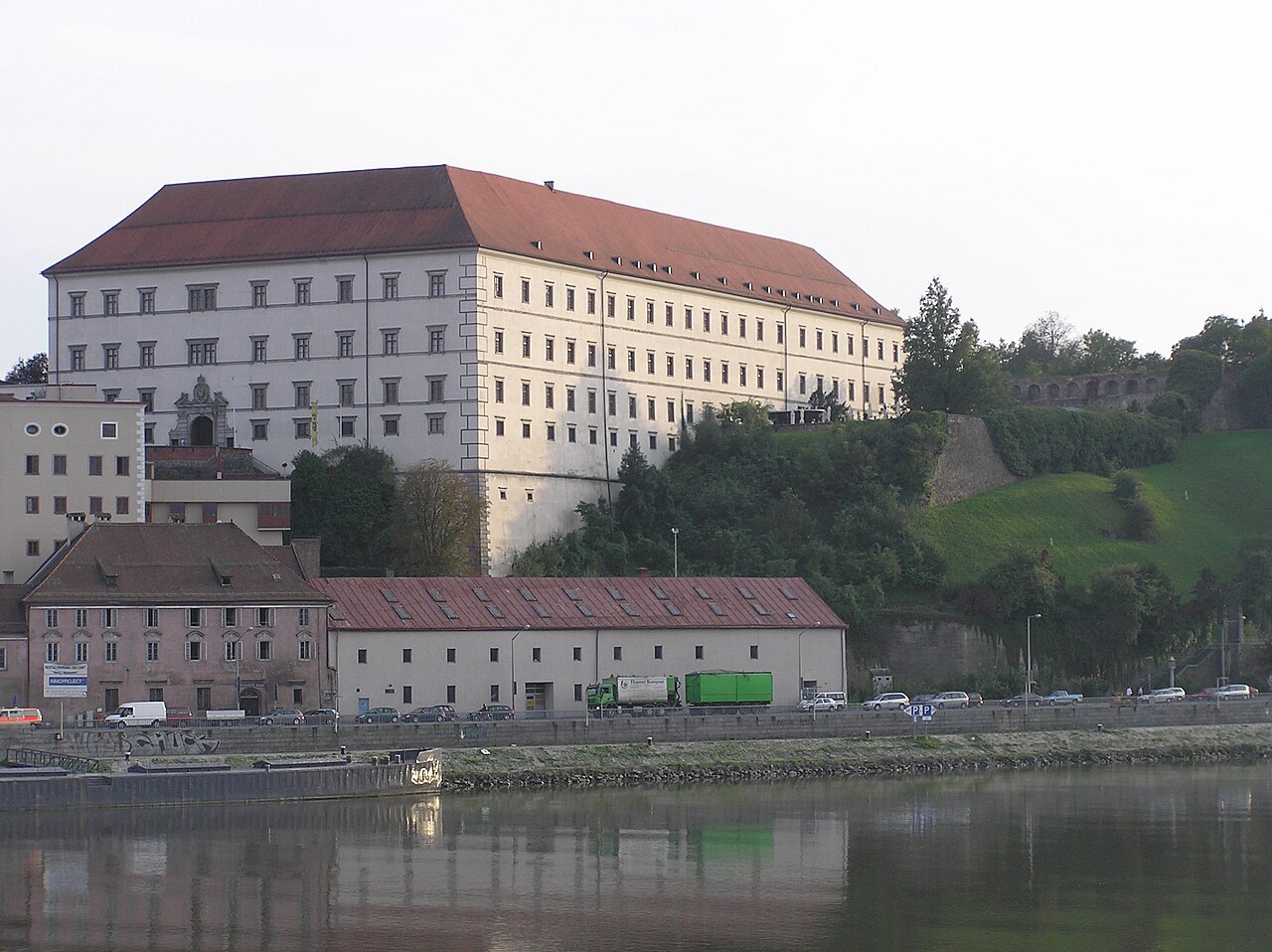
Linz Castle (Linzer Schloss) is located on a hill above the old town district of Linz, Austria, directly on the Danube.
The castle was built on the site of the former Roman fort of Lentia. The first known mention dates back to June 20, 799.
Until around 1150, the Lords of Linz resided here as feudal lords of the High Bishopric of Passau, under the sovereignty of the Dukes of Bavaria. Around the middle of the 12th century, Passau expanded Ebelsberg Castle to become its base in the Linz area. It was probably around this time that the Haunsperg family, as successors to the Lords of Linz, took over the Passau fiefdom of Linz. In 1205/1206, the Babenberg Duke Leopold VI of Austria and Styria acquired the emerging city of Linz and its castle from Gottschalk II von Haunsperg.
Under Emperor Frederick III, the castle was converted into a palace in 1477 and served as his residence from 1489 to 1493. The Frederick Gate, which is still preserved today, dates from this period. His son Maximilian I often stayed in Linz and in the castle. His grandson, the future Emperor Ferdinand I, had the palace extended and lavishly furnished for his wife Anne of Bohemia and Hungary after their wedding in Linz. Their children Elisabeth (1526) and Ferdinand II (1529) were born in Linz Palace. After separating from her husband, the Polish King Sigismund II. August, their daughter Catherine lived in Linz Palace with her servants from October 1567 until her death in 1572.
Emperor Rudolf II had the palace demolished and rebuilt in 1600 according to plans by the Dutch master builder Anton de Moys from Antwerp, who had been court architect in Vienna from 1581. In addition to the mighty four-storey block building with two inner courtyards, the main gate to the city (Rudolf Gate, 1604) was also built.
During the Bavarian rule from 1620 to 1628, Count Adam von Herberstorff resided in the castle as governor. He strengthened the fortifications around the castle in anticipation of an imminent siege by the peasants. In 1626, the castle was besieged by the rebellious peasants.
During the plague in Vienna, Emperor Ferdinand III and the court stayed in Linz Palace from 1644 to 1646. Emperor Leopold I resided there during the Second Siege of Vienna by the Turks in 1683.
In 1783, the provincial governor moved his offices from the palace to the Linz Landhaus.
Text adapted from “Linz Castle (Austria)” on Wikipedia, CC BY-SA 4.0.
Linz Palace ranks #2,371 of 9,079 worldwide in the atlas's castle fame ranking, and #51 of the 240 mapped in Austria. Founded 799, it is older than 95% of the atlas's dated landmarks — one of 48 atlas entries founded in the 8th century. Its Wikipedia articles were opened 1,919 times in the last 60 days, more than 68% of the atlas. The nearest day-trip guide is Linz, 1 km away. See how Austria compares in the castle statistics.
View on the interactive castle map →