 Germany · 15th century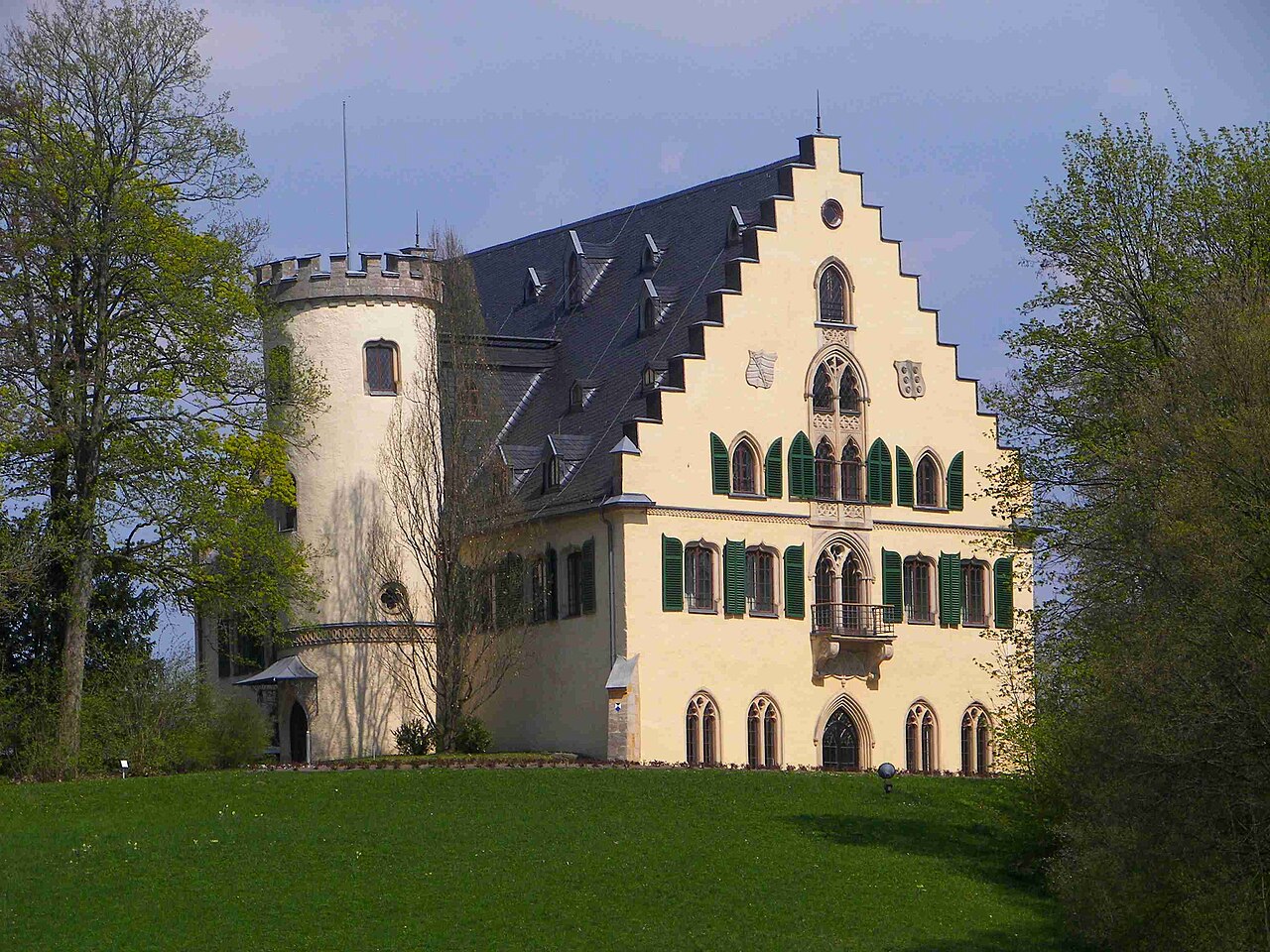
Schloss Rosenau, called in English The Rosenau or Rosenau Palace, is a former castle, converted into a ducal country house, near the town of Rödental, formerly in Saxe-Coburg, now lying in Bavaria, Germany.
Schloss Rosenau was the birthplace and boyhood home of Prince Albert of Saxe-Coburg and Gotha, who, in 1840, became the husband and consort of Queen Victoria of the United Kingdom of Great Britain and Ireland.
It should not be confused with another house of the same name at Waldviertel in Austria.
Text adapted from “Schloss Rosenau, Coburg” on Wikipedia, CC BY-SA 4.0.
Schloss Rosenau (Coburg) ranks #1,670 of 9,079 worldwide in the atlas's castle fame ranking, and #129 of the 711 mapped in Germany. Founded 1439, it is older than 49% of the atlas's dated landmarks — one of 554 atlas entries founded in the 15th century. Its Wikipedia articles were opened 5,144 times in the last 60 days, more than 87% of the atlas. 6 more atlas landmarks stand within 25 km. See how Germany compares in the castle statistics.
View on the interactive castle map →