 Philippines · 18th century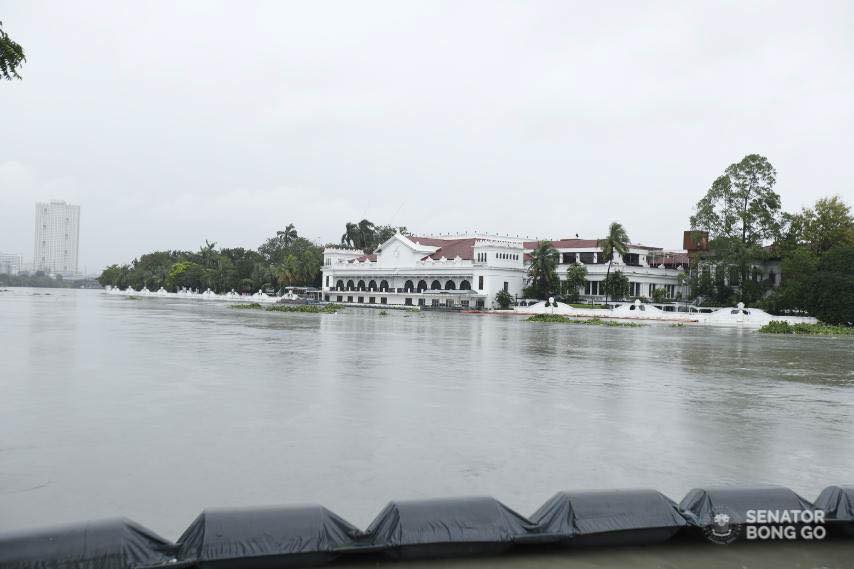
Malacañang Palace (Filipino: Palasyo ng Malakanyang, locally [paˈlɐ̞ʃo näŋ maläkɐˈɲäŋ]), officially known as Malacañan Palace, is the official residence and principal workplace of the president of the Philippines. It is located in the Manila district of San Miguel, along Jose Laurel Street, though it is commonly associated with nearby Mendiola Street. The term Malacañang is often used as a metonym for the president, their advisers, and the Office of the President of the Philippines. The sprawling Malacañang Palace complex includes numerous mansions and office buildings designed and built largely in the bahay na bato and neoclassical styles.
Among the presidents of the present Fifth Republic, only Gloria Macapagal Arroyo actually lived in the main palace as both her office and her residence, with all others residing in nearby properties that form part of the larger palace complex. The palace has been seized several times as a result of protests starting with the People Power Revolution of 1986, the 1989 coup attempt (when the palace was buzzed by T-28 Trojans), the 2001 Manila riots, and the EDSA III riots.
The original structure was built in 1750 by Don Luis José de la Rocha Camiña, a Spaniard physician in the galleon trade, who built it as a summer house with his wife, Gregoria Tuason de Zaballa, daughter of don Antonio Tuason and doña Justa de Zaballa. It is located in San Miguel, along the Pasig River. The Rocha property was built of stone and described as being a relatively modest country house (although modern-day Rochas say it was not small and in fact had a ballroom) with a bath house on the river and gardens, all enclosed by a stone fence. The latter was probably a nipa-roofed and bamboo-enclosed structure built on the water, away from the gaze of passing boats. It was easily accessible from Intramuros and Binondo by boat, carriage, or horseback.
Text adapted from “Malacañang Palace” on Wikipedia, CC BY-SA 4.0.
Malacañang Palace ranks #332 of 9,079 worldwide in the atlas's castle fame ranking, and #1 of the 14 mapped in Philippines. Founded 1750, it is older than 16% of the atlas's dated landmarks — one of 696 atlas entries founded in the 18th century. Its Wikipedia articles were opened 16,582 times in the last 60 days, more than 97% of the atlas. 3 more atlas landmarks stand within 25 km. See how Philippines compares in the castle statistics.
View on the interactive castle map →