Ruin
Masuyama Castle
🇯🇵 Japan · 14th century
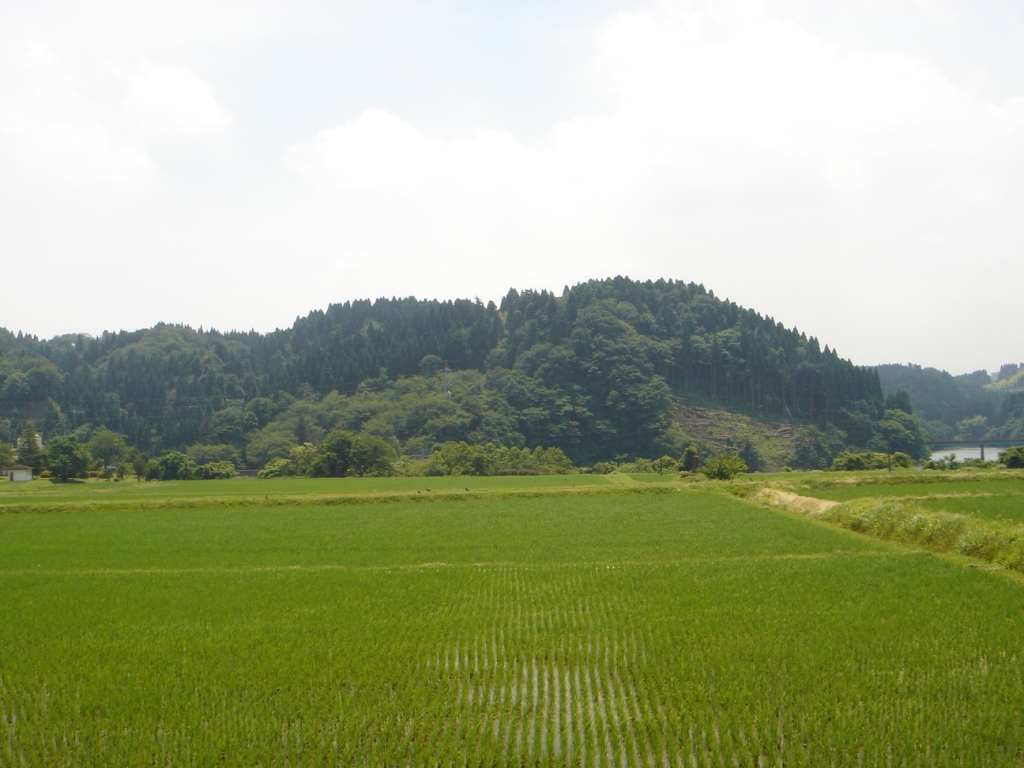
Masuyama Castle (増山城, Masuyama-jō) was a Muromachi period yamashiro-style Japanese castle located in what is now part of the city of Tonami, Toyama Prefecture in the Hokuriku region of Honshu, Japan. The ruins have been protected by the central government as a National Historic Site since 2009. It was also known as Wada Castle (和田城, Wada-jō)
Masuyama Castle is located on a 120-meter hill in the mountainous area which separates the Tonami Plain from the Toyama Plain in Etchū Province. This location is on the border of the three counties of Tonami, Imizu, and Nei, and the castle could command the major transportation route within the province. Although the Hokuriku kaidō, a highway which connected Kyoto with the Hokuriku region, passed Kurikara Pass at the border of Kaga Province and followed the Shokawa River to Toyama Bay avoided this area by taking a coastal route, the more direct route passed through this hilly area and Masuyama Castle was located to guard this strategic area. Masuyama Castle is a regarded as one of three major mountain castles of Etchū Province along with Moriyama Castle near the Noto Peninsula and Matsukura Castle in Uozu area.
The foundation of Masuyama Castle was founded during the Nanboku-cho period by Momonoi Tadatsuna (d. 1376), the shugo of Etchū Province. The name Wada Castle came from the nearby Wada River. Momonoi later revolted against the Ashikaga shogunate, and the castle was seized by a shogunal army and awarded to the Ninomiya clan, but the castle fell into ruins shortly after the conclusion of the campaign. Around a hundred years later, the castle was rebuilt as a stronghold of the Jinbō clan, retainers of the Hatakeyama clan who had been awarded with the position of shugo of Etchū Province. The Hatakeyama preferred to rule in absentia from Kyoto, and the province was sub-divided between the Jinbō, Shiina and Yusa clans to administer on their behalf.
By the end of the 15th century, the Hatakeyama clan was significantly weaker and unable to exert their authority over Etchū. Jinbo Yoshimune (d. 1531) attempted to ally with the Ikkō-ikki movement and to become independent, but was crushed by the Hatakeyama and by the forces of the Uesugi clan from neighbouring Echigo Province. However, his son Jinbō Nagatomo (d.
Text adapted from “Masuyama Castle” on Wikipedia, CC BY-SA 4.0.
Masuyama Castle ranks #5,720 of 8,134 worldwide in the atlas's castle fame ranking, and #273 of the 297 mapped in Japan. Founded 1394, it is older than 55% of the atlas's dated landmarks — one of 604 atlas entries founded in the 14th century. 2 more atlas landmarks stand within 25 km. See how Japan compares in the castle statistics.
View on the interactive castle map →Frequently asked questions
Where is Masuyama Castle?
Masuyama Castle stands in Japan, at 36.65215°, 137.04177°.
When was Masuyama Castle built?
The atlas dates its founding to 1394. Earlier structures may have stood on the site; this is the earliest documented founding year.
How famous is Masuyama Castle?
In this atlas's fame ranking: #5,720 of 8,134 worldwide, and #273 in Japan. Fame here combines how many Wikipedia language editions cover a landmark with how many people read them.
What is the nearest castle to Masuyama Castle?
Takaoka Castle, about 11 km away.
More castles in Japan
- Yogaisan Castle Japan · 16th century
- Naegi Castle Japan · 16th century
- Sugiyama Castle Japan
- Shinoridate Japan
More ruins
- Hachimanyama Castle Japan · 16th century
- Wakasa Oniga Castle Japan · 12th century
- Wakimoto Castle Japan
- Twelve Garrisons of Southern Hokkaido Japan