Ruin
Yogaisan Castle
🇯🇵 Japan · 16th century
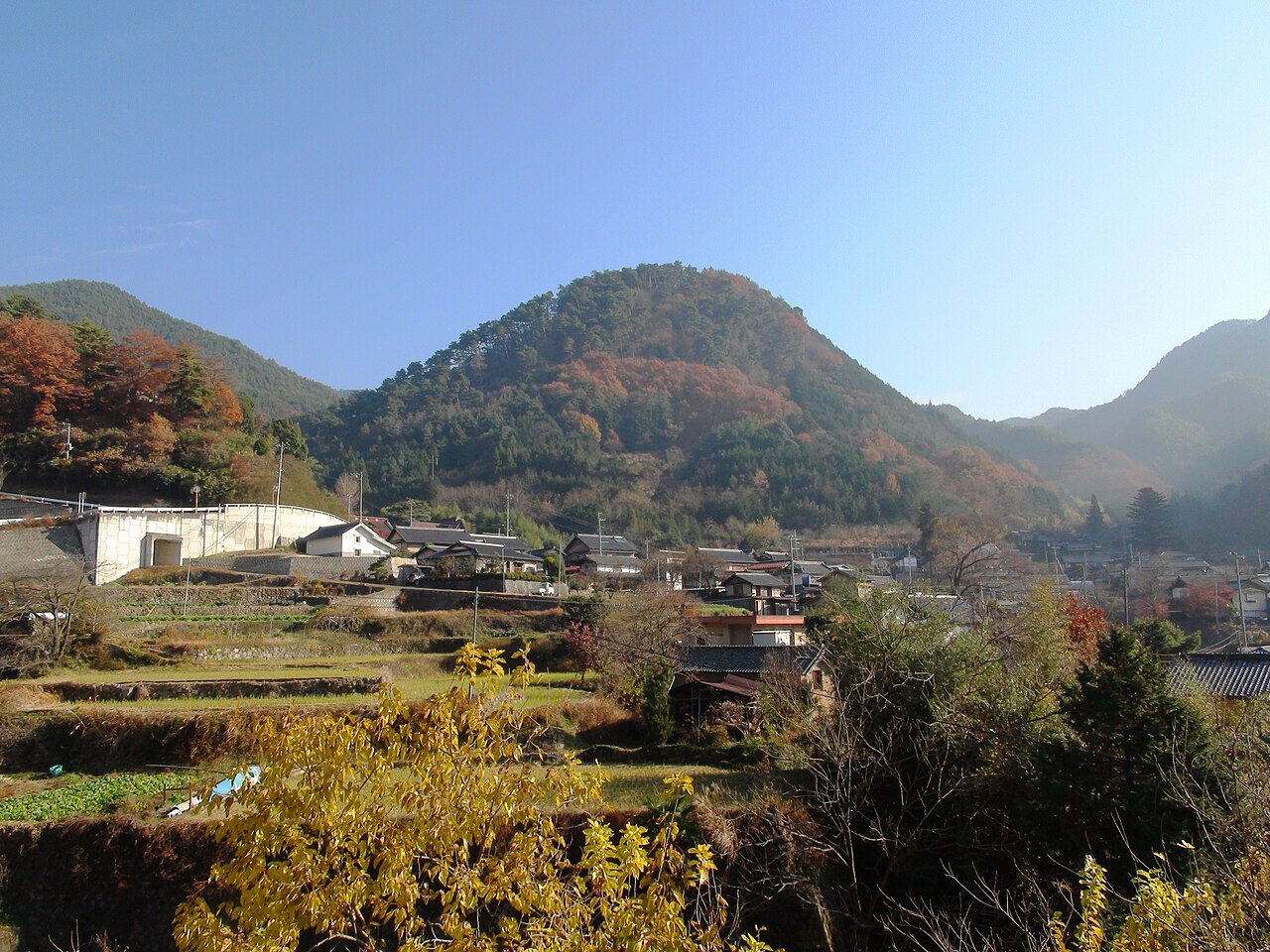
Yōgaiyama Castle (要害山城, Yōgaiyama-jō) was a Sengoku period yamajiro located in Kai Province (present day Yamanashi Prefecture), constructed in the 1520s by the Takeda clan. Since 1991, the ruins have been protected as a National Historic Site since 1938. The castle is also known as the Sekisuiyama Castle (積翠山城, Sekisuiyama-jō).
The Takeda clan was a cadet branch of the Minamoto clan, and gradually gained control over Kai Province from the late Heian period from their bases at Hakusan Castle and Yato Castle. From the Kamakura period to the Sengoku period, they were the shugo of Kai Province, and Takeda Nobutora (1493-1573) selected a location near the center of the province to build his fortified residence and jōkamachi in 1519. This was the Tsutsujigasaki Yakata in what is now the city of Kōfu. Although a strongly-fortified manor house, its primary defenses were moats, and it was considered unsuitable to withstanding a siege. Nobutora therefore fortified a nearby 770 metres (2,530 ft) mountain, Yōgaiyama, as a supporting castle and final redoubt with wooden rampartss and earthenworks defenses and built a signal tower on its summit.
Yōgaiyama Castle occupies a narrow ridge, and consists of 20 terraces cut into the hillside. The route does not climb directly between terraces, but wanders back-and-forth, so as to expose any enemy to attack by defenders in the terrace above. The inner bailey is a rectangular area 80 x 30 meters at the highest point of the mountain, and was surrounded by clay walls. The enclosure has gates on its eastern and western sides. The total length of the castle is over 500 meters.
On 16 October 1521, Takeda Nobutora defeated the Imagawa at the Battle of Iidagawara. Nobutora faced an invasion of a 15,000-strong army from neighboring Suruga Province led by Imagawa clan general Fukushima Masanari in support of the rebellion of the Ōi clan against Takeda rule. Nobutora sent his wife, the daughter of Ōi Nobusato, to the Yōgaiyama Castle for safekeeping. She gave birth to a son the day before Nobutora defeated the invasion, and in celebration of the event, Nobutora named their son, the future Takeda Shingen, “Katsuchiyo”.
In 1576, Takeda Katsuyori ordered that the fortifications be renovated on a large scale.
Text adapted from “Yōgaiyama Castle” on Wikipedia, CC BY-SA 4.0.
Yogaisan Castle ranks #5,460 of 8,134 worldwide in the atlas's castle fame ranking, and #262 of the 297 mapped in Japan. Founded 1520, it is older than 44% of the atlas's dated landmarks — one of 755 atlas entries founded in the 16th century. Its Wikipedia articles were opened 1,205 times in the last 60 days, more than 54% of the atlas. 3 more atlas landmarks stand within 25 km. The nearest day-trip guide is Sagamihara, 72 km away. See how Japan compares in the castle statistics.
View on the interactive castle map →Frequently asked questions
Where is Yogaisan Castle?
Yogaisan Castle stands in Japan, at 35.703°, 138.598°.
When was Yogaisan Castle built?
The atlas dates its founding to 1520. Earlier structures may have stood on the site; this is the earliest documented founding year.
How famous is Yogaisan Castle?
In this atlas's fame ranking: #5,460 of 8,134 worldwide, and #262 in Japan. Fame here combines how many Wikipedia language editions cover a landmark with how many people read them.
What is the nearest castle to Yogaisan Castle?
Tsutsujigasaki Castle, about 3 km away.
More castles in Japan
- Naegi Castle Japan · 16th century
- Sugiyama Castle Japan
- Shinoridate Japan
- Hachimanyama Castle Japan · 16th century
More ruins
- Wakasa Oniga Castle Japan · 12th century
- Wakimoto Castle Japan
- Twelve Garrisons of Southern Hokkaido Japan
- Nowy Dwór Castle in Wałbrzych Poland · 14th century