Castle
Nagaoka Castle
🇯🇵 Japan · 16th century
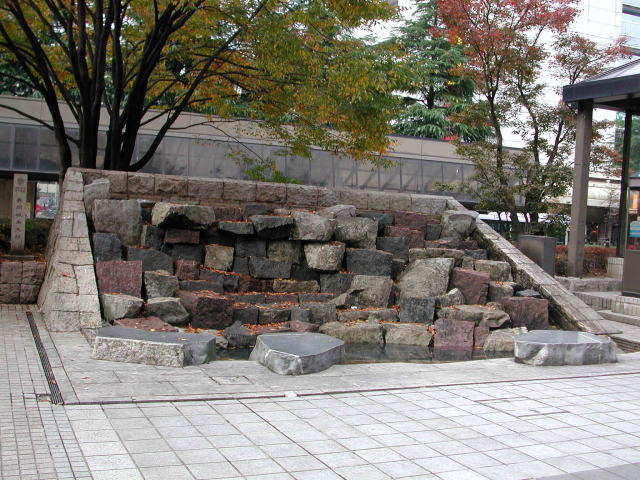
Nagaoka Castle (長岡城, Nagaoka-jō) was a Japanese castle located in Nagaoka, Niigata Prefecture, Japan. At the end of the Edo period, Nagaoka Castle was home to a branch of the Makino clan, daimyō of Nagaoka Domain.
The area around Nagaoka Castle was the territory of the Hori clan under Hori Naoyori (1577-1639), who was elevated to the status of a 60,000 koku daimyō for his services to Toyotomi Hideyoshi. Under the Tokugawa shogunate, Hori Naoyori was awarded an additional 20,000 koku from the holdings of the disgraced Matsudaira Tadateru in 1616. Around this time, he relocated his seat from Zaōdo (蔵王堂) on the east bank of the Shinano River to higher ground on the west bank. This marked the start of Nagaoka Castle. He was transferred to Murakami Domain in 1618, and the castle was completed by Makino Tadanari (1581-1655), whose descendants continued to hold the castle until the Meiji restoration.
Most of the castle burned down in March 1728 and was only restored in 1754. Another fire in 1844 destroyed two gates and a portion of the daimyo’s palace. The castle also suffered repeatedly from flooding due to its location, notably in 1671, 1674, 1781, and 1789. The Sanjō earthquake of 1829 also destroyed most of the castle structures.
During the Boshin War, representatives of the domain met with representatives of the Satchō Alliance at a nearby temple, but the negotiations ended without agreement, and Nagaoka Castle was attacked and destroyed by the military forces of the new Meiji government.
Following the war the moats were filled in, and part of the castle site was sold to private hands. In 1898, Nagaoka Station was built on the eastern half of the Honmaru central bailey. Nagaoka City Hall and other public structures occupy much of the remaining site.
Nagaoka Castle was a flatland-style castle with two central baileys, the Honmaru (本丸) and the Ni-no-Maru (二の丸), both surrounded by a moat. These were in turn surrounded by the San-no-Maru (三の丸) and Tsume-no-Maru (詰の丸) Baileys, and the Minami-Kuruwa (南曲輪) and Nishi-Kuruwa (西曲輪) forecourts. This outer ring of defences was also surrounded by a moat. The castle had only earthen ramparts, with yagura watchtowers at various locations, and there was no donjon in the central bailey.
Text adapted from “Nagaoka Castle” on Wikipedia, CC BY-SA 4.0.
Nagaoka Castle ranks #3,798 of 8,134 worldwide in the atlas's castle fame ranking, and #193 of the 297 mapped in Japan. Founded 1537, it is older than 42% of the atlas's dated landmarks — one of 755 atlas entries founded in the 16th century. Its Wikipedia articles were opened 2,061 times in the last 60 days, more than 68% of the atlas. 1 more atlas landmarks stand within 25 km. See how Japan compares in the castle statistics.
View on the interactive castle map →Frequently asked questions
Where is Nagaoka Castle?
Nagaoka Castle stands in Japan, at 37.44742°, 138.85314°.
When was Nagaoka Castle built?
The atlas dates its founding to 1537. Earlier structures may have stood on the site; this is the earliest documented founding year.
How famous is Nagaoka Castle?
In this atlas's fame ranking: #3,798 of 8,134 worldwide, and #193 in Japan. Fame here combines how many Wikipedia language editions cover a landmark with how many people read them.
What is the nearest castle to Nagaoka Castle?
Tochio Castle, about 12 km away.
More castles in Japan
- Toba Castle Japan · 16th century
- Tatsuno Castle Japan · 15th century
- Shinjō Castle Japan · 17th century
- Aya Castle Japan · 14th century
More castles
- Camponeschi Castle Italy · 16th century
- Gerdauen Castle Russia · 14th century
- Preußisch Eylau Castle Russia · 14th century
- Castle of Castrojeriz Spain · 8th century