 Japan · 16th century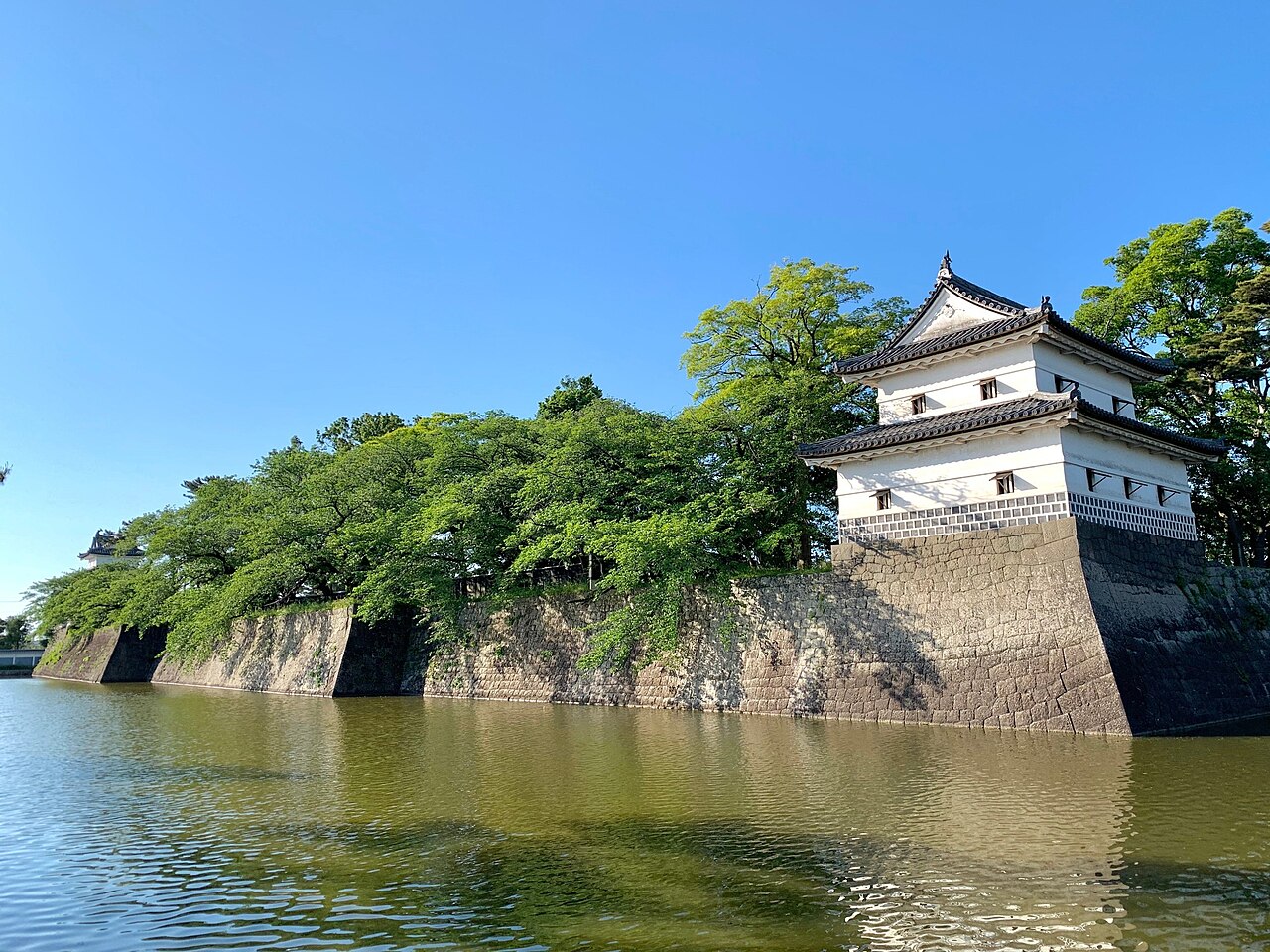
Shibata Castle (新発田城, Shibata-jō) is a flatland-style Japanese castle located in the city of Shibata, Niigata Prefecture, Japan. Throughout the Edo period, Shibata Castle was home to the Mizoguchi clan, daimyō of Shibata Domain. The castle was also known as "Ayame-jō" (菖蒲城, "Iris Castle").
Shibata Castle is located at the center of the modern city of Shibata, approximately 20 kilometers east of the city of Niigata. Historically, the area was a vast marsh made by Shinano River and the Agano River, which were both important trade routes for Echigo Province. The construction date of the original Shibata Castle is unknown; however, the surrounding area was under control of the Shibata clan since the Kamakura period. The Shibata were a cadet branch of the Sasaki clan, from Sasaki Moritsuna, a retainer of Minamoto no Yoritomo who had been awarded estates in this area for his role in suppressing a local rebellion.
By the middle of Muromachi period, the Shibata were the most powerful of the "Agekitashu", a group of local petty lords who were mostly independent due to their distance from the provincial capital at Jōetsu. However, by the Sengoku period, the Shibata became retainers of Uesugi Kenshin, and Shibata Nagatsu (1538–1580) was ranked among Kenshin's top seven generals. After Kenshin's death, his two adopted sons Uesugi Kagekatsu and Uesugi Kagetora fought a war over the succession. The Shibata were instrumental in Kagekatsu's victory but were highly incensed when Kagekatsu failed to follow through on his promises to increase their territory.
Lured by promised by Oda Nobunaga, Shibata Shigeie (1547–1587) revolted against Kagekatsu, but was defeated after a fierce seven year war, and the clan was destroyed.
Shibata Castle was taken by Uesugi Kagekatsu, but in 1597, Toyotomi Hideyoshi moved the Uesugi clan to Aizu-Wakamatsu and assigned the former Shibata lands to Mizoguchi Hidekatsu in 1598. Hidekatsu had originally been a retainer of Niwa Nagahide, but after his death pledged fealty directly to Toyotomi Hideyoshi. After the death of Toyotomi Hideyoshi, he pledged fealty to Tokugawa Ieyasu, and was confirmed in his holdings by the new Tokugawa shogunate after the Battle of Sekigahara, The Mizoguchi clan rebuilt Shibata Castle in the contemporary flatland castle style.
Text adapted from “Shibata Castle” on Wikipedia, CC BY-SA 4.0.
Shibata Castle ranks #1,990 of 9,035 worldwide in the atlas's castle fame ranking, and #123 of the 295 mapped in Japan. Founded 1597, it is older than 32% of the atlas's dated landmarks, one of 886 atlas entries founded in the 16th century. Its Wikipedia articles were opened 4,349 times in the last 60 days, more than 85% of the atlas. See how Japan compares in the castle statistics.
View on the interactive castle map →