 Azerbaijan · 18th century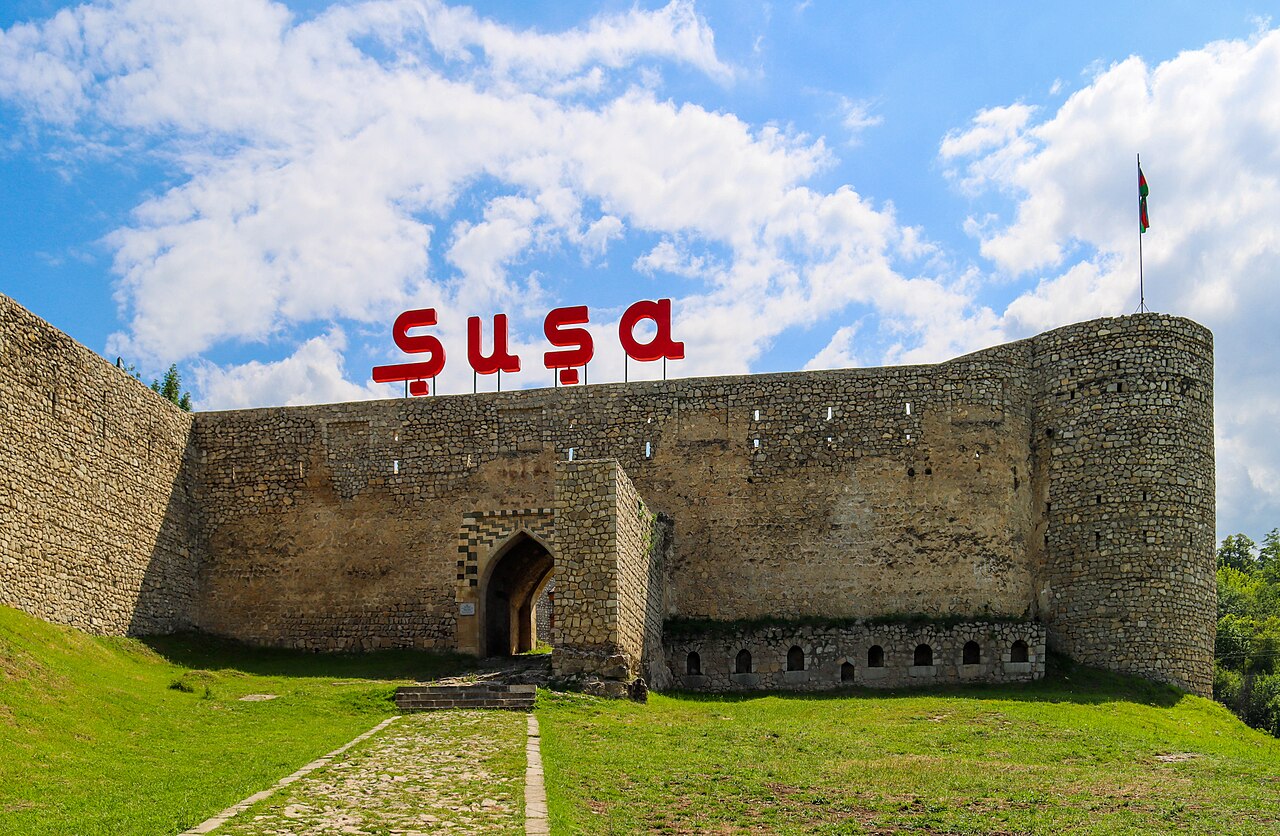
The Shusha fortress (Azerbaijani: Şuşa qalası, Persian: قلعه شوش) or Shushi fortress (Armenian: Շուշիի բերդ) is a fortress surrounding the historical centre of Shusha. The newly conquered castle town was called "Panahabad fortress" named after Panah Ali Khan who together with Melik Shahnazar was the founder of the fort. In later years, the city was just called "Fortress". A settlement at Shusha is first recorded in a 15th-century illustrated Armenian gospel which mentions the "Shushu village".
The area where the Shusha fortress was built is a mountainous plateau in the form of amphitheater from the west with numerous hills and rifts. The highest area of plateau is 1600 metres and the lowest area is 1300 metres above sea level. At present, the territory of Shusha city consists of plateau with a hill located lengthwise in its center. The architecture of Shusha fortress represents basic principles of architecture of feudal period in terms of both the choice of location, structural planning and the artistic appearance of the fort.
Shusha fortress had three main gates: Ganja Gate, Iravan Gate and Aghoghlan Gate. The names of all these gates are often mentioned in historical sources, as well as in all the drawn plans of 19th-century Shusha.
Text adapted from “Shusha fortress” on Wikipedia, CC BY-SA 4.0.
Shusha Fortress ranks #1,836 of 9,079 worldwide in the atlas's castle fame ranking, and #3 of the 46 mapped in Azerbaijan. Founded 1752, it is older than 16% of the atlas's dated landmarks — one of 696 atlas entries founded in the 18th century. Its Wikipedia articles were opened 1,909 times in the last 60 days, more than 68% of the atlas. 2 more atlas landmarks stand within 25 km. See how Azerbaijan compares in the castle statistics.
View on the interactive castle map →