 Germany · 13th century
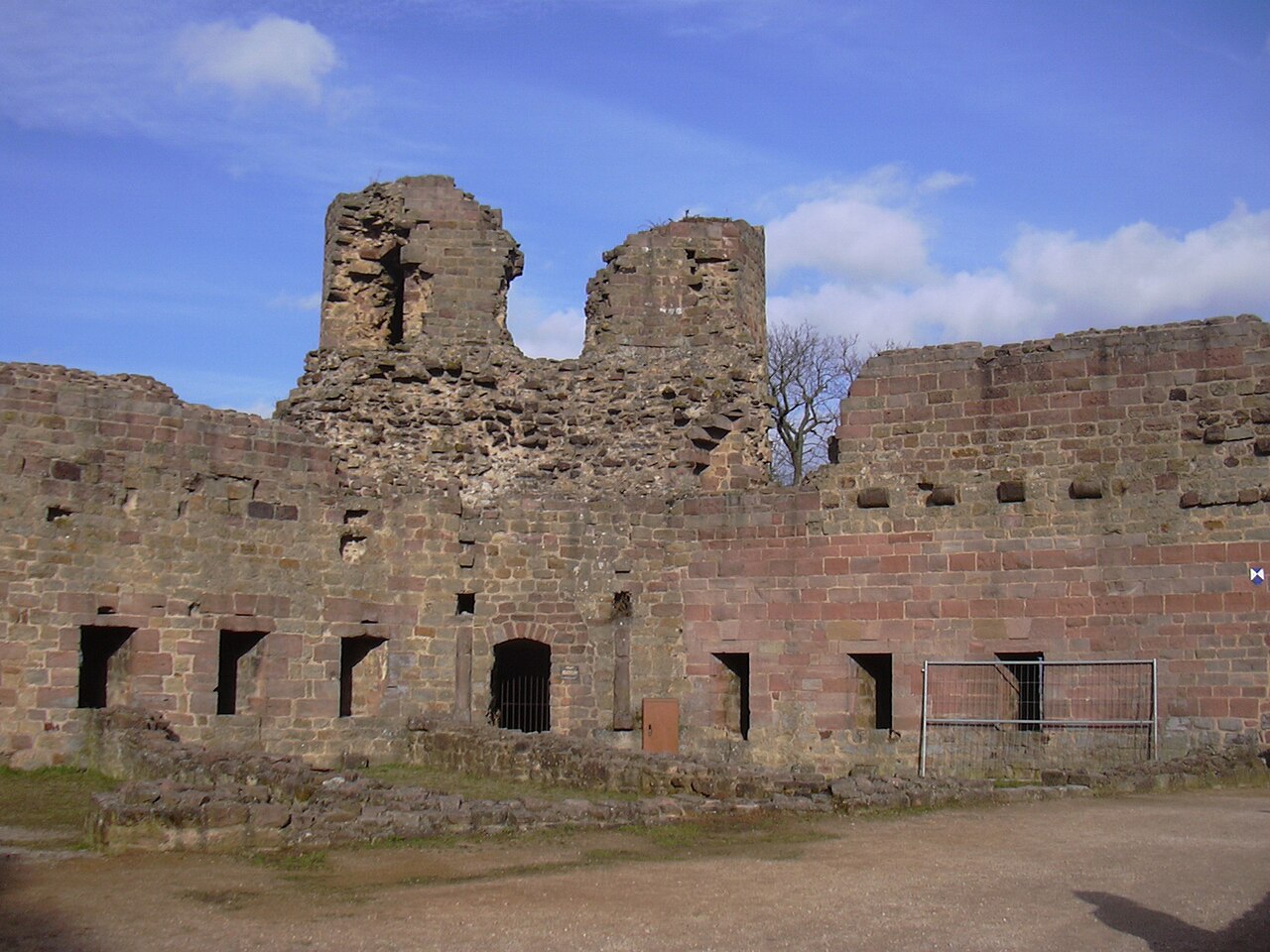
Neuleiningen Castle ranks #5,482 of 9,040 worldwide in the atlas's castle fame ranking, and #473 of the 714 mapped in Germany. Founded 1238, it is older than 72% of the atlas's dated landmarks, one of 1091 atlas entries founded in the 13th century. Its Wikipedia articles were opened 1,059 times in the last 60 days, more than 52% of the atlas. 13 more atlas landmarks stand within 25 km. The nearest day-trip guide is Mannheim, 24 km away. See how Germany compares in the castle statistics.
Neuleiningen Castle is a ruin on the eastern edge of the Palatinate Forest in the state of Rhineland-Palatinate in Germany in the municipality of Neuleiningen in the Bad Dürkheim district.
It was built in 1238-41 by Count Frederick III of Leiningen. The French destroyed it in 1690 and it has lain in ruins since that time.
The castle is located on a foothill of the Haardt on the northeastern edge of the Palatinate Forest. Its eponymous village is grouped around the castle, high above the left bank of the Eckbach at an elevation of about 300 metres above sea level.
Near the castle is the Old Vicarage (Alte Pfarrey), which was first recorded in 1524 and which houses a gourmet restaurant today.
Its name, like that of its sister castle, Altleiningen five kilometres to the southwest, is derived from the Frankish noble family, the counts of Leiningen, who ruled the territory of Leiningerland.
The castle was built following a division of inheritance around 1240 by Count Frederick III of Leiningen. Together with, Battenberg Castle, 1,400 metres to the south, the castle controlled the entrance to the Eckbach valley. Passing between various lines of the family, the castle remained the property of the Leiningens for over 200 years. In 1468, Prince-Elector Frederick the Victorious of the Palatinate became involved in inheritance disputes amongst the Leiningens and seized possession of the castle by force. In 1508, after passing through several intermediate arrangements, an agreement was reached: the castle would be divided between the Bishopric of Worms and the counts of Leiningen-Westerburg.
In 1525, during the Peasants' War, the castle was opened to the rebellious farmers without a fight and, having been hosted by Countess Eva (1481–1543) in a friendly and generous way, the farmers left without causing great damage. Local poet, Paul Münch, described this historical episode in his Palatine poem Die Gräfin Eva vun Neileininge. Even in Thirty Years' War the castle only suffered minor damage.
During the War of the Palatine Succession, however, invading French troops razed the entire site in 1690. Its two owners, Leiningen-Westerburg and the Bishopric of Worms, could not agree to rebuild the castle in the period that followed – Leiningen being for, and Worms being against, the idea. In 1767, Charles of Leiningen-Westerburg finally sold the Leiningen half to Worms.
Text adapted from “Neuleiningen Castle” on Wikipedia, CC BY-SA 4.0.
View on the interactive castle map →