Ruin
Nochiseyama Castle
🇯🇵 Japan · 16th century
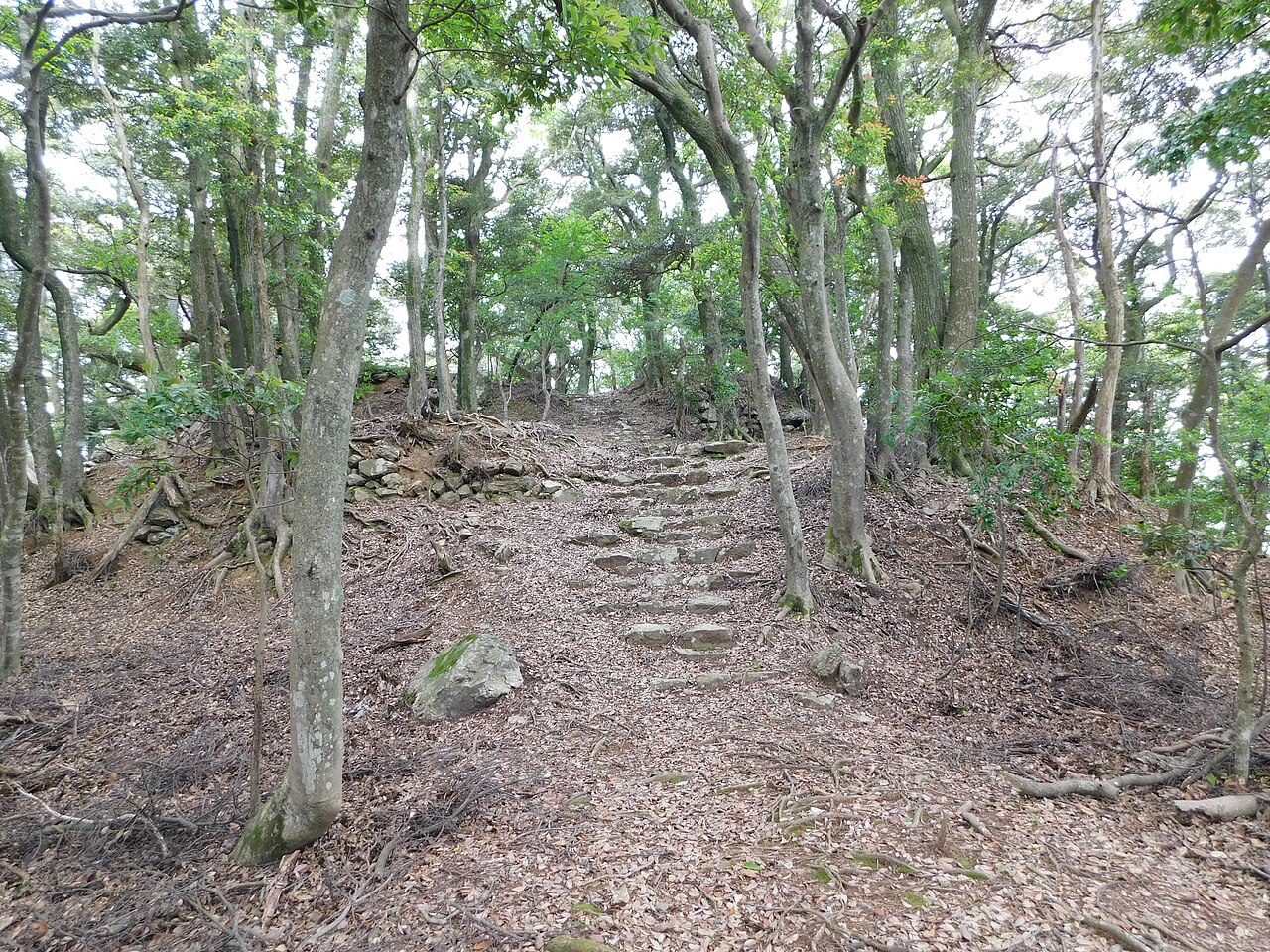
Nochiseyama Castle (後瀬山城, Nochiseyama-jō) was a Sengoku period yamashiro-style Japanese castle located in what is now part of the city of Obama, Fukui Prefecture in the Hokuriku region of Honshu, Japan. The ruins have been protected as a National Historic Site since 1997.
Nochiseyama Castle is located on a 160-meter hill located next to the Tango-kaidō highway, at the southeast edge of what is now central Obama city. Obama prospered as a port Wakasa Bay connecting to Kyoto from before the Heian period, and the Tango-kaidō was the primary route from the port to Kyoto and the Kansai region.
A cadet branch of the Takeda clan from Kai Province gained control of Wakasa Province during the Muromachi Period, but were based in Kyoto and ruled in absentia. They were heavily involved in the politics of the Onin War and were noted supporters of the Ashikaga shogunate. In 1522, Takeda Motomitsu, the fifth generation shugo of Wakasa decided relocate from the war-ravaged Kyoto to his domain in Wakasa and began construction of the castle, which would eventually extend 500 meters from north-to-south, with a palace at the foot of the mountain. The Takeda has close relations with the court nobility and men of arts in Kyoto, and invited many persons of culture to Wakasa as a refuge from the ongoing wars.
However, this interlude was short. By the 1550s there was a major succession dispute within the Takeda clan, during which time a faction led by Takeda Motoaki (1562-1582) sought the assistance of the powerful Asakura clan from neighbouring Echizen Province. Motoaki was installed as the 9th Lord of Wakasa at the head of an Asakura army, and was then taken as a hostage to the Asakura stronghold of Ichijōdani, and Wakasa was thereafter ruled by Asakura proxies.
In 1573, Oda Nobunaga destroyed the Asakura clan; however, Motoaki was not returned in Wakasa. Instead, Nobunaga's general Niwa Nagahide was awarded the province. Niwa Nagahide was instrumental in the construction of Nobunaga's Azuchi Castle in 1576, and through this experience, greatly expanded upon and improved the defences of Nochiseyama Castle. The central areas at the top of the peak were surrounded by stone walls with huge stones, and a large palace was built at this area. The ramparts of the numerous enclosures on the mountain were also reinforced with stone and with dry moats.
Text adapted from “Nochiseyama Castle” on Wikipedia, CC BY-SA 4.0.
Nochiseyama Castle ranks #5,006 of 8,134 worldwide in the atlas's castle fame ranking, and #242 of the 297 mapped in Japan. Founded 1522, it is older than 44% of the atlas's dated landmarks — one of 755 atlas entries founded in the 16th century. Its Wikipedia articles were opened 1,234 times in the last 60 days, more than 54% of the atlas. 2 more atlas landmarks stand within 25 km. The nearest day-trip guide is Hikone, 53 km away. It is one of the 71 landmarks on the atlas's regional map of Kansai. See how Japan compares in the castle statistics.
View on the interactive castle map →Frequently asked questions
Where is Nochiseyama Castle?
Nochiseyama Castle stands in Japan, at 35.4882°, 135.73906°.
When was Nochiseyama Castle built?
The atlas dates its founding to 1522. Earlier structures may have stood on the site; this is the earliest documented founding year.
How famous is Nochiseyama Castle?
In this atlas's fame ranking: #5,006 of 8,134 worldwide, and #242 in Japan. Fame here combines how many Wikipedia language editions cover a landmark with how many people read them.
What is the nearest castle to Nochiseyama Castle?
Obama Castle (Wakasa Province), about 2 km away.
More castles in Japan
- Ina Castle Japan · 15th century
- Nirayama Castle Japan · 15th century
- Shigisan Castle Japan · 16th century
- Yokote Castle Japan · 16th century
More ruins
- Kvasovo Castle Ukraine
- Cembalo Ukraine · 14th century
- Fort Witsen Ghana · 17th century
- Castle of Alcantarilha Portugal