 Italy · 14th century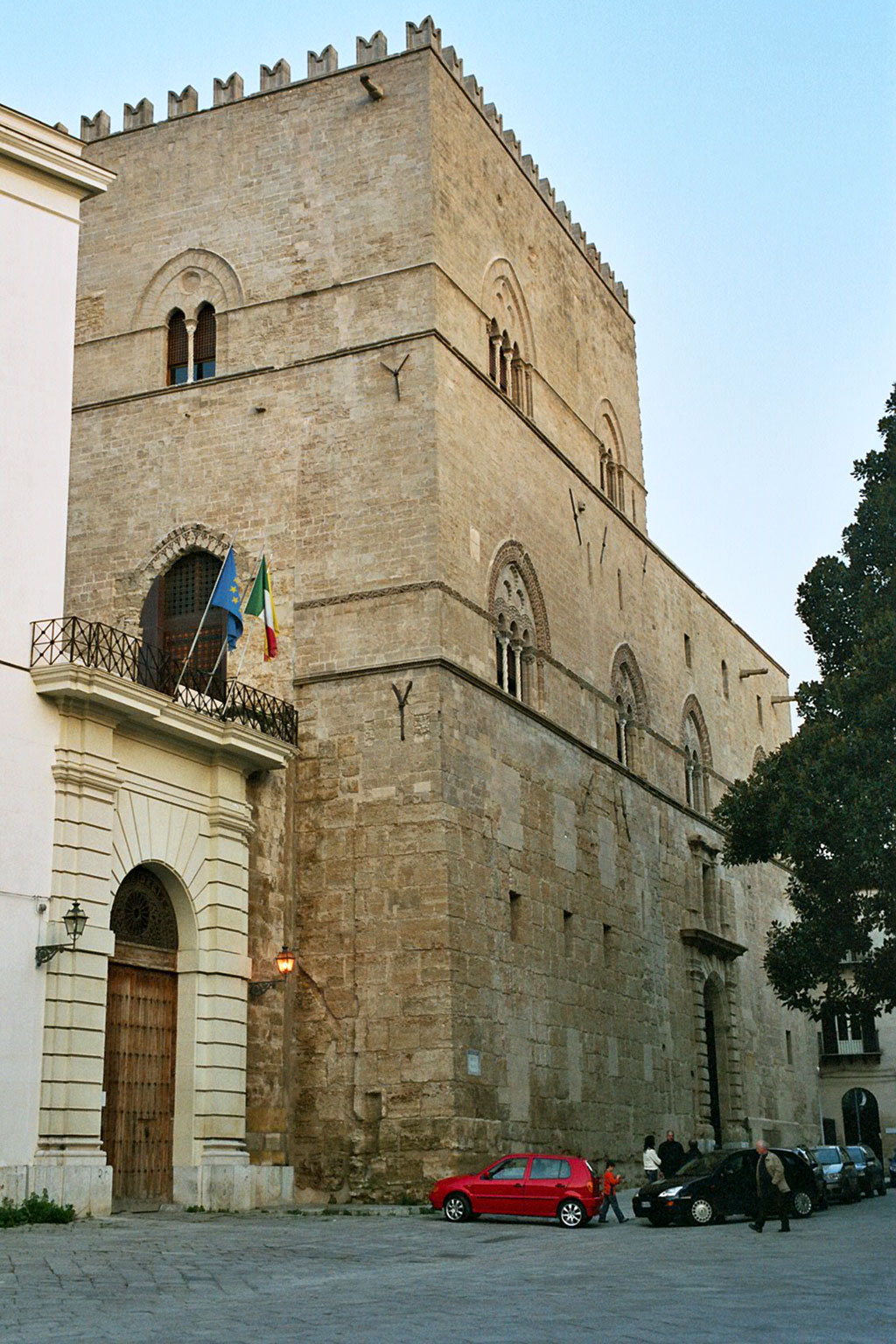
The Palazzo Chiaramonte-Steri is a 14th-century palace in Palermo, Sicily. Built for the powerful Chiaramonte family, it later served as the residence of the viceroys of Sicily and, from 1604 to 1782, as the seat of the Inquisition in Palermo; since 1943 it has housed the rectorate of the University of Palermo.
The palace was commissioned in the early 14th century by Giovanni “il Vecchio” Chiaramonte, one of the most powerful nobles of Sicily. Building work began around 1307 and continued through the later 14th century, with additions under his successors.
Designed as both a fortified residence and a statement of dynastic prestige, it became the Chiaramonte family’s principal seat in Palermo and is considered the prototype of the so-called Chiaramontan Gothic style.
The palace symbolised the Chiaramonte’s political influence during their control of the County of Modica. Following the execution of Andrea Chiaramonte in 1392 and the forfeiture of family lands, the Steri passed into royal hands.
Under the Aragonese—John II and Ferdinand II—and later the Spanish Habsburgs from Charles V, the Steri served as a viceregal residence and administrative seat; institutional summaries also note royal/viceregal use and parliamentary meetings. From 1468 to 1517 it housed the viceroys during works at the Palazzo Reale (Palazzo dei Normanni). A municipal summary also records later use by the customs administration.
From the early 17th century the Steri became Palermo’s seat of the Inquisition (the Sicilian tribunal), formally the Tribunal of the Holy Office. In this context a tribunale (tribunal) was a church court that investigated and prosecuted offences against Catholic doctrine, such as heresy. Proceedings typically involved inquiry, interrogations, and sentencing; punishments ranged from penances and fines to imprisonment, with cases referred to secular authorities for enforcement when required.
Institutional and scholarly summaries place the Inquisition’s Palermo phase at the Steri broadly from about 1600–1601 into the 18th century; focused studies on the prison evidence narrow the operating span of the Steri cells to 1604–1782.
The complex included court rooms and a prison. Hundreds of inscriptions and drawings scratched by detainees survive on the cell walls, offering a rare first-hand record of beliefs, fears, and appeals from the period.
Text adapted from “Palazzo Chiaramonte” on Wikipedia, CC BY-SA 4.0.
Palazzo Chiaramonte ranks #2,092 of 9,035 worldwide in the atlas's castle fame ranking, and #150 of the 555 mapped in Italy. Founded 1307, it is older than 60% of the atlas's dated landmarks, one of 757 atlas entries founded in the 14th century. Its Wikipedia articles were opened 2,709 times in the last 60 days, more than 76% of the atlas. 8 more atlas landmarks stand within 25 km. It is one of the 32 landmarks on the atlas's regional map of Sicily. See how Italy compares in the castle statistics.
View on the interactive castle map →