 Greece · 14th century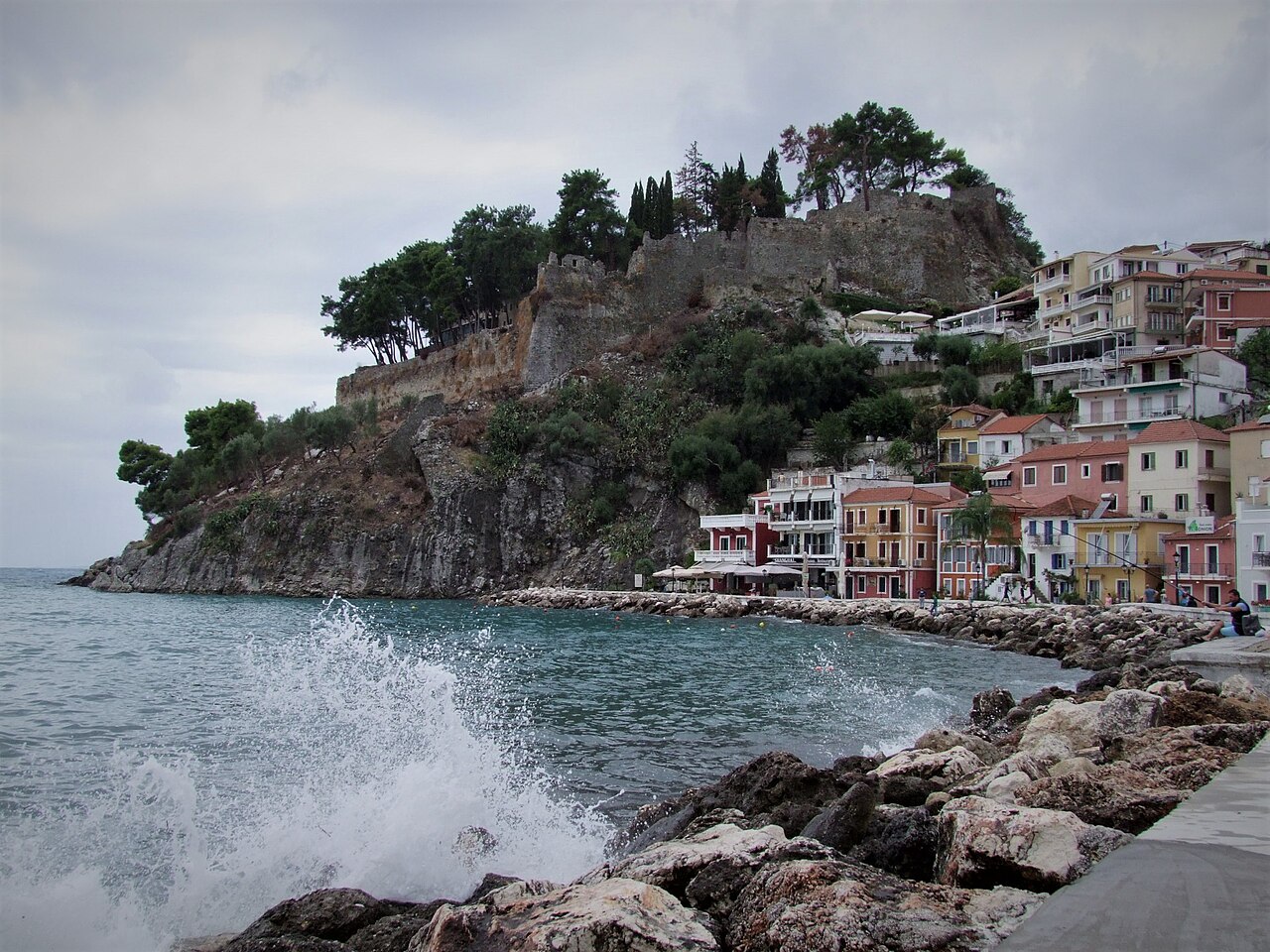
The Parga Castle (Greek: Κάστρο Πάργας) is a medieval hilltop citadel complex in the town of Parga, Epirus, Greece. Located on the top of a hill overlooking the town, it has been an important landmark since the 15th century due in part to the strong fortifications used to protect the town from invasions from land and sea.
Located on a strategically placed rocky peninsula overlooking the sea on three sides and the town on the forth.
In antiquity the area around the castle was inhabited by the Greek tribe of the Thesprotians. The ancient town of Toryne was probably located here. Before the strong castle of Parga was built (which survives today), the inhabitants of Parga tried to keep the fortified city, which was exposed to the sea, so that they could face the invaders. In this effort, they built the first fortifications with the help of the Normans, initially in the 11th century by the residents of Parga to protect their town from pirates and later the Ottomans. In the 15th century, as Ottoman control of the region increased, the Venetians rebuilt the castle to fortify the area.
The town and its castle were unsuccessfully offered by Nicholas Orsini, the Despot of Epirus, to the Republic of Venice in exchange for Venetian aid against the Byzantine Empire. During the Epirote rebellion of 1338/39 against the Byzantine emperor Andronikos III Palaiologos, Parga remained loyal to the emperor. In the 1390s it was under the rule of Gjin Bua Shpata, lord of Arta.
The town finally passed under Venetian control in 1401 and was administered as a mainland exclave of the Venetian possession of Corfu, under a castellan. Venetian possession was confirmed in the Ottoman–Venetian treaty of 1419. Apart from brief periods of Ottoman possession, the town remained in Venetian hands until the Fall of the Republic of Venice in 1797.
In 1452, Parga and the fortified position was occupied by Hatzi Bey for two years; part of the castle was demolished at that time. In 1537, Ottoman admiral Hayreddin Barbarossa burned and destroyed the fortress and the houses within. Before the castle's reconstruction in 1572 by the Venetians, the Turks again demolished it. The castle was rebuilt with the help of the Venetians, but before it was completed, it was demolished again by the Turks.
Text adapted from “Parga Castle” on Wikipedia, CC BY-SA 4.0.
Parga Castle ranks #4,141 of 9,035 worldwide in the atlas's castle fame ranking, and #58 of the 133 mapped in Greece. Founded c. 1380, it is older than 52% of the atlas's dated landmarks, one of 757 atlas entries founded in the 14th century. Its Wikipedia articles were opened 3,152 times in the last 60 days, more than 79% of the atlas. The nearest day-trip guide is Ioannina, 58 km away. See how Greece compares in the castle statistics.
View on the interactive castle map →