 Greece · 18th century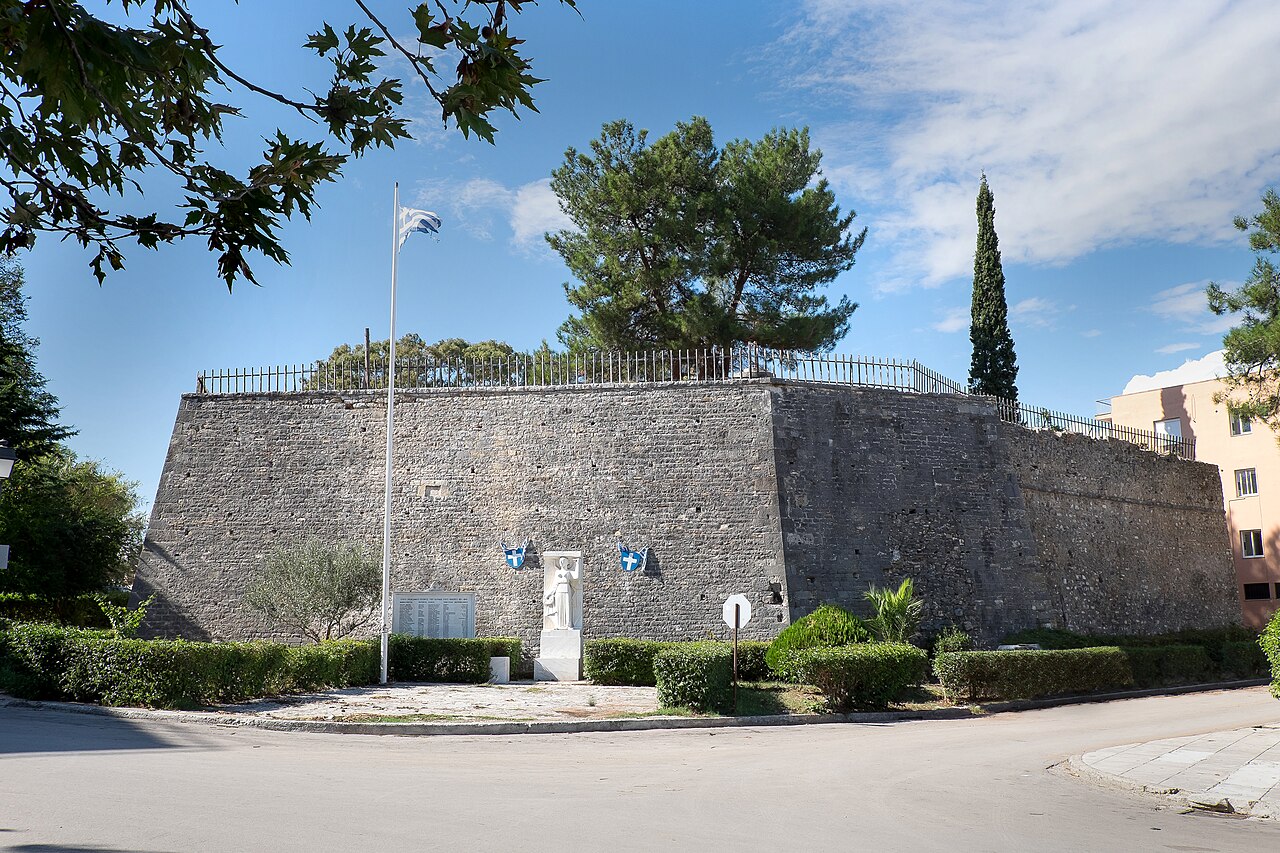
The Castle of Saint Andrew (Greek: κάστρο του Αγίου Ανδρέα) is a fortress in Preveza, Greece. First constructed by the Ottoman Empire in the early 1700s, it was expanded under Venetian rule in 1718–1797 and again under the autonomous regime of Ali Pasha of Yanina in 1807–1808 to become the largest of the several fortifications in the Preveza area.
The castle was known in Ottoman times as Iç Kalesı (lit. 'Inner Castle'), as well as 'Castle of the Plane Tree' (Φρούριο του Πλατάνου) and 'Castle of the Roots' (Ριζόκαστρο). It derives its modern name from a church dedicated to Saint Andrew that existed in it during Venetian times.
The first fortress of Preveza was the Castle of Bouka, built by the Ottoman Empire in the 1486/7, a decade after the Ottoman conquest of the region. This castle was razed by the Venetians in 1701, when they were obliged to return Preveza to Ottoman control by the terms of the Treaty of Karlowitz. As a result, the Ottomans did not rebuilt the old fort, but erected a new one, some 800 metres (2,600 ft) further north at a site reported in Venetian sources as Sto Chiparissi (Greek for 'at the cypress tree').
A Venetian engineer attached to the fleet drew a sketch of the castle in 1702, according to which it was a square structure, with a square bastion at each corner. The stone-built curtain walls were about 200 metres (660 ft) long, and the walls of each of the four sides of the bastions another 25 metres (82 ft) long. The wall was not very tall—about 1 metre (3.3 ft)—nor very thick—about 1.7 metres (5.6 ft), and was reinforced with wooden stakes that protruded about 1.7 metres (5.6 ft) from the wall. A moat was dug around the fort, and the excavated earth dumped between it and the stone wall, forming a second defense line. The erection of the new fortress, and centre of the Ottoman administration, also had the effect of drawing the city northwards, as the local inhabitants began building their homes in close proximity to it.
The Venetian admiral Andrea Pisani captured the relatively weak fortress on 22 October 1717, during the Seventh Ottoman-Venetian War; the Venetians immediately started strengthening the defences, widening the moat by about 1 metre (3.3 ft). They also converted the garrison's mosque into a church, and dedicated it to Saint Andrew, likely in honour of Pisani.
Text adapted from “Castle of Saint Andrew” on Wikipedia, CC BY-SA 4.0.
St. Andrew's Castle ranks #6,052 of 9,035 worldwide in the atlas's castle fame ranking, and #74 of the 133 mapped in Greece. Founded 1710, it is older than 20% of the atlas's dated landmarks, one of 685 atlas entries founded in the 18th century. 6 more atlas landmarks stand within 25 km. The nearest day-trip guide is Ioannina, 79 km away. See how Greece compares in the castle statistics.
View on the interactive castle map →